
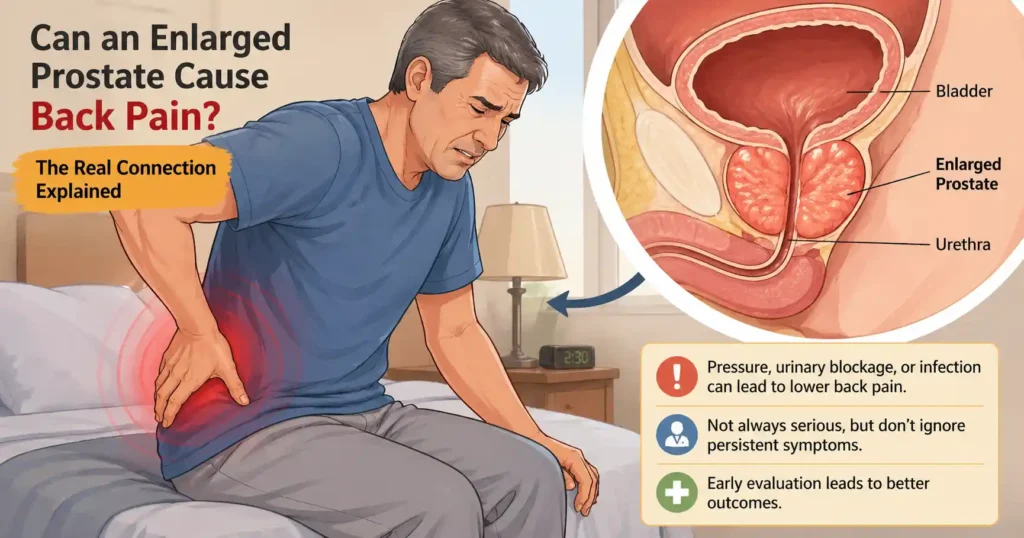
Answer: Yes, an enlarged prostate can cause back pain, but not directly. The pain usually results from complications such as urinary retention, bladder pressure, or kidney strain. In some cases, infection or more serious conditions may also trigger lower back discomfort.
Key Takeaways
- An enlarged prostate does not directly cause back pain.
- Back pain usually comes from pressure, infection, or complications.
- Most back pain cases are not prostate-related.
- Urinary symptoms appear first, not pain.
- Persistent or severe pain needs proper evaluation—not guessing.
What Is an Enlarged Prostate?
An enlarged prostate, also called benign prostatic hyperplasia (BPH), is a non-cancerous increase in prostate size. It’s extremely common. By age 60, over 50% of men have some degree of enlargement, according to the National Institute of Diabetes and Digestive and Kidney Diseases.1Enlarged Prostate (Benign Prostatic Hyperplasia), NIDDK
The prostate sits just below the bladder and wraps around the urethra. As it grows, it presses on that tube. That’s where most problems start.
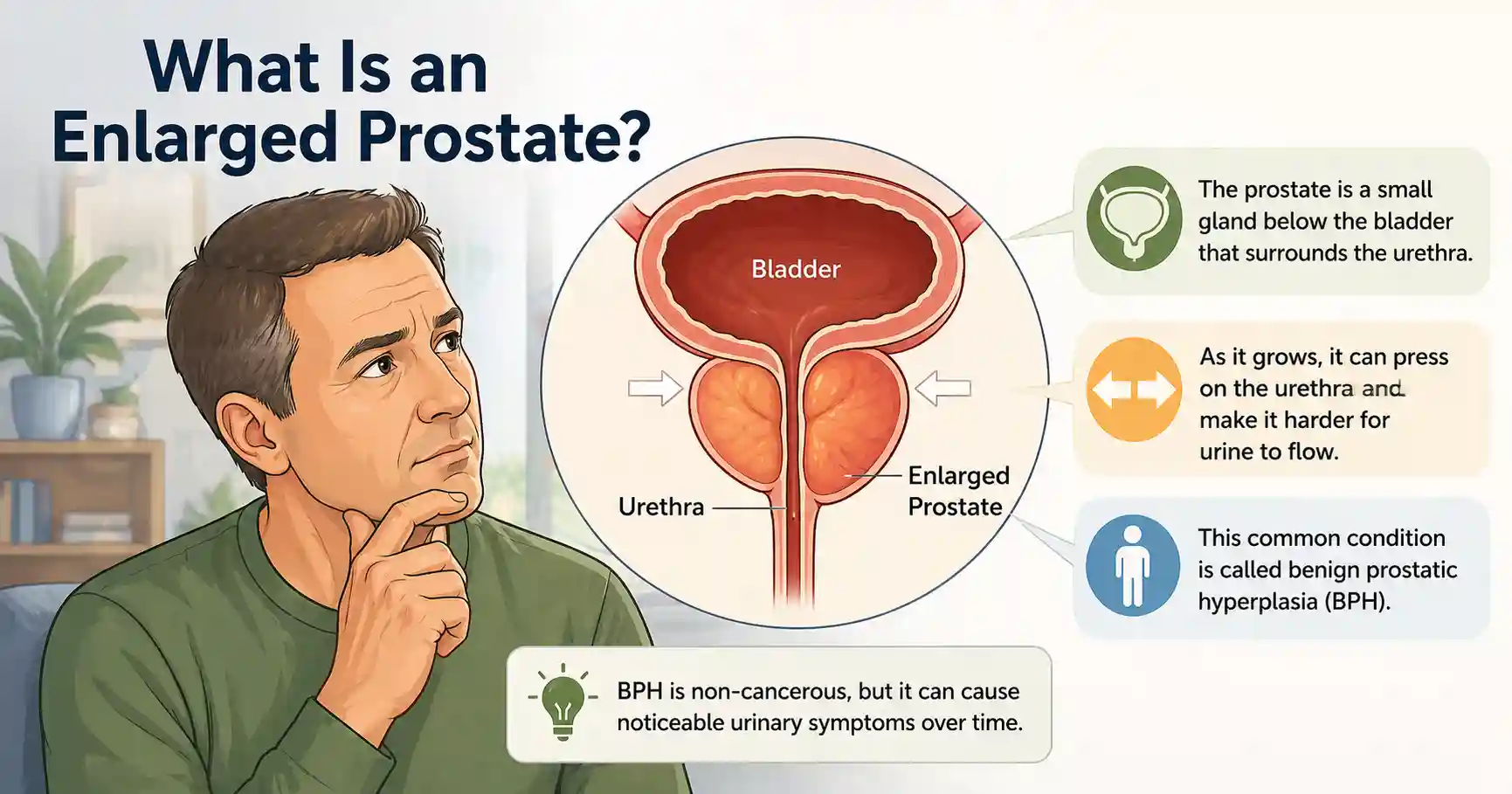
Typical effects:
- Weak urine flow
- Frequent urination (especially at night)
- Trouble emptying the bladder
Here’s what most articles miss: the prostate itself doesn’t cause pain easily. It’s not designed to. Pain usually shows up when something else goes wrong.
Quick Takeaway: An enlarged prostate is common and usually harmless, but it can create pressure that leads to other problems.
Can an Enlarged Prostate Cause Back Pain?
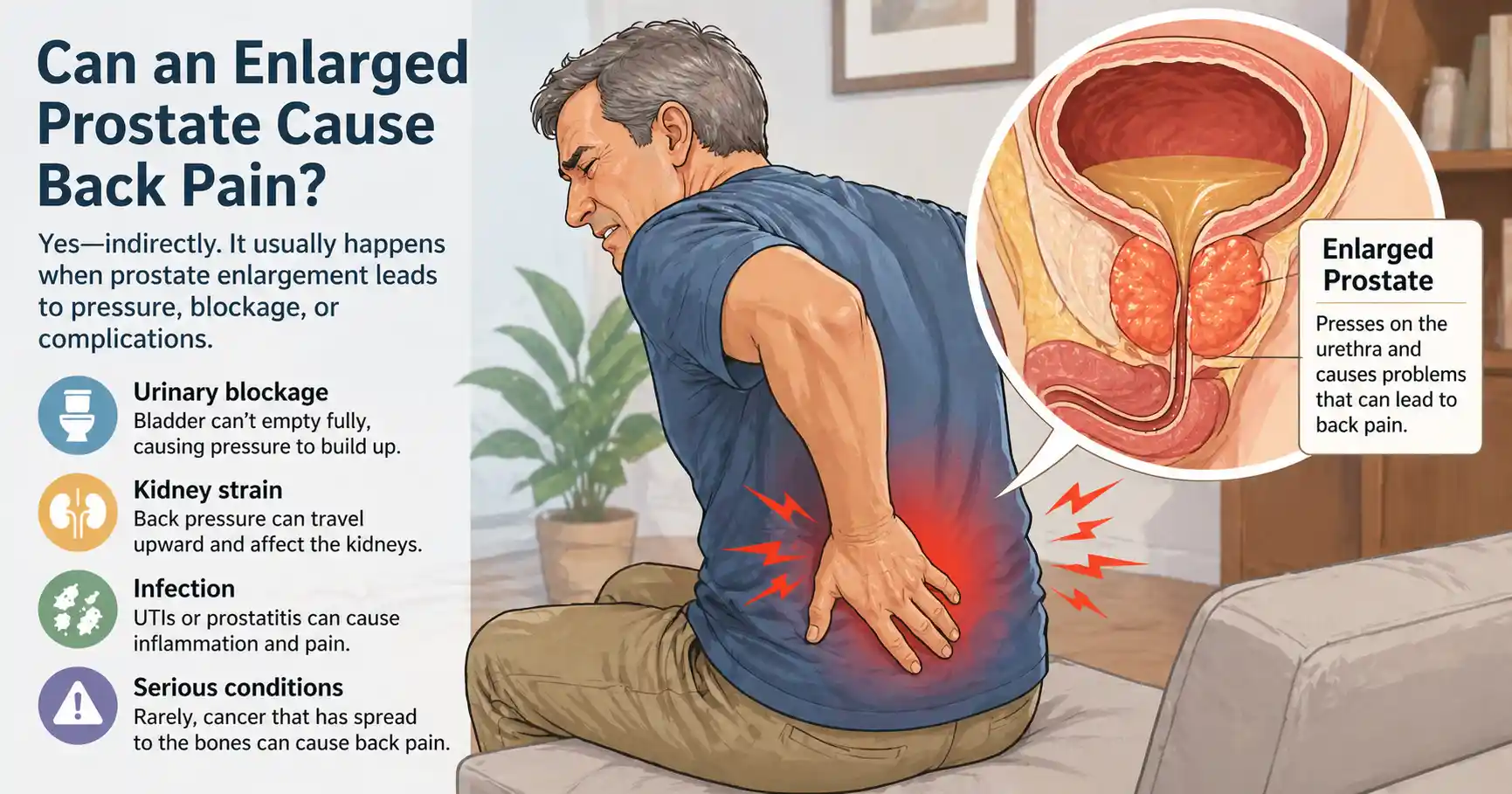
Yes—but indirectly. Back pain linked to prostate issues usually comes from secondary effects, not the enlargement itself.
Here’s the reality:
- Mild BPH → No back pain
- Moderate BPH → Urinary symptoms only
- Severe or complicated cases → Possible back pain
This is where most content gets sloppy. They say “yes” without explaining how.
The key triggers are:
- Urinary retention (bladder not emptying)
- Kidney pressure
- Infections (UTIs or prostatitis)
- Rarely, advanced prostate cancer
According to Mayo Clinic (2025), untreated urinary blockage can lead to bladder damage and kidney strain—both of which can refer pain to the lower back.
Quick Takeaway: Back pain from prostate issues is a downstream effect, not a direct symptom.
How Does an Enlarged Prostate Lead to Back Pain?
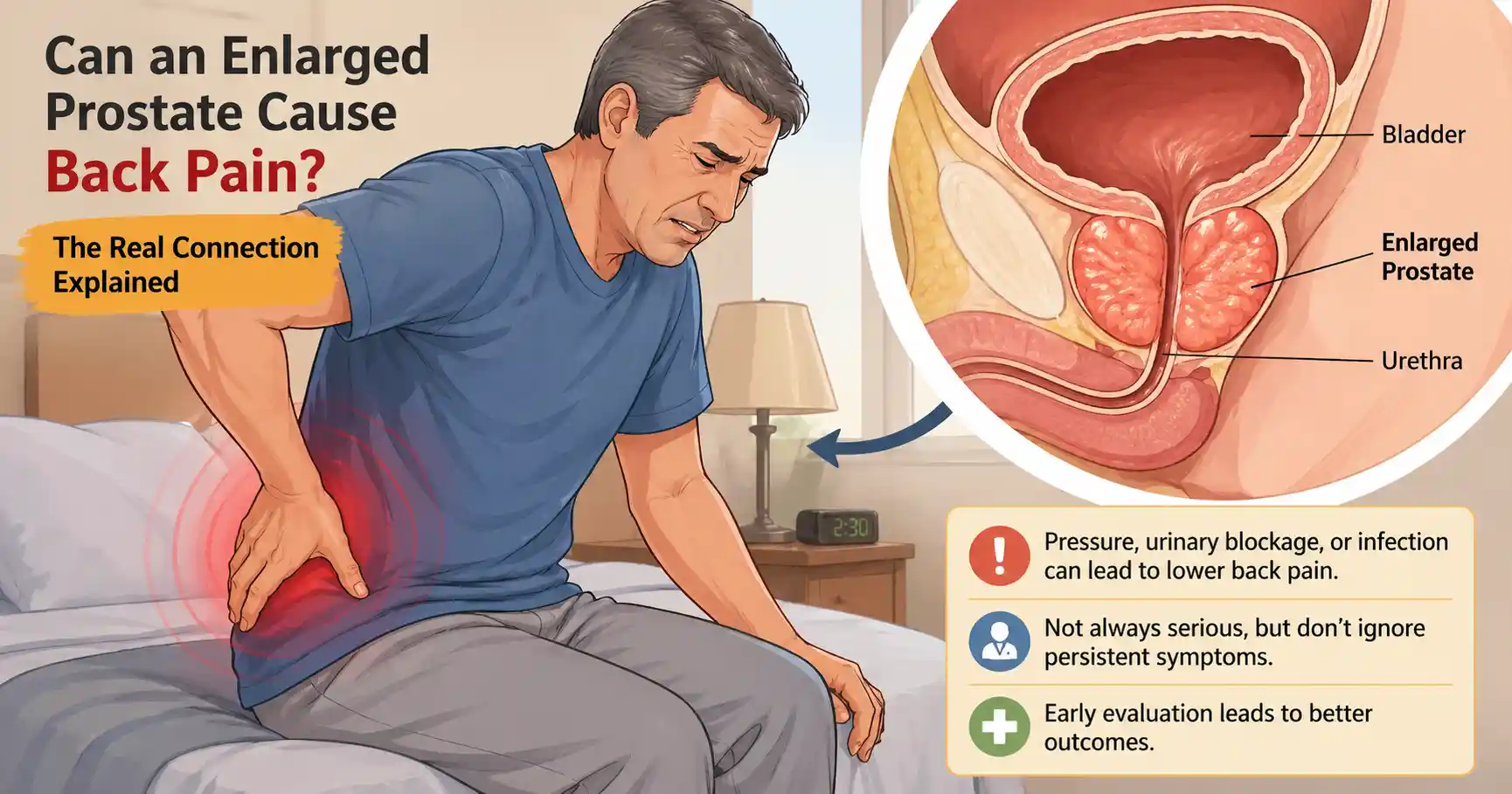
The actual chain looks like this:
- Prostate enlarges
- It blocks urine flow
- The bladder doesn’t empty fully
- Pressure builds in the bladder
- Pressure travels backward to the kidneys
- Kidneys become strained → back or flank pain
That pain is usually felt in:
- Lower back
- Sides (flank area)
- Sometimes radiating outward
There’s a second mechanism most people miss:
Nerve-related (referred pain)
The prostate shares nerve pathways with the pelvic floor and lower spine. Irritation in this region can create:
- Dull lower back pain
- Pain that doesn’t change with movement
This is why some men feel back pain even when scans look normal.
Quick Takeaway: Back pain happens due to pressure buildup or shared nerve pathways—not because the prostate itself hurts.




What Does Back Pain From Prostate Issues Feel Like?
Not all back pain is equal. This is where you need clarity.
| Type of Pain | Likely Cause | What It Feels Like |
|---|---|---|
| Dull, constant ache | Bladder or kidney pressure | Deep, internal discomfort |
| Sharp or radiating pain | Infection or inflammation | Spreads to the sides or groin |
| Pain with fever | Infection (UTI/prostatitis) | Severe, urgent |
| Pain with movement | Muscle issue (not prostate) | Changes with posture |
Here’s the mistake people make: They assume any lower back pain = prostate problem.
Wrong.
If your pain changes with:
- Sitting
- Bending
- Lifting
…it’s almost certainly musculoskeletal, not prostate-related.
Quick Takeaway: Prostate-related pain is usually deep, constant, and not movement-dependent.
What Are the Signs of an Enlarged Prostate in Men?
These symptoms of an enlarged prostate show up long before any back pain.
Common signs:
- Frequent urination (especially at night)
- Weak or interrupted urine stream
- Feeling like the bladder isn’t empty
- Urgency to urinate
- Dribbling after urination
Less obvious signs:
- Sleep disruption (from night urination)
- Mild pelvic pressure
- Occasional discomfort after urinating
According to current research (as of 2026), most men ignore early symptoms for years. That’s why complications show up later.
Quick Takeaway: Urinary changes are the first warning, not back pain.
What Causes an Enlarged Prostate?
The exact cause isn’t fully settled, but patterns are clear.
Main drivers:
- Age-related hormone changes
- Testosterone and DHT imbalance
- Genetic predisposition
- Lifestyle factors (sedentary behavior, obesity)
The hormone dihydrotestosterone (DHT) plays a major role. It builds up in prostate tissue and drives growth.
One thing worth saying: A lot of “natural cure” content online exaggerates this. There’s no magic fix. Management is realistic. Reversal is rare.
Quick Takeaway: Aging and hormones drive prostate growth more than anything else.
Can Prostatitis or Prostate Cancer Cause Back Pain?
Yes—and this is where things get serious.
Prostatitis (inflammation or infection)
- Causes pelvic pain, discomfort, and sometimes back pain
- Often worse at night
- May include burning urination or fever
Prostate cancer (advanced stages)
- Can spread to bones
- Causes persistent back pain that doesn’t go away
But here’s the reality check:
- Most back pain is NOT cancer
- Jumping to that conclusion is unnecessary and inaccurate
The difference is persistence and severity.
| Condition | Pain Pattern | Risk Level |
|---|---|---|
| BPH | Mild or none | Low |
| Prostatitis | Painful, sometimes acute | Moderate |
| Cancer (advanced) | Severe, persistent | High |
Quick Takeaway: Back pain is more likely from inflammation or pressure—not cancer—but persistent pain should be checked.
When Should You Worry About Back Pain and Prostate Symptoms?
You don’t need to panic. But you shouldn’t ignore everything either.
Seek medical help if you have:
- Back pain + fever
- Trouble urinating or complete blockage
- Blood in urine
- Pain that doesn’t improve after weeks
- Unexplained weight loss
Probably NOT prostate-related:
- Pain that improves with stretching
- Pain after long sitting or bad posture
- Pain linked to gym activity
Most men overestimate the risk. The majority of cases are still muscle-related.
Quick Takeaway: Red flags matter more than mild symptoms.
How Is It Diagnosed and Treated?
Doctors don’t guess. They check systematically.
Diagnosis may include:
- Physical exam (DRE)
- Urine tests
- PSA blood test
- Ultrasound or imaging
Treatment depends on severity:
| Severity Level | Treatment Approach | What It Includes |
|---|---|---|
| Mild cases | Conservative management | Lifestyle changes (reduce caffeine, limit evening fluids), regular monitoring |
| Moderate | Medication-based treatment | Alpha-blockers (relax prostate muscles), 5-alpha-reductase inhibitors (shrink prostate over time) |
| Severe | Procedural or surgical treatment | Minimally invasive procedures or surgery to reduce prostate size and relieve blockage |
The Mayo Clinic notes that treatment is based on symptom severity—not prostate size alone.
FAQs
What does back pain from prostate problems feel like?
It usually feels like a deep, dull ache in the lower back or sides. It doesn’t change much with movement or posture. If infection is involved, the pain may become sharper and come with fever or urinary symptoms.
Can prostate problems cause lower back pain without urinary symptoms?
It’s uncommon but possible. Nerve-related referred pain or early inflammation can sometimes cause discomfort before obvious urinary issues appear, but most cases still involve at least mild urinary changes.
Is back pain a sign of prostate cancer?
Back pain can be a sign of advanced prostate cancer, especially if it spreads to the bones. However, this is not common. Most back pain cases are caused by muscle or spine issues, not cancer.
Why is prostatitis worse at night?
Symptoms often feel worse at night because of reduced distraction, increased pelvic pressure from sitting or lying down, and changes in inflammation patterns. Sleep disruption also makes pain feel more intense.
Can treating an enlarged prostate relieve back pain?
Yes, if the back pain is caused by urinary blockage or pressure buildup. Treating the underlying issue can reduce strain on the bladder and kidneys, which may relieve associated discomfort.
Final Word
So, can an enlarged prostate cause back pain? Yes—but only when it leads to complications like pressure, infection, or nerve irritation. Most back pain still has nothing to do with the prostate. The real skill is knowing the difference. That’s where most people get it wrong.
Disclaimer: This content is for informational purposes only and is not medical advice. Consult a qualified healthcare professional before making any health decisions. Seek immediate care for severe symptoms like inability to urinate, blood in urine, or persistent pain.
Scientific References
- 1
