
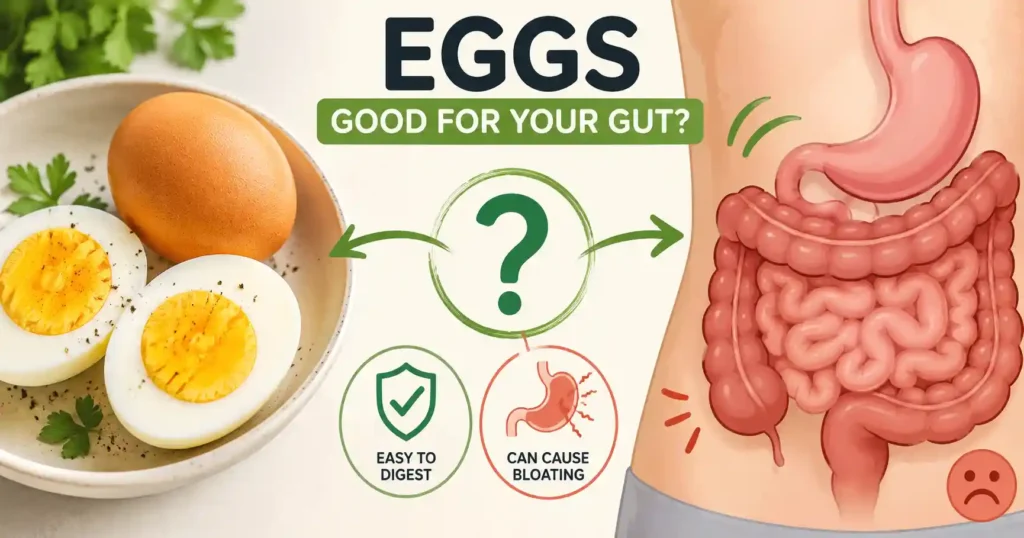
Eggs are generally good for gut health and digestion for most people because they are easy to absorb, high in protein, and low in fiber and irritants. Soft-cooked eggs are often gentler on the stomach than greasy or heavily processed breakfast foods. Some people, however, develop bloating, nausea, gas, or bowel changes after eating eggs due to sensitivities, fat digestion problems, or underlying digestive conditions.
A strange thing happens in gut-health content online. Foods are either labeled “superfoods” or “toxic.” Eggs get pushed into both categories depending on which article you read. The reality is less dramatic.
For many people, eggs are one of the easier animal proteins to digest. But if someone already struggles with IBS, sulfur sensitivity, gallbladder problems, reflux, or food intolerances, eggs can suddenly feel very different. That’s the part most articles skip.
As of 2026, current research suggests eggs themselves are not inherently harmful to the gut for most healthy adults. The bigger issue is how the individual digestive system responds to them.
- Eggs are generally easy to digest for most healthy adults.
- Soft-cooked eggs are often gentler than greasy fried breakfasts.
- Eggs themselves are not proven “gut-healing” foods.
- Bloating after eggs may relate to sulfur sensitivity, fat digestion, or IBS.
- Egg preparation matters more than many people realize.
- Persistent digestive symptoms should not be blamed on one food automatically.
What Makes Eggs Easy to Digest for Many People?
Eggs digest relatively easily because their protein structure becomes highly absorbable when cooked properly. They also contain almost no fiber, which reduces digestive workload compared to many heavy breakfast foods.

Cooked eggs provide:
- High-quality protein
- Choline
- Vitamin B12
- Selenium
- Healthy fats in the yolk
Research published in the Journal of Nutrition found cooked egg protein has a very high bioavailability, meaning the body can absorb and use it efficiently. That matters because poorly digested protein tends to increase bloating and gut fermentation.
Soft-boiled or poached eggs are usually easier on digestion than:
- deep-fried eggs
- buttery scrambled eggs
- fast-food breakfast sandwiches
That difference is not about the egg itself. It is usually about the added fat.
A lot of people blame eggs when the actual problem is:
- excess butter
- processed meat
- greasy oils
- large breakfast portions
That distinction matters more than wellness blogs admit.
Why eggs feel “light” for some people
Eggs move through the stomach fairly efficiently compared with very fibrous or greasy meals. Many people recovering from stomach illness tolerate plain eggs better than:
- sausage
- bacon
- pastries
- fried potatoes
Hospitals and bland-diet recommendations often include eggs for this reason.
Are Eggs Hard to Digest for Some People?
Yes. Eggs can cause digestive discomfort in certain people, especially when another digestive issue already exists.

The common internet advice is:
“If eggs upset your stomach, you must be allergic.”
Not necessarily. True egg allergy exists, but many adults experience digestive reactions without having a classic allergy.
Possible reasons include:
| Possible Trigger | What May Happen |
|---|---|
| Egg intolerance | Bloating, gas, stomach discomfort |
| Sulfur sensitivity | Rotten-egg smelling gas |
| Fat digestion problems | Nausea or heaviness |
| IBS sensitivity | Cramping or bowel urgency |
| Histamine response | Digestive irritation in sensitive people |
| Reflux/GERD | Symptoms worsen after greasy egg meals |
Egg yolks contain fat. For someone with poor gallbladder function or bile flow issues, that fat can feel heavy or nauseating.
This is where online content becomes sloppy. Articles often say:
“Eggs are easy to digest.”
That’s true for many people. But digestion is not just about the food itself. It is also about:
- stomach acid
- enzyme production
- bile flow
- gut sensitivity
- meal size
A healthy digestive system and a sensitive digestive system can react very differently to the same egg breakfast.1The Impact of Egg Consumption on Gastrointestinal Health: A Systematic Literature Review and Meta-Analysis, PubMed Central.
Can Eggs Cause Bowel Problems?
Eggs can contribute to bowel changes in some people, although they are not a common cause of serious digestive disease.
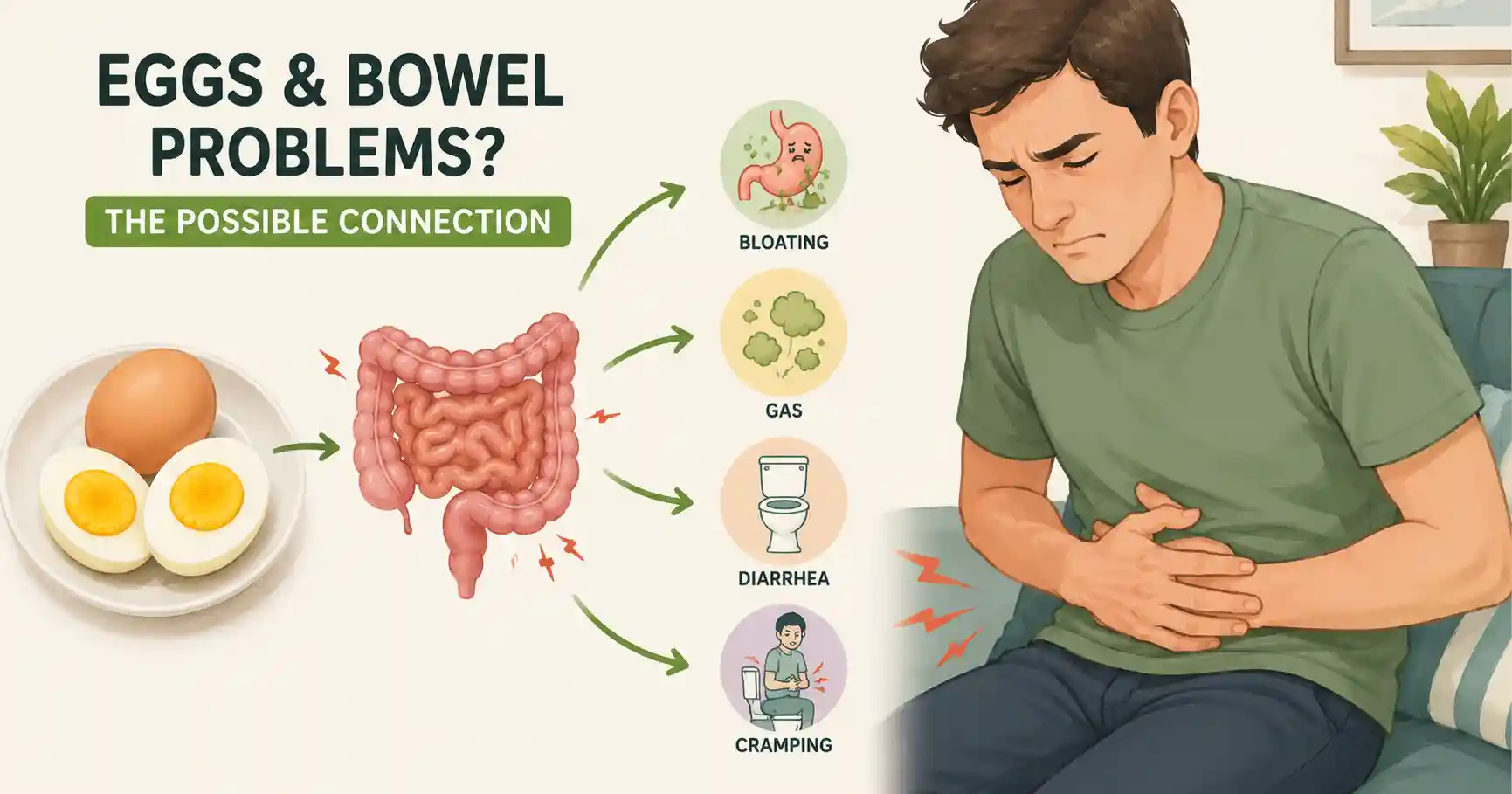
Possible reactions include:
- diarrhea
- constipation
- gas
- bloating
- stomach cramps
- urgency after meals
The mechanism varies.
Why do some people get diarrhea after eggs
This is often related to:
- Fat intolerance
- Rapid bile release
- Food sensitivity
- IBS triggers
- Greasy preparation methods
The egg itself is not always the issue. A buttery diner omelet with processed meat and cheese hits digestion differently than a plain boiled egg.
Why do some people get constipated?
Eggs contain almost no fiber. Eating large amounts of eggs while eating very little fruit, vegetables, or water can contribute to slower bowel movements.
That does not mean eggs “cause constipation” universally. It usually reflects the entire diet pattern.
Sulfur-smelling gas after eggs
This is extremely common.
Eggs contain sulfur-containing amino acids. Gut bacteria break these compounds down during digestion. Some people produce stronger-smelling gas because of their microbiome composition or slower digestion.
That symptom alone does not automatically mean something is wrong.





Are Eggs Good for Gut and Digestive Health Long Term?
Eggs can fit into a gut-friendly diet for many people because they provide protein and nutrients without the irritation that highly processed foods often cause.
But there is a problem with how “gut health” gets discussed online. A lot of articles casually imply that eggs directly improve the microbiome. The evidence is not that clear.
Current studies are mixed. Some research in Nutrients and Frontiers in Nutrition2The Impact of Egg Consumption on Gastrointestinal Health: A Systematic Literature Review and Meta-Analysis, Nutrients. suggests eggs may influence gut bacteria indirectly through:
- choline metabolism
- protein intake
- dietary patterns
But eggs are not a probiotic food. They do not suddenly “repair the gut.” That language gets exaggerated fast online.
What eggs can do:
- Support protein intake during recovery
- Replace ultra-processed breakfasts
- Provide nutrients important for intestinal tissue maintenance
What eggs probably do not do:
- Heal leaky gut directly
- Dramatically transform gut bacteria
- Eliminate bloating by themselves
Those are very different claims.
Are Eggs Good for Debloating?
Eggs may help reduce bloating for some people because they are low in carbohydrates and fermentable fibers that often trigger gas.
This is why some people with IBS tolerate eggs better than:
- beans
- onions
- certain dairy products
- high-FODMAP foods
But there is another side to this. For people sensitive to sulfur compounds or high-fat meals, eggs can increase bloating instead. This is why internet advice becomes frustratingly contradictory. Both experiences are real.
Eggs may help with bloating when:
- The diet previously contained heavily processed foods
- Carbohydrate fermentation is the issue
- Meals are simple and lower-fat
- IBS triggers are primarily fiber/FODMAP-related
Eggs may worsen bloating when:
- Fat digestion is weak
- Sulfur sensitivity exists
- Large, greasy breakfasts are common
- The person already experiences reflux or nausea
A lot of readers searching “are eggs good for debloating” are actually trying to identify food triggers. That requires pattern tracking, not generic “healthy food” lists.
Which Egg Preparation Is Easiest to Digest?
Cooking method changes digestion more than most people realize.
| Egg Preparation | Digestive Impact |
|---|---|
| Soft-boiled | Usually easiest |
| Poached | Gentle on stomach |
| Hard-boiled | Easy for many people |
| Plain scrambled | Moderate |
| Fried in butter/oil | Heavier digestion |
| Fast-food egg sandwiches | Most likely to trigger symptoms |
Research from the American Egg Board and protein digestibility studies show cooked eggs digest better than raw eggs because heat denatures proteins, making them easier for enzymes to break down.
Raw eggs are actually harder to digest than cooked eggs. That surprises people because “raw food” trends often imply the opposite.
Who May Need to Be Careful With Eggs?
Some groups may need to monitor egg intake more carefully if symptoms appear consistently.
These include people with:
- IBS
- gallbladder disease
- egg allergy
- sulfur sensitivity
- chronic reflux
- post-meal nausea
- unexplained digestive symptoms
The important part is consistency. One bad reaction after a greasy brunch means very little. Repeated symptoms after simple egg meals are more meaningful. A food journal usually reveals patterns faster than random elimination diets.
Frequently Asked Questions
Are eggs easy to digest when you have an upset stomach?
Plain cooked eggs are often easier to digest than greasy or highly processed foods. Many people tolerate boiled or poached eggs during mild stomach upset because they provide protein without much fiber or spice. Fried eggs cooked in a lot of oil may feel heavier and worsen nausea in sensitive individuals.
Can eggs cause digestive issues even without an allergy?
Yes. Some people experience bloating, gas, diarrhea, or stomach discomfort after eggs without having a true allergy. Fat intolerance, IBS, sulfur sensitivity, or reflux may contribute to these reactions. Repeated symptoms after simple egg meals are more useful clues than isolated reactions after heavy breakfasts.
Are eggs good for gut health or just easy to digest?
Those are not the same thing. Eggs are usually easy to digest for many people, but current research does not clearly show that they directly improve the gut microbiome. Their biggest advantage is often replacing heavily processed breakfast foods with a simpler protein source.
Will eggs help with bloating?
Eggs may help some people feel less bloated because they are low in fermentable carbohydrates. Others feel more bloated after eggs due to sulfur compounds, fat digestion problems, or sensitivity to egg proteins. Individual response matters more than broad internet claims.
Is a boiled egg better for digestion than a fried egg?
Usually, yes. Boiled or poached eggs tend to be easier on digestion because they contain less added fat. Fried eggs cooked in butter or oil may slow stomach emptying and trigger nausea, reflux, or heaviness in sensitive individuals.
Final Thoughts
For most people, eggs are a digestible, nutrient-dense food that fits well into a balanced diet. The real issue is not whether eggs are universally “good” or “bad” for gut health. It is whether your digestive system tolerates them comfortably and consistently.
A lot of online content tries to turn eggs into either a miracle gut food or a digestive villain. Neither position matches reality very well. If you tolerate eggs well, they are usually a reasonable choice for gut and digestive health. If they repeatedly trigger symptoms, the smarter move is figuring out why instead of forcing yourself to keep eating them.
Scientific References
- 1The Impact of Egg Consumption on Gastrointestinal Health: A Systematic Literature Review and Meta-Analysis, PubMed Central. ↩︎
- 2
