

Best mushroom coffee for gut health usually means a mushroom coffee blend that is lower in acidity, moderate in caffeine, and made with functional mushroom extracts that may support digestion or reduce stomach irritation.
Many people switch to mushroom coffee because regular coffee causes bloating, reflux, jitters, or digestive discomfort. The biggest benefit is often not the mushrooms themselves, but the combination of lower caffeine, gentler blends, and fewer irritating additives.
People searching this topic are usually trying to solve one of three problems: stomach irritation from coffee, energy crashes, or digestive discomfort after caffeine. Those are related issues, but they are not identical. That distinction gets lost in most wellness content.
What Is Mushroom Coffee and Why Do People Use It for Gut Health?
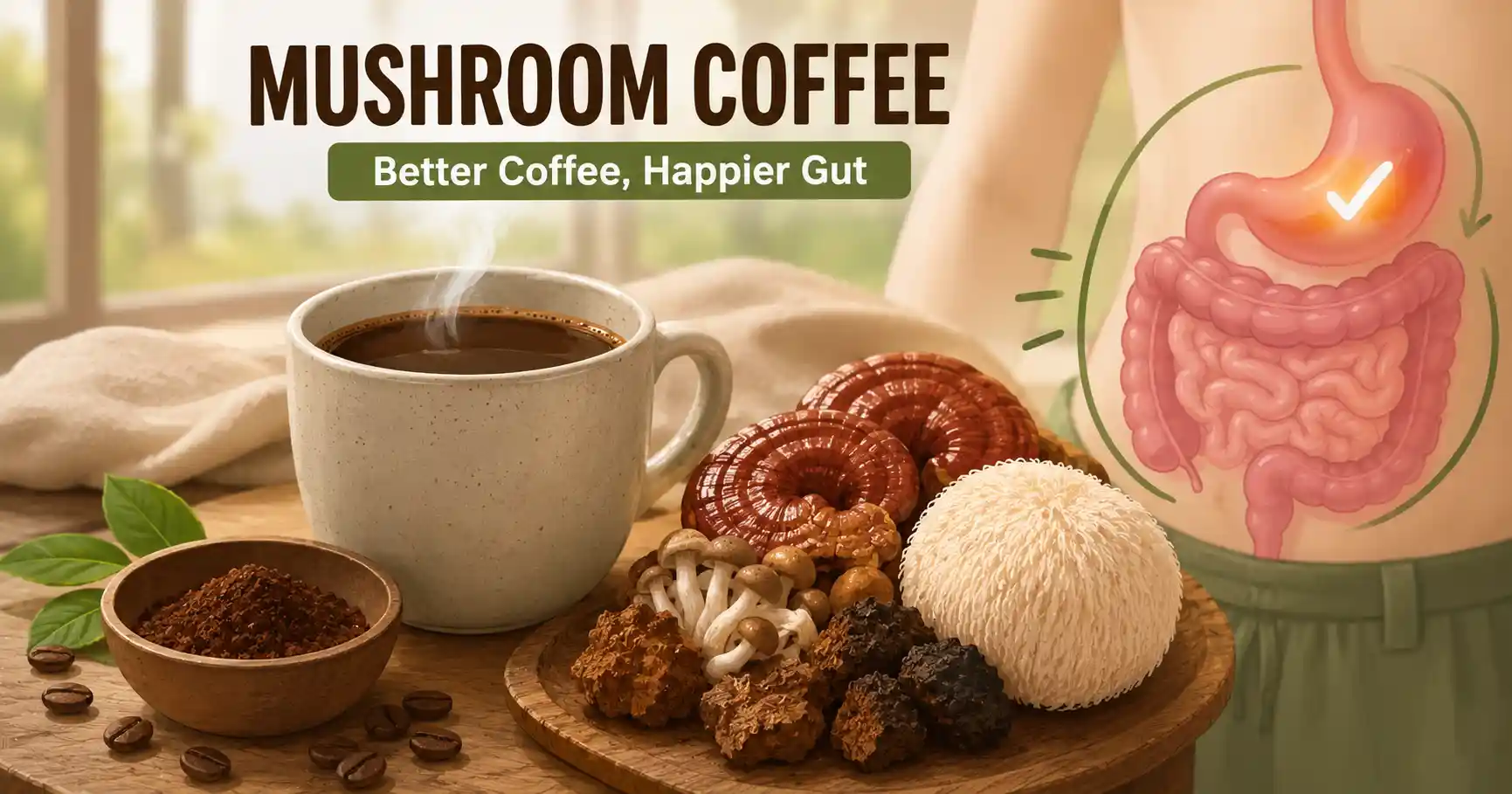
Mushroom coffee is a coffee blend mixed with powdered medicinal mushrooms or mushroom extracts. Most products use mushrooms like lion’s mane, chaga, reishi, or cordyceps.
Despite the name, it usually still contains real coffee.
Most blends reduce the coffee amount by around 30–60%, which lowers caffeine and acidity. That alone may explain why some people tolerate it better.
This part matters because many articles pretend that the mushrooms are doing all the work. In reality, someone switching from:
- 300 mg caffeine dark roast coffee, to
- 80 mg mushroom blend
…may naturally feel less digestive irritation regardless of the mushrooms.
That does not make mushroom coffee fake. It just means the mechanism is more practical than magical.
Some mushroom blends also contain:
- prebiotic fibers
- beta-glucans
- adaptogenic compounds
- added probiotics
Research published in Nutrients (2021) and Frontiers in Nutrition (2022) suggests certain mushroom compounds may interact with immune and gut pathways, though most evidence comes from isolated mushroom studies rather than commercial coffee blends.
Quick Takeaway: Mushroom coffee may feel gentler on digestion, mostly because of lower caffeine and acidity, while some mushroom compounds may offer additional digestive support.
Is Mushroom Coffee Actually Better for Digestion Than Regular Coffee?
For some people, yes.
For others, probably not enough to matter.
The answer depends on why regular coffee bothers your stomach.
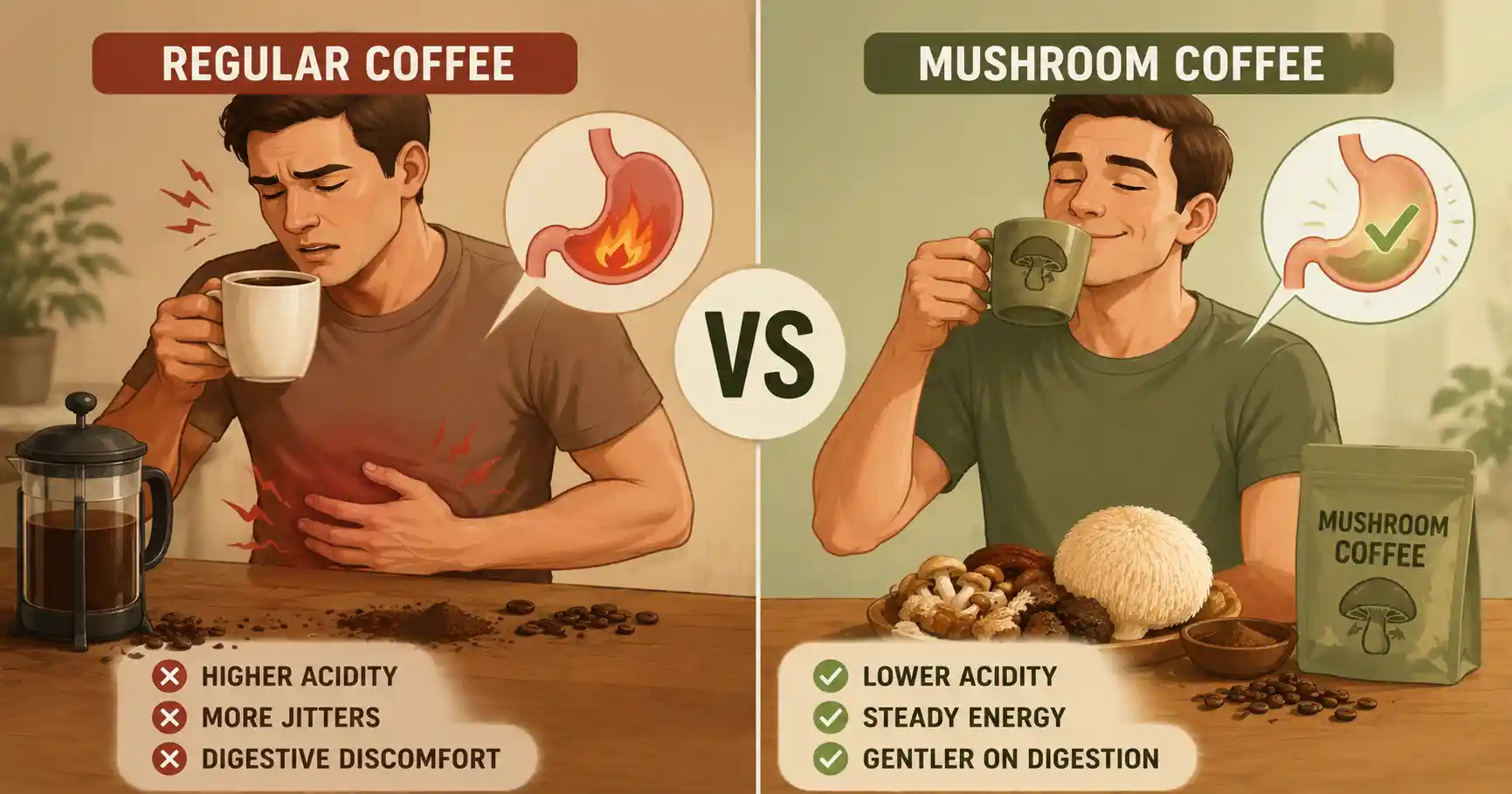
Mushroom coffee may help if you experience:
- Acid reflux after coffee
- Caffeine jitters
- Mild stomach irritation
- Loose stools from high caffeine intake
- Bloating from sweetened creamers
- Anxiety-related digestive symptoms
It may not help much if you have:
- IBS triggered by mushrooms
- Gastritis
- Severe reflux disease
- FODMAP sensitivity
- Sensitivity to additives or gums
This is where most articles oversimplify the topic badly. “Gut health” is not one thing. Someone trying to reduce reflux needs a different solution than someone trying to support microbiome diversity.
Coffee itself is actually linked with some positive gut microbiome effects in research. A 2023 review in the journal Foods found coffee polyphenols may positively influence gut bacteria in some people. So regular coffee is not automatically “bad for the gut.”1Effects of Coffee on Gut Microbiota and Bowel Functions in Health and Diseases: A Literature Review, PubMed Central.
The problem is tolerance. Some people tolerate coffee extremely well. Others do not.
Mushroom coffee often works best for people who:
- like coffee
- react poorly to high caffeine
- still want a morning routine
That’s a narrower and more realistic claim than: “mushroom coffee heals your gut.” Because current evidence does not support that level of certainty.
What Ingredients in Mushroom Coffee May Affect Gut Health?
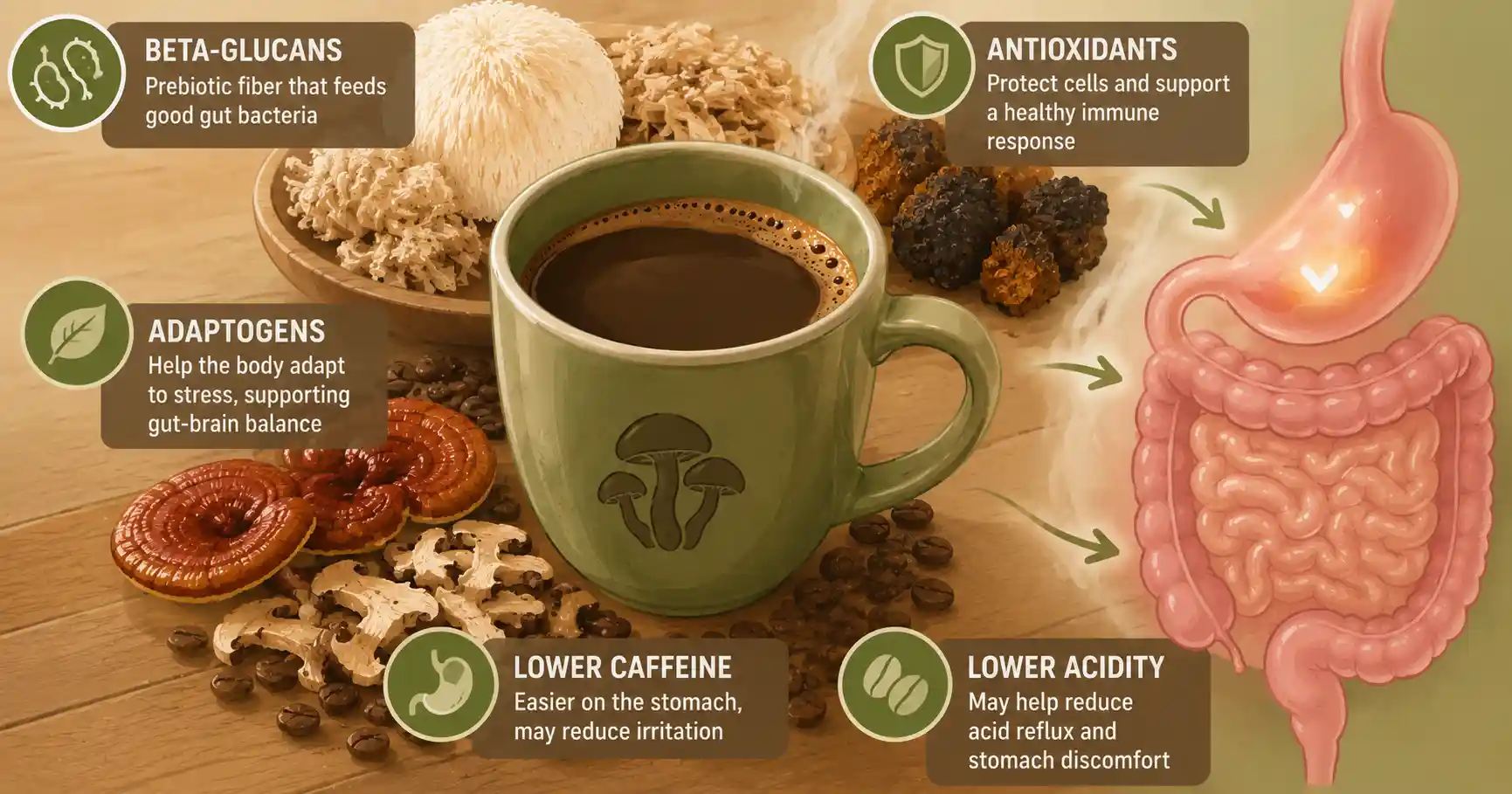
Beta-glucans
These are natural fibers found in mushrooms.
Some beta-glucans may act like prebiotics, meaning they help feed beneficial gut bacteria. Research in the Journal of Fungi (2021) suggests beta-glucans may influence immune signaling and gut interactions.
- The catch: many commercial blends contain very small amounts.
A product saying “contains lion’s mane” tells you almost nothing unless dosage and extraction quality are clear.
Lower caffeine
This is probably the most immediate digestive factor.
High caffeine intake can:
- increase stomach acid
- speed bowel movements
- worsen anxiety-related digestion
- trigger reflux in sensitive people
Reducing caffeine often improves digestive comfort faster than adding mushrooms. That reality gets buried under marketing.
Acidity levels
Some mushroom coffees use low-acid beans or gentler roasting methods.
Lower-acid coffee may help people with:
- reflux
- mild gastritis
- stomach burning
But “low acid” does not mean acid-free. That misunderstanding causes a lot of disappointment.
Adaptogenic compounds
Reishi and cordyceps are often marketed as adaptogens.
The theory is that lowering stress response may indirectly help digestion through the gut-brain connection. There is some emerging evidence around stress, inflammation, and digestive signaling, but the human evidence is still limited.
This is one of those areas where wellness marketing runs way ahead of research.





Which Mushroom Coffee Ingredients Matter Most?
Not all mushroom ingredients do the same thing.
| Ingredient | Common Claim | What Research Actually Suggests |
|---|---|---|
| Lion’s Mane | Brain + gut support | Early evidence for nerve and gut interactions, but human data remains limited |
| Reishi | Stress support | May affect immune pathways and stress response |
| Chaga | Antioxidants | Rich in antioxidant compounds, but evidence in humans is still developing |
| Cordyceps | Energy support | More linked to stamina and fatigue than digestion |
| Turkey Tail | Microbiome support | Contains polysaccharides studied for gut and immune effects |
Some brands use “fairy dust” amounts purely for label appeal. If a proprietary blend hides exact ingredient amounts, that’s usually not a great sign.
Quick Takeaway: The quality and dosage of mushroom extracts matter far more than the marketing label on the front of the package.
What Makes Some Mushroom Coffees Easier on the Stomach?
The mushrooms are only part of the equation.
A mushroom coffee can still upset your stomach if it contains:
- artificial sweeteners
- gums
- cheap instant fillers
- high caffeine
- added sugar alcohols
This is why some people try mushroom coffee once, feel bloated, and assume mushrooms are the problem. Sometimes the additives are the real issue.
Features that may make a blend gentler:
- lower caffeine content
- organic coffee beans
- no sugar alcohols
- simple ingredient list
- dual-extracted mushroom extracts
- low-acid roasting
- minimal gums or emulsifiers
Features that may worsen digestion:
- excessive chicory root
- heavy sweeteners
- hidden dairy powders
- artificial creamers
- very high adaptogen blends
There’s another issue people rarely discuss.
Some mushroom coffees contain large amounts of chicory root because it is cheap and creates a “functional” image. Chicory contains inulin fiber, which helps some people but can trigger bloating in others, especially IBS sufferers.
That nuance is missing from most ranking pages.
What Is the Best Mushroom Coffee for Gut Health?
The best mushroom coffee for gut health is usually the one that:
- lowers digestive irritation
- reduces caffeine overload
- avoids unnecessary additives
- uses transparent ingredient labeling
That sounds less exciting than wellness marketing. It’s still true.
Good signs to look for
- Exact mushroom dosage listed
- Third-party testing
- Moderate caffeine levels
- No proprietary blends
- Minimal additives
- Low-acid claims with actual sourcing details
Red flags
- “Detox” language
- Unrealistic health promises
- Huge proprietary blends
- Extremely long ingredient lists
- No extraction method mentioned
A simpler product is often better here.
Many brands try to combine:
- probiotics
- collagen
- MCT oil
- Adaptogens
- Greens powders
- Sweeteners
…into one product. That usually creates a digestive gamble rather than a gut-friendly coffee.
Who Should Avoid Mushroom Coffee?
Mushroom coffee is not ideal for everyone.
You should be cautious if you have:
- mushroom allergies
- severe IBS
- kidney issues
- autoimmune conditions
- active gastritis
- Serious reflux disease
Some medicinal mushrooms may also interact with:
- blood thinners
- diabetes medications
- immune-related drugs
This area gets skipped in many affiliate articles because it complicates the sales pitch. If a product claims it works for literally everyone, that’s usually a sign the article cares more about conversions than accuracy.
Quick Takeaway: Mushroom coffee may help some people tolerate coffee better, but it is not automatically safer or healthier for every digestive condition.
What Most Mushroom Coffee Marketing Gets Wrong
Most marketing treats mushroom coffee like a scientifically settled health upgrade. It is not.
As of 2026:
- Evidence for medicinal mushrooms is promising
- Evidence for mushroom coffee products specifically is still limited
Those are different things.
A lot of wellness content quietly combines:
- isolated mushroom research
with - commercial coffee products
That leap is bigger than it sounds.
The strongest evidence currently supports:
- Reduced caffeine intake
- lower acidity
- moderation
- simpler ingredients
The mushrooms themselves may add benefits. The certainty level is just not as strong as the advertising suggests.
Honestly, after reading dozens of ranking pages on this topic, the weirdest pattern is how few of them discuss caffeine reduction. That is probably the single biggest reason many people feel better after switching.
Yet it gets overshadowed by buzzwords because “less caffeine” is less marketable than “ancient functional adaptogens.”
FAQs
Is mushroom coffee good for your gut?
Mushroom coffee may feel gentler on digestion because it usually contains less caffeine and lower acidity than regular coffee. Some mushroom compounds may also support gut-related pathways.
What is the healthiest mushroom coffee?
The healthiest mushroom coffee usually has moderate caffeine, minimal additives, transparent ingredient labels, and properly extracted mushroom ingredients.
Can mushroom coffee help with bloating?
Mushroom coffee may help if bloating is triggered by acidic or high-caffeine coffee. Some blends can worsen bloating if they contain chicory root, gums, or sugar alcohols.
Is mushroom coffee less acidic than regular coffee?
Many mushroom coffee blends are lower in acidity than regular coffee, which may help reduce mild stomach irritation or reflux symptoms in some people.
Does mushroom coffee improve the gut microbiome?
Some mushroom compounds contain beta-glucans and fibers that may support gut bacteria, but direct evidence on mushroom coffee products is still limited.
Final Thoughts
The best mushroom coffee for gut health is usually not the one with the most aggressive marketing. It is the one your stomach actually tolerates well, with fewer additives, moderate caffeine, and realistic ingredient transparency.
For many people, the biggest benefit is simply drinking a gentler coffee blend with less caffeine overload. The mushrooms may add something useful on top of that. The current research just does not support treating mushroom coffee like a miracle digestive fix.
Scientific References
- 1Effects of Coffee on Gut Microbiota and Bowel Functions in Health and Diseases: A Literature Review, PubMed Central. ↩︎
