
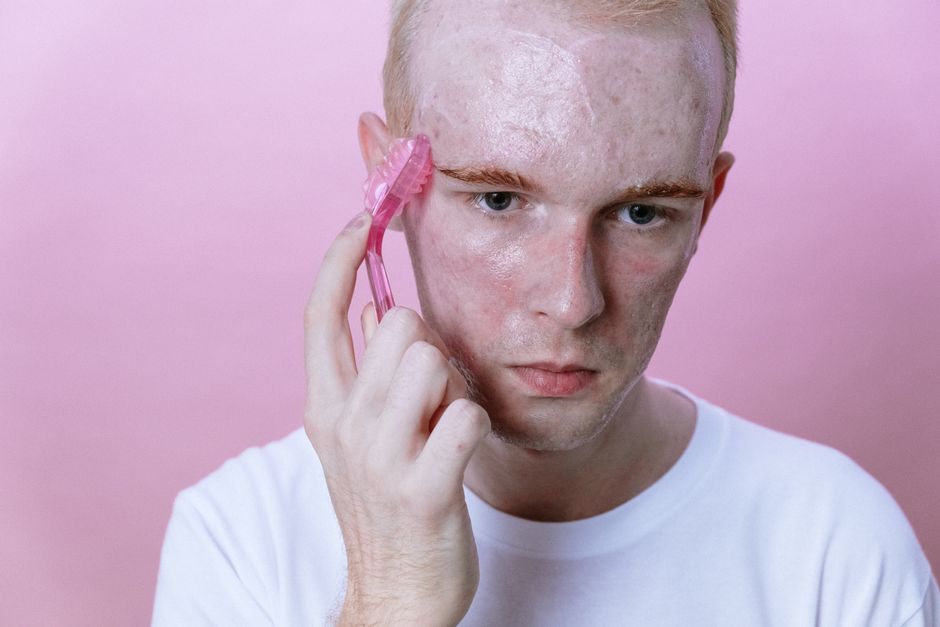
Smoking does not cause acne in the way most people mean it. It does not work like the bacteria behind a breakout or the hormones behind teenage pimples. But smoking clearly changes the skin, and those changes show up in ways that can look like acne or make existing acne worse. The honest answer sits in that gap: cigarettes are not a direct cause of ordinary acne, but they are linked to several skin conditions that mimic it, and the evidence on whether they worsen true acne is mixed.
What Actually Causes Acne?
Acne is a disorder of the pilosebaceous unit — the hair follicle and its attached oil gland. Four things have to come together for a pimple to form.
- Oil production rises, usually driven by hormones
- Dead skin cells shed abnormally and plug the follicle opening
- The bacterium Cutibacterium acnes multiplies inside the blocked follicle
- Inflammation follows, which is what produces the redness and tenderness
Hormones, genetics, and inflammation are the main drivers. Diet and stress play smaller, debated roles. Smoking is not part of the standard model of acne formation taught in dermatology, and it is not listed among the established causes.
That matters, because it means a smoker with acne should not assume cigarettes are the root problem. The root problem is usually hormonal or genetic, and quitting smoking alone will not clear it.
Will Smoking Cause Acne on Its Own?
No. There is no established evidence that smoking creates acne in someone whose skin would otherwise be clear. The relationship is more complicated than that.
Some research has actually pointed the other way. Several studies have found lower rates of acne in smokers than in non-smokers, which sounds like smoking protects the skin. That conclusion does not hold up well. Smoking constricts blood vessels and reduces blood flow to the skin, which can dampen the visible redness and swelling of inflammation. A pimple may look less angry without actually being less of a pimple. This is a cosmetic effect, not a treatment.
Other studies find the opposite — that smokers have more acne, particularly on the face and especially in adult women. The evidence is genuinely mixed. When studies disagree this much, the honest position is that the link is real but not consistent, and no one has shown that smoking is a cause of acne rather than a factor that sometimes travels alongside it.
What Is Smoker’s Acne?
Smoker’s acne is a term used for a specific pattern of breakouts seen in some smokers. It is not a formal diagnosis in the way acne vulgaris is. It describes blackheads and blocked pores that cluster around the mouth, chin, and jawline, sometimes with large, deep cysts.
The proposed mechanism is mechanical and chemical. Heat from the cigarette, repeated pursing of the lips, and the tar and other combustion products in smoke may all irritate the skin around the mouth. The follicles there become blocked, and the result resembles acne.
This is a reasonable explanation, and it fits what clinicians observe. But it has not been confirmed by large controlled studies, and not every smoker develops it. Treat the term as a description of a pattern, not a proven disease with a proven cause.


Can Smoking Make Existing Acne Worse?
Possibly, and the evidence leans that way for adults more than teenagers. Some studies indicate that smokers with acne tend to have more inflammatory lesions and more scarring than non-smokers with similar acne. The effect is not large or universal, and results vary between studies.
There are plausible reasons smoking could worsen acne:
- Smoking increases oxidative stress, which can drive inflammation
- It alters sebum composition, potentially making oil more likely to clog pores
- It affects hormone levels, including androgens that influence oil production
- It impairs wound healing, which matters for how acne marks and scars resolve
Each of these is biologically plausible. Plausibility is not proof. The clinical studies are inconsistent, and no trial has shown that smoking directly increases acne severity in a controlled way. The fair statement is that smoking is associated with worse acne outcomes in some studies, not that it reliably worsens acne.
Does Quitting Smoking Clear Up Acne?
Not necessarily, and this is where expectations often go wrong. Quitting smoking improves many aspects of health, and it is one of the most effective things a person can do for long-term wellbeing. But there is no strong evidence that stopping smoking clears acne.
Some people report skin improvements after quitting. Others report temporary breakouts during withdrawal. Both happen, and neither is well studied. Hormonal acne in adult women, in particular, tends to persist regardless of smoking status because its drivers are hormonal.
If you have persistent acne, the effective treatments are the established ones — topical retinoids, benzoyl peroxide, certain antibiotics, and for some people hormonal therapies. A dermatologist can match treatment to the type and severity of your acne. Smoking cessation is worth doing for many reasons, but it is not an acne treatment.
How Can You Tell Acne From Other Smoking-Related Skin Problems?
Several skin conditions linked to smoking can be mistaken for acne. Getting the distinction right matters, because the treatments differ.
| Condition | Typical appearance | Relation to smoking |
|---|---|---|
| Acne vulgaris | Blackheads, whiteheads, red bumps, sometimes deep cysts | Not caused by smoking; may be worsened in some smokers |
| Smoker’s acne pattern | Blackheads and cysts around mouth and chin | Described in smokers; not a formal diagnosis |
| Nicotine-related breakouts | Small bumps, sometimes on hands or face | Linked to nicotine exposure; uncommon |
| Rosacea | Persistent redness, flushing, visible vessels, bumps | Smoking is among the factors associated with it |
| Poor wound healing | Slow-healing blemishes, more noticeable marks | Smoking impairs healing; well established |
The overlap is real. A red bump on the face can be acne, rosacea, or irritation, and only a clinician can tell them apart reliably. If breakouts are persistent, painful, or leaving marks, that is a reason to see a dermatologist rather than guess.
What Does the Evidence Actually Show?
The strongest honest summary is this: smoking is not an established cause of acne, but it is associated with skin changes that can resemble or accompany acne, and in some studies with more severe acne and scarring in adults.
The research has real limits. Studies rely on people reporting their own smoking and acne, which is imprecise. They cannot easily separate smoking from other factors like diet, stress, and hormones. And they disagree with each other often enough that no single conclusion holds.
What is not in doubt is the broader picture. Smoking is a leading cause of preventable disease, and it damages the skin in ways beyond acne — accelerating wrinkles, delaying healing, and raising the risk of several skin conditions. Those effects are well documented. The acne question is narrower and less settled.
If you smoke and have acne, treat the acne with proven methods and treat the smoking as its own separate issue. Neither one cancels out the other, and both are worth addressing.
Frequently Asked Questions
Does smoking cause acne?
No. Smoking is not an established cause of ordinary acne, which is driven mainly by hormones, genetics, and inflammation. Smoking is linked to some skin changes that resemble acne, but the evidence does not show it creates acne on its own.
What is smoker’s acne?
It is a description of blackheads and deep bumps clustered around the mouth and chin in some smokers, thought to result from heat, friction, and smoke irritation. It is not a formal medical diagnosis and not every smoker develops it.
Will quitting smoking clear up my acne?
Not reliably. Some people notice skin improvements after quitting, but there is no strong evidence that stopping smoking clears acne. Proven acne treatments work independently of smoking status.
Can smoking make acne worse?
Some studies suggest smokers with acne have more inflammatory lesions and scarring, especially adults, but results vary and the effect is not consistent. Smoking is associated with worse outcomes in some research, not proven to reliably worsen acne.
