
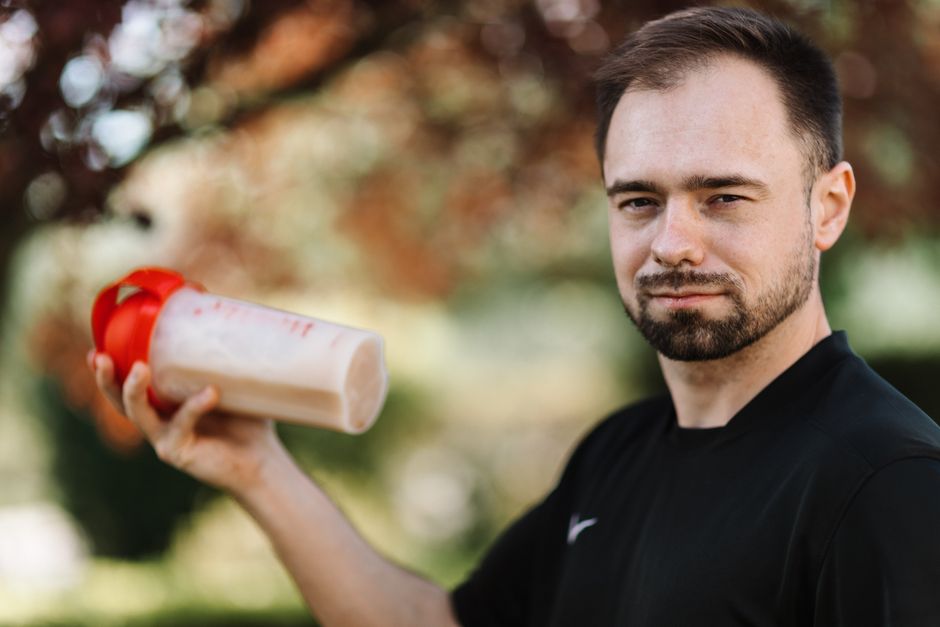
Protein shakes do not cause weight gain on their own. Weight gain happens when you consistently take in more calories than your body burns, and a protein shake is simply a source of calories like any other food. Whether it adds to your daily total or replaces something else is what decides the outcome.
That said, protein shakes are easy to overdo. They are liquid, they go down fast, and many people drink them on top of their normal meals rather than instead of them. Do that often enough and the extra calories add up. Used with some awareness, a protein shake is just a convenient way to get protein. Used carelessly, it can quietly push your daily intake higher than you realize.
How Does a Protein Shake Actually Affect Your Weight?
Body weight is governed mainly by energy balance. Take in more calories than you use, and you store the surplus. Take in fewer, and you draw on stored energy. A protein shake enters that equation as a bundle of calories, and its effect depends entirely on where it lands in your day.
Protein itself has a few properties worth knowing. It is more filling per calorie than fat or carbohydrate for many people, and digesting it burns a small amount of energy. Protein also helps preserve muscle. None of that makes a protein shake magically neutral. A scoop of protein powder typically carries roughly 100 to 120 calories before you add anything to it. Blend it with milk, a banana, peanut butter, and honey and you can easily pass 400 to 500 calories in a single drink. That is a meal, not a snack.
So the honest answer is that a protein shake is neither fattening nor slimming by nature. It is a calorie delivery system. The context decides what it does.
Will Protein Shakes Make You Gain Weight If You Drink Them After Workouts?
Drinking a shake after exercise does not automatically add weight. What matters is your total intake across the whole day, not the timing of one drink.
Post-workout shakes are popular because resistance training creates a window where muscles are primed to take up protein and rebuild. That is real physiology. But the muscle-building benefit depends on your overall protein intake and your training, not on drinking the shake within a narrow window. Total daily protein matters far more than precise timing for most people.
Here is where weight gain can creep in. Many people add a post-workout shake without changing anything else. If your other meals stay the same, you have added a few hundred calories. Over weeks, that surplus can show up on the scale. If your goal is to build muscle without adding fat, the shake needs to fit inside your calorie budget, not sit on top of it.
When Protein Shakes Do Cause Weight Gain
Protein shakes contribute to weight gain in a few predictable situations. Recognizing them is more useful than fearing the shake itself.
- Drinking them in addition to full meals. A shake after breakfast, lunch, and dinner adds calories without replacing anything. This is the most common path to unwanted weight gain.
- Choosing high-calorie mix-ins. Whole milk, nut butters, honey, oats, and fruit can multiply the calorie content. That can be useful for someone trying to gain weight and counterproductive for someone trying to lose it.
- Underestimating liquid calories. Drinks do not trigger the same fullness signals as solid food for many people. It is easy to consume several hundred calories in a shake and still feel hungry an hour later.
- Using them out of habit rather than need. If you already hit your protein target through food, an extra shake is just extra calories.
None of this is a flaw in protein powder. It is a mismatch between the product and the goal.


Can Protein Shakes Help You Lose Weight Instead?
Yes, for some people. A protein shake can support weight loss when it replaces a higher-calorie meal or snack and helps you stay full on fewer calories.
Protein tends to increase satiety, the feeling of being satisfied after eating. A shake in place of a fast-food breakfast, for example, may leave you eating less later. The catch is the word replace. A shake that substitutes for something else can lower your daily intake. A shake that is added on top does the opposite.
Some evidence suggests higher-protein diets can help preserve muscle during weight loss and may support appetite control. The effect on the scale still comes down to calories. Protein shakes are a tool that can make a lower-calorie diet easier to stick to, not a method that bypasses energy balance.
How Many Calories Are in a Typical Protein Shake?
The calorie count swings widely depending on the powder and what you mix with it. The table below shows common combinations and rough ranges. These are general estimates, not exact figures, because brands and portion sizes vary.
| Shake Combination | Approximate Calories |
|---|---|
| One scoop protein powder + water | 100–130 |
| One scoop + skim milk | 180–220 |
| One scoop + whole milk | 250–300 |
| One scoop + whole milk + banana | 350–400 |
| One scoop + whole milk + banana + peanut butter | 500–600 |
The range is the point. Two people can drink a “protein shake” and take in wildly different amounts of energy. Reading the label and measuring your mix-ins tells you far more than the word “protein” on the tub.
Does Protein Powder Itself Cause Fat Gain?
Protein powder does not target fat tissue or cause fat gain through some special mechanism. Extra calories from protein can still be stored as fat if you take in more than you burn, just as with any surplus.
One nuance is worth stating carefully. Protein is not stored in the body the way fat is. There is no protein reservoir waiting to be tapped. Your body uses what it needs for muscle, enzymes, and other functions, and handles the rest through normal metabolic pathways. When total calories exceed needs, the surplus energy is stored regardless of which macronutrient it came from. Protein is not exempt from that rule.
What protein does offer is better satiety and support for muscle. Those are genuine advantages. They are not the same as a guarantee against weight gain.
How Do You Use Protein Shakes Without Gaining Weight?
Fit the shake into your day rather than stacking it on top. That single principle covers most of what matters.
- Decide whether the shake is replacing a meal or snack, or adding to your intake. Be honest about which one it is.
- Read the label and measure your powder. Scoops vary, and a heaping scoop is more calories than a level one.
- Watch the mix-ins. Water and unsweetened plant milks keep calories low. Nut butters, honey, and full-fat dairy raise them fast.
- Track your total protein. Most people do not need multiple shakes a day if they eat protein-rich foods at meals.
- Weigh yourself over weeks, not days. Trends tell you more than any single reading.
If your goal is to gain weight, the same tools work in reverse. Add calorie-dense mix-ins and drink shakes alongside meals. Some people, including older adults and those with poor appetite, find liquid calories easier to consume than solid food. In that case a shake can be a practical way to increase intake.
Are There Any Downsides to Watch For?
For most healthy adults, protein shakes are not harmful when used sensibly. The main issues are practical rather than dangerous.
Some people experience digestive discomfort from certain powders, particularly those containing lactose or sugar alcohols. Others find that relying heavily on shakes crowds out whole foods that provide fiber, vitamins, and other nutrients. A shake is a supplement, not a replacement for a varied diet.
People with kidney disease should talk to a clinician before increasing protein intake, because the kidneys handle protein byproducts and medical guidance matters in that situation. For everyone else, the evidence does not suggest that higher protein intake damages healthy kidneys, though it is worth being clear that this is a topic where individual medical advice should come from a doctor, not a general article.
If you are pregnant, breastfeeding, or managing a medical condition, the amount and type of protein supplement that fits your situation is a conversation for your clinician. No general guideline covers every case.
Frequently Asked Questions
Will protein shakes make you gain weight if you drink them every day?
Only if they push your total daily calories above what you burn. A daily shake that replaces other food will not cause weight gain, but one added on top of your normal meals can over time.
Do protein shakes make you gain fat or muscle?
Protein shakes support muscle growth when paired with resistance training and adequate overall protein, but they do not build muscle on their own. Any surplus calories, from protein or otherwise, can be stored as fat.
Is it bad to drink a protein shake without working out?
It is not harmful, but the muscle-building benefit is limited without training to stimulate it. Without exercise, the shake mainly functions as a source of calories and protein.
How many calories should a protein shake have?
There is no single correct number, because it depends on your goals and daily intake. A basic shake with water is often around 100 to 130 calories, while one with milk, fruit, and nut butter can exceed 500.
