
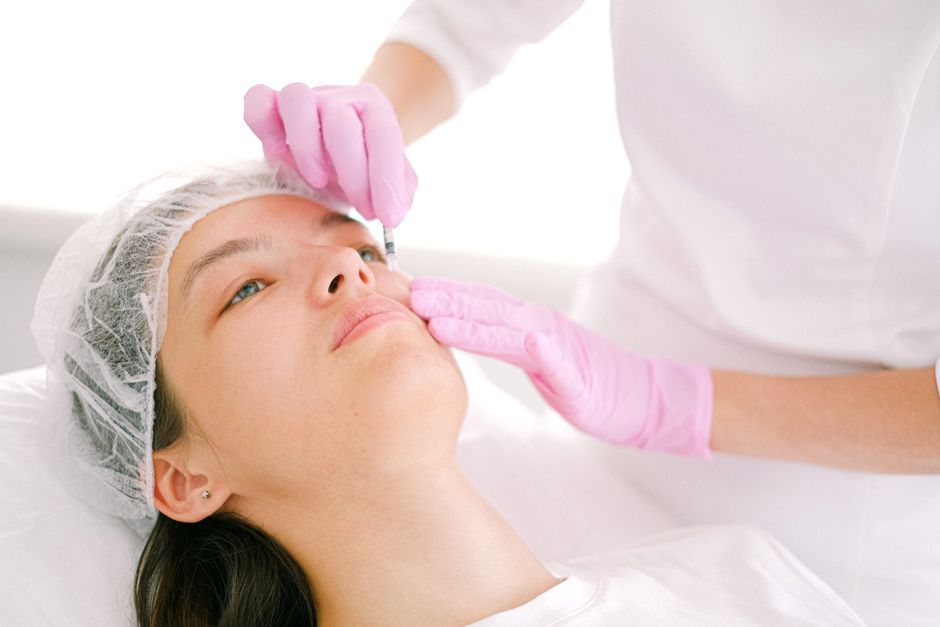
If you have ever felt or heard a clicking sensation when you open your mouth or move your jaw, you might wonder if Botox can stop it. The short answer is that Botox can reduce jaw clicking in certain cases, but it does not work for everyone and it does not fix the underlying cause. The clicking sound often comes from the temporomandibular joint, or TMJ, which connects your jaw to your skull. Botox relaxes the muscles around that joint, which can take pressure off the area and sometimes stop the clicking. But clicking can also come from a displaced disc inside the joint itself, and Botox cannot move a disc back into place.
What Actually Causes Your Jaw to Click?
Jaw clicking has several possible causes. The most common is a problem with the small disc that sits between the bones of your jaw joint. This disc acts like a cushion. When it shifts out of place, it can make a popping or clicking sound when you open or close your mouth.
Another cause is muscle tension. When the muscles around your jaw are tight or overworked, they can pull the joint in ways that create noise. Teeth grinding, stress, and chewing gum too much can all make these muscles tense up. Some people also have arthritis in the jaw joint, which can cause clicking along with pain.
Research shows that about one in three people experience some form of jaw clicking at some point in their lives. Most of them never need treatment. The clicking is only a concern when it comes with pain, locking, or difficulty chewing.
How Does Botox Affect the Jaw Muscles?
Botox is a purified protein that temporarily stops muscles from contracting. When injected into the masseter muscle, which is the large muscle on the side of your jaw, it weakens that muscle. This reduces the force of clenching and grinding.
Studies have found that Botox can reduce jaw muscle activity by about 30 to 50 percent. This is enough to relieve tension for many people. But the effect is temporary. It typically lasts three to six months before the muscle regains full strength.
Botox does not directly affect the joint itself. It does not repair a displaced disc or fix arthritis. It only changes how forcefully the muscles pull on the joint. If your clicking comes from muscle tension pulling the joint out of alignment, Botox can help. If it comes from a disc that is physically out of place, Botox may not change the clicking at all.
Will Botox Keep Your Eyes From Clicking?
This question mixes up two different body parts. Botox for jaw clicking has nothing to do with the eyes. The phrase “Will Botox Keep Your Eyes From Clicking” seems to confuse TMJ treatment with cosmetic Botox around the eyes.
Botox around the eyes is used for wrinkles, not for any kind of clicking sound. There is no known condition where the eyes make a clicking noise that Botox would treat. If you are reading about Botox for jaw clicking, ignore any references to eyes. They are a different treatment for a different purpose.
For jaw clicking specifically, Botox has shown mixed results in clinical studies. A 2019 review of multiple studies found that Botox reduced pain in people with TMJ disorders but did not consistently stop clicking sounds. Some patients reported that the clicking stopped. Others said the clicking remained even when their pain improved.




What Does the Research on Botox for Jaw Clicking Actually Show?
Current research suggests that Botox is more reliable for treating jaw pain than for treating jaw sounds. A study published in the Journal of Oral and Maxillofacial Surgery in 2020 found that 72 percent of patients reported less pain after Botox injections. But only about 40 percent reported that their clicking or popping stopped completely.
Another study looked at people who had both pain and clicking. After Botox treatment, most people had less pain. But the clicking improved in only about half of them. This tells us that clicking and pain do not always come from the same source.
There is also the question of how much Botox to use. Too little may not relax the muscle enough. Too much can make it hard to chew. Doctors typically use between 25 and 50 units per side. The right dose depends on your muscle size and how strong your clenching is.
As of 2026, there is no large-scale clinical trial that proves Botox reliably stops jaw clicking in most people. The evidence is mostly from smaller studies and patient reports. This does not mean it never works. It means the results vary from person to person.
What Are the Real Alternatives to Botox for Jaw Clicking?
Before considering Botox, most dentists recommend trying simpler options first. These treatments address the root cause rather than just relaxing the muscle.
| Treatment | What It Does | How Well It Works for Clicking |
|---|---|---|
| Night guard or splint | Keeps teeth apart during sleep, reduces grinding force | Moderate evidence for reducing clicking in some people |
| Physical therapy for the jaw | Strengthens and stretches jaw muscles, improves joint position | Good evidence for reducing both pain and clicking |
| Stress management and relaxation | Reduces unconscious clenching and grinding | Some people report improvement, limited studies |
| Diet changes | Softer foods reduce joint load | Helps temporarily but does not fix the cause |
| Botox injections | Weakens jaw muscle, reduces clenching force | Mixed results for clicking, better for pain |
Physical therapy for the jaw is one of the most effective options. A trained therapist can teach you exercises that help the jaw joint move more smoothly. Some studies show that physical therapy reduces clicking in 60 to 70 percent of people over three months.
Night guards are another common option. They do not stop you from grinding, but they protect your teeth and can change how your jaw sits while you sleep. Some people find that their clicking goes away after a few weeks of wearing a guard. Others see no change.
What to Avoid When Trying to Fix Jaw Clicking
There is a lot of bad advice online about jaw clicking. Some sources claim that cracking your jaw on purpose will help. It will not. Forcing your jaw to pop can stretch the ligaments and make the problem worse over time.
Another myth is that surgery is the only real cure. Surgery for TMJ clicking is rarely needed. Most people improve with conservative treatments. Surgery also carries risks like nerve damage and infection that are not worth it for a sound that does not cause pain.
Some people also try over-the-counter jaw exercises from the internet without knowing if they are doing them correctly. Wrong exercises can increase muscle tension and make clicking louder. It is better to see a dentist or physical therapist who can check your specific joint movement.
- Do not force your jaw to pop or click on purpose
- Do not chew gum or hard foods repeatedly
- Do not assume Botox will fix all jaw clicking
- Do not ignore pain that comes with clicking
- Do not try aggressive jaw exercises without professional guidance
When Should You See a Professional About Jaw Clicking?
You do not need treatment for jaw clicking if it happens without pain. Many people have clicking jaws their whole lives with no problems. The clicking itself is not harmful.
You should see a dentist or a TMJ specialist if the clicking comes with pain, if your jaw locks open or shut, or if you have trouble chewing. You should also seek help if the clicking started after an injury or if it gets worse over time.
A good evaluation includes listening to your jaw movement, checking your bite, and sometimes taking an X-ray or MRI. The MRI is the best way to see if the disc inside your joint is displaced. This information helps decide whether Botox or another treatment makes sense for you.
Frequently Asked Questions
Can Botox stop my jaw from clicking permanently?
No. Botox wears off after three to six months. The clicking may return once the muscle regains full strength.
Is Botox for jaw clicking covered by insurance?
Most insurance plans do not cover Botox for TMJ because it is considered an off-label use. Some plans may cover it if you have severe pain, but this is rare.
How long does it take for Botox to work on jaw clicking?
It usually takes three to seven days to feel the muscle relax. The full effect on clicking may take up to two weeks.
Does Botox for jaw clicking hurt?
The injections feel like small pinches. Most people tolerate them well with no numbing, though some clinics offer ice or topical cream.
