
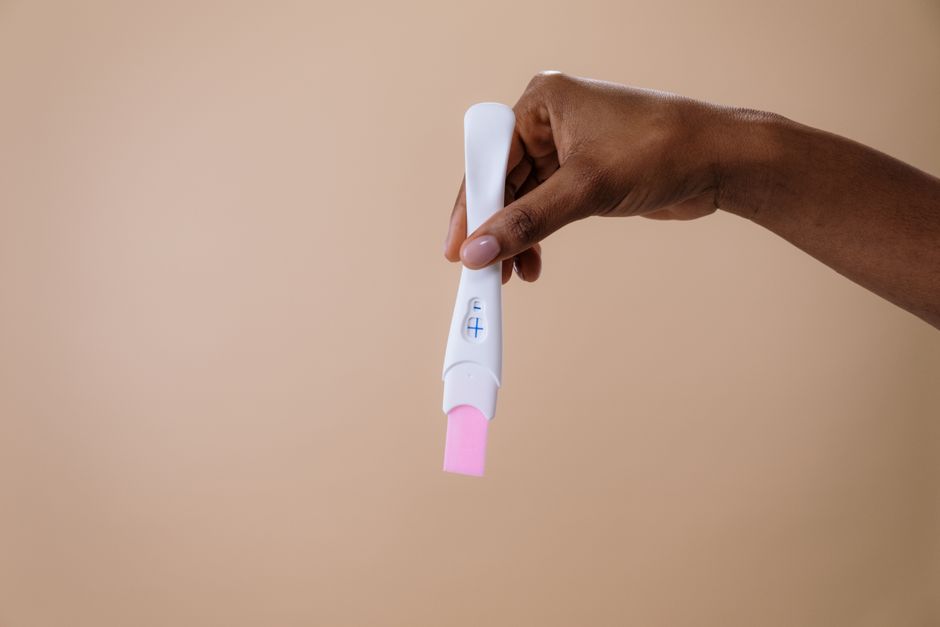
A positive pregnancy test means one thing at its core: the test detected human chorionic gonadotropin (hCG) in your urine or blood. That hormone is normally made by tissue that forms after an embryo implants in the uterus. Most positive tests are true positives. But hCG can appear for other reasons, and knowing them matters — especially if a positive result doesn’t match your situation.
Pregnancy tests are built to detect hCG, not to confirm a pregnancy. Anything that puts hCG into your body or prompts your body to produce it can turn a test positive. That includes a real pregnancy, a recent pregnancy loss, certain fertility treatments, and a small number of medical conditions. Rarely, a test reads positive when there is no hCG at all.
Why Would A Pregnancy Test Be Positive? The Main Root Causes
hCG is a hormone produced by cells called syncytiotrophoblasts, which are part of the placenta-to-be. These cells begin forming once a fertilized egg implants in the uterine lining, usually about six to twelve days after ovulation. hCG then rises quickly in early pregnancy.
Home urine tests are generally designed to detect hCG at levels around 20 to 25 mIU/mL, though sensitivity varies by brand. Blood tests can pick up much lower levels. So a positive result means hCG crossed whatever threshold that test uses.
The root causes fall into a few groups:
- A normal pregnancy. This is by far the most common reason. Implantation triggers hCG production, and levels climb from there.
- A pregnancy that is not progressing normally. Ectopic pregnancy (implanted outside the uterus) and early miscarriage can both produce hCG and a positive test.
- Leftover hCG after a pregnancy ends. hCG can stay detectable for weeks after a miscarriage, an abortion, or childbirth.
- Fertility treatment. Some injectable fertility drugs contain hCG itself, which can register on a test.
- Medical conditions that raise hCG. A small number of tumors and other conditions can produce hCG.
- Test error or interference. Rare, but real.
Each of these deserves its own look, because the practical meaning of a positive test is very different depending on which one applies.
Can You Get a Positive Test Without Being Pregnant?
Yes. A positive test without an ongoing pregnancy is uncommon but well documented, and the reasons are specific.
The most frequent is a very early loss. Many pregnancies end in miscarriage before a person even knows they conceived, sometimes called a chemical pregnancy. hCG rises enough to turn a test positive, then the pregnancy stops developing. A test taken days later may be faintly positive or negative. Research consistently shows that early pregnancy loss is common, though exact rates are hard to pin down because so many go unnoticed.
An ectopic pregnancy is another cause. Here the embryo implants outside the uterus, most often in a fallopian tube. The tissue still makes hCG, so tests turn positive, but the pregnancy cannot survive and can become a medical emergency if it grows. This is why a positive test paired with one-sided pelvic pain, shoulder pain, or heavy bleeding needs urgent medical attention rather than a wait-and-see approach.
Fertility treatment is a separate category. Some injectable medications used in IVF and other fertility cycles contain hCG to trigger ovulation or support the cycle. That hCG can show up on a home test for a number of days afterward. Clinics typically advise waiting a set period before testing for this reason. The timing depends on the dose and the specific protocol, so follow your clinic’s instructions rather than guessing.
Which Medical Conditions Can Raise hCG?
A few conditions outside pregnancy can produce hCG, and they are rare. Knowing they exist is useful mostly because it explains why a doctor may order follow-up testing after an unexpected positive.
Gestational trophoblastic disease is a group of conditions that start from placental tissue. In one form, called a molar pregnancy, abnormal tissue grows instead of a normal embryo, and hCG levels can run very high. This requires medical management and monitoring.
Some tumors can also make hCG, including certain germ cell tumors and, less often, other cancers. This is uncommon. It matters mainly in the rare case of a positive hCG test in someone who cannot be pregnant, where doctors will look for a non-pregnancy source.
Certain pituitary conditions can produce small amounts of hCG as well. These situations are unusual and are diagnosed through blood testing and imaging, not by a home test alone.





How Do False Positives Happen?
A true false positive — a positive result with no hCG present at all — is rare. When it happens, the cause is usually interference in the test itself.
Blood tests can be affected by substances in the sample, including certain antibodies or other proteins that cross-react with the test. Some autoimmune conditions and rare blood factors have been linked to this. Urine tests are less prone to it but not immune.
Home test errors cause more confusion than true false positives. Testing too early, reading the result outside the stated window, or using an expired or improperly stored test can all produce a misleading line. A faint line that appears after the reading time should not be trusted. Check the instructions for your specific test.
One useful clarification: a “faint positive” is still usually a positive. hCG levels start low and rise, so an early test often shows a lighter line. The strength of the line does not reliably tell you how far along a pregnancy is.
What Should You Do After a Positive Test?
For most people, the next step is straightforward: confirm with a clinician. A blood test can measure the exact hCG level, and repeat testing over a couple of days can show whether it is rising as expected in an early pregnancy.
Seek care promptly if a positive test comes with any of these:
- One-sided pelvic or abdominal pain
- Shoulder tip pain
- Heavy vaginal bleeding
- Dizziness or fainting
Those symptoms can signal an ectopic pregnancy, which is a medical emergency. Do not wait to see if they pass.
If you have had a miscarriage, abortion, or recent birth and get an unexpected positive test, tell your clinician. Leftover hCG can linger and complicate the picture. The same applies if you have recently used fertility medication containing hCG.
If a positive result truly doesn’t fit — you cannot be pregnant and have no recent pregnancy — a clinician can investigate further. That path usually starts with a blood hCG test and, depending on the result, may include imaging or other tests. This is uncommon, and most unexpected positives turn out to have an ordinary explanation.
How Reliable Are Home Pregnancy Tests?
Home urine tests are accurate when used correctly and after a missed period. Their reliability depends on timing and technique more than anything else.
Testing too early is the most common reason for a false negative, not a false positive. hCG may not have reached the test’s detection threshold yet. Waiting until a missed period improves accuracy considerably. First-morning urine is often more concentrated, which some instructions recommend for early testing.
Blood tests are more sensitive and can detect hCG earlier and at lower levels. They are also what clinicians use to track whether a pregnancy is progressing, because a single number says less than a trend over time.
No home test can tell you whether a pregnancy is in the uterus, whether it is healthy, or how far along it is. That requires clinical evaluation. A positive test is a starting point, not a diagnosis.
Frequently Asked Questions
Can a pregnancy test be positive and still not be pregnant?
Yes, though it is uncommon. Recent pregnancy loss, fertility medication containing hCG, and rare medical conditions can all produce a positive result without an ongoing pregnancy.
How long can hCG stay in your system after a miscarriage?
hCG can remain detectable for several weeks after a miscarriage, and the exact time varies by how far along the pregnancy was. A clinician can track levels to confirm they are falling as expected.
Can a urinary tract infection cause a positive pregnancy test?
No. A urinary tract infection does not produce hCG, so it does not cause a true positive test. Blood or protein in urine can occasionally interfere with how a test strip reads, but this is not the same as a positive hCG result.
What does a faint positive pregnancy test mean?
A faint line is usually still a positive result, because hCG starts low and rises early in pregnancy. Confirm with a repeat test or a clinician, and do not read the strip after the time window stated in the instructions.
