
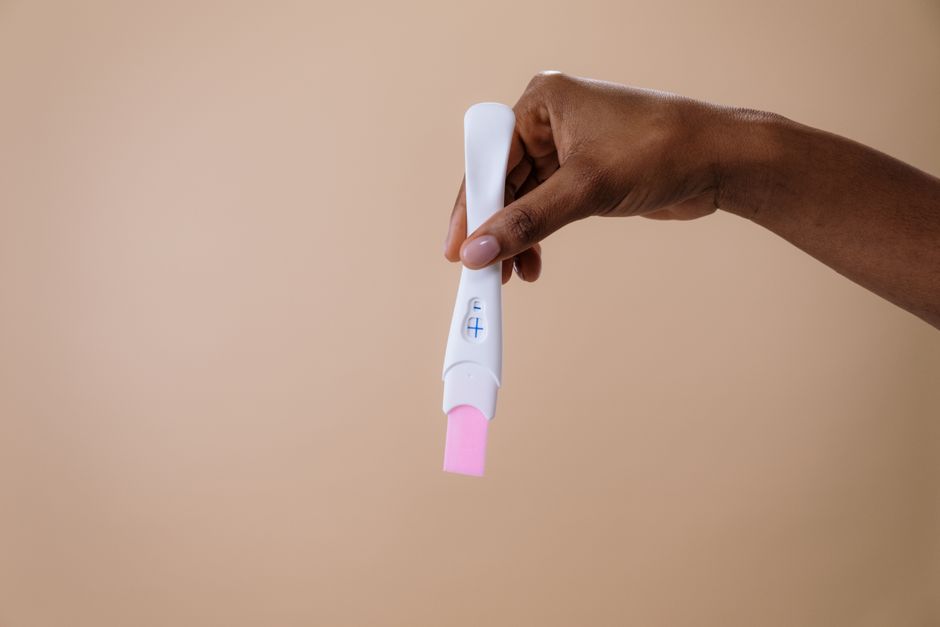
A pregnancy test works by detecting a hormone called human chorionic gonadotropin, or hCG, in your urine or blood. This hormone is made by cells that form the placenta after an embryo implants in the uterus. A home test uses antibodies that react to hCG and produce a visible line or digital “pregnant” result. If there is no hCG, or not enough of it, the test shows negative.
How Does A Pregnancy Test Work Hcg Explained
The entire process depends on one biological event: an embryo attaching to the lining of the uterus. Once that happens, specialized cells called trophoblasts begin producing hCG. These are the cells that will eventually become part of the placenta.
hCG then enters your bloodstream and, within a short time, passes into your urine. A home pregnancy test is designed to catch that hCG in your urine. A blood test at a doctor’s office measures the same hormone but with greater sensitivity.
The key point is timing. hCG does not appear the moment sperm meets egg. It appears after implantation, which usually happens several days after fertilization. Before implantation, there is no hCG to detect, no matter how early you test.
What Is hCG And Why Does The Body Make It?
hCG is a hormone produced almost exclusively during pregnancy. Its main job in early pregnancy is to signal the corpus luteum — a temporary structure left in the ovary after ovulation — to keep making progesterone. Progesterone is what maintains the uterine lining so the pregnancy can continue.
Without that signal, the corpus luteum would break down, progesterone would drop, and the uterine lining would shed. In a normal menstrual cycle, that shedding is your period. In early pregnancy, hCG prevents it.
hCG levels rise quickly in early pregnancy, roughly doubling every two to three days during the first several weeks. That rapid rise is what makes pregnancy tests possible. It also means a test taken too early can miss a pregnancy that a test taken a few days later would catch.
One detail that surprises many people: hCG is actually a family of related molecules. Standard pregnancy tests are designed to detect the intact hormone and most of its common variants, which is one reason they work reliably across a wide range of concentrations.
How Does A Home Urine Test Detect hCG?
A home test strip contains antibodies that bind specifically to hCG. When you apply urine, the liquid moves along the strip and carries any hCG with it. If hCG is present, it binds to these antibodies and triggers a visible reaction — usually a colored line.
Most tests have two zones. One is a control zone that reacts whether or not hCG is present, confirming the test worked. The other is a test zone that only reacts when hCG is present. A second line (or a plus sign, depending on the brand) means hCG was detected.
Digital tests work on the same principle but use electronics to read the result and display the word “pregnant” or “not pregnant.” The underlying chemistry is the same. The digital display just removes the guesswork of interpreting faint lines.
Why Faint Lines Happen
A faint line usually means hCG is present but at a low concentration. This can happen very early in pregnancy. It can also happen if you drink a lot of fluid before testing, which dilutes your urine. Using first-morning urine, which is more concentrated, generally gives a clearer result.
Faint lines can be genuinely ambiguous. If a line is very faint, waiting two or three days and retesting is more informative than trying to interpret a borderline result.





When Can You Test And Why Does Timing Matter?
Timing is the single biggest factor in whether a home test gives an accurate result. Test too early and you may get a false negative — the test says negative when you are actually pregnant.
Implantation typically occurs about six to twelve days after ovulation, though the range varies. hCG becomes detectable in urine shortly after that. Many test manufacturers say their products can detect pregnancy from the first day of a missed period, and some claim earlier detection. Those claims depend on how sensitive the specific test is and on when implantation happened in your particular cycle.
If you test on the day of a missed period and get a negative result but still suspect pregnancy, waiting a few days and testing again is reasonable. hCG levels rise fast enough that a repeat test a few days later is often conclusive.
How Accurate Are Home Pregnancy Tests?
Home pregnancy tests are generally accurate when used correctly and after a missed period. Research on widely used test brands has found high accuracy when instructions are followed and testing occurs around the expected date of a missed period.
Accuracy drops when tests are used too early, when instructions are not followed precisely, or when the result is read outside the recommended time window. Reading a test after the stated time limit can produce an evaporation line — a faint mark that looks like a positive result but is not.
False positives are uncommon but possible. Certain medical conditions and some fertility medications that contain hCG can cause a positive result without a pregnancy. A blood test ordered by a clinician can clarify an unclear result.
How Is A Blood Test Different From A Urine Test?
A blood test measures hCG directly in your bloodstream and can detect it at lower concentrations than a urine test. There are two main types: a qualitative test that simply confirms whether hCG is present, and a quantitative test that measures the exact level.
The quantitative test is often used to track how hCG levels are changing over time. Clinicians sometimes use it when a pregnancy’s progress is unclear, because the pattern of rise or fall can provide useful information.
Blood tests require a visit to a lab or clinic and a clinician’s order. They are not something you can do at home. For most people, a home urine test is the first and often only test needed to confirm pregnancy.
| Feature | Urine Test (Home) | Blood Test (Clinical) |
|---|---|---|
| Where it is done | At home | Lab or clinic |
| Detects hCG at | Higher concentrations | Lower concentrations |
| Gives an exact level | No | Yes (quantitative type) |
| Requires a clinician | No | Yes |
| Speed of result | Minutes | Usually hours to a day |
What Can Cause A False Result?
False negatives are the most common problem, and they almost always trace back to testing too early. If hCG has not reached a detectable level in your urine yet, the test cannot find it. Diluted urine from drinking lots of fluids can also push hCG below the detection threshold.
Expired tests or tests stored improperly may not work correctly. Always check the expiration date and follow the storage instructions on the package.
False positives are rarer. Some fertility treatments involve hCG injections, which can linger in the body and trigger a positive result. Certain rare medical conditions can also produce hCG. If a positive result seems unexpected or does not fit your situation, a clinician can help sort it out.
Evaporation lines are a frequent source of confusion. These appear when urine dries on the test strip after the reading window has passed. They are not positive results, which is why the timing instructions on the package matter.
What Should You Do After A Positive Test?
A positive home test is a strong signal of pregnancy, but it is not a diagnosis. The next step is to contact a healthcare provider, who can confirm the pregnancy and begin prenatal care.
Early prenatal care matters. A clinician can assess your health, discuss any medications you take, and arrange appropriate follow-up. They can also confirm the pregnancy with a blood test or ultrasound if needed.
If you have symptoms like severe pain, heavy bleeding, or dizziness, seek medical care promptly. These can have several causes, and only a clinician can determine what is happening.
Frequently Asked Questions
How soon after conception can a pregnancy test detect hCG?
Most home tests can detect hCG around the time of a missed period, which is roughly two weeks after ovulation for many people. Some sensitive tests claim earlier detection, but testing too early raises the chance of a false negative.
Can a pregnancy test be positive without pregnancy?
False positives are uncommon but possible, usually from hCG-containing fertility medications or certain rare medical conditions. A clinician can confirm with a blood test.
Does the darkness of the line mean anything?
Line darkness generally reflects how much hCG is present, so a darker line often means a higher level. It is not a reliable way to judge how far along a pregnancy is.
Can drinking too much water affect a pregnancy test?
Yes, large amounts of fluid can dilute your urine and lower hCG concentration, which may cause a faint line or a false negative. Testing with first-morning urine reduces this risk.
