
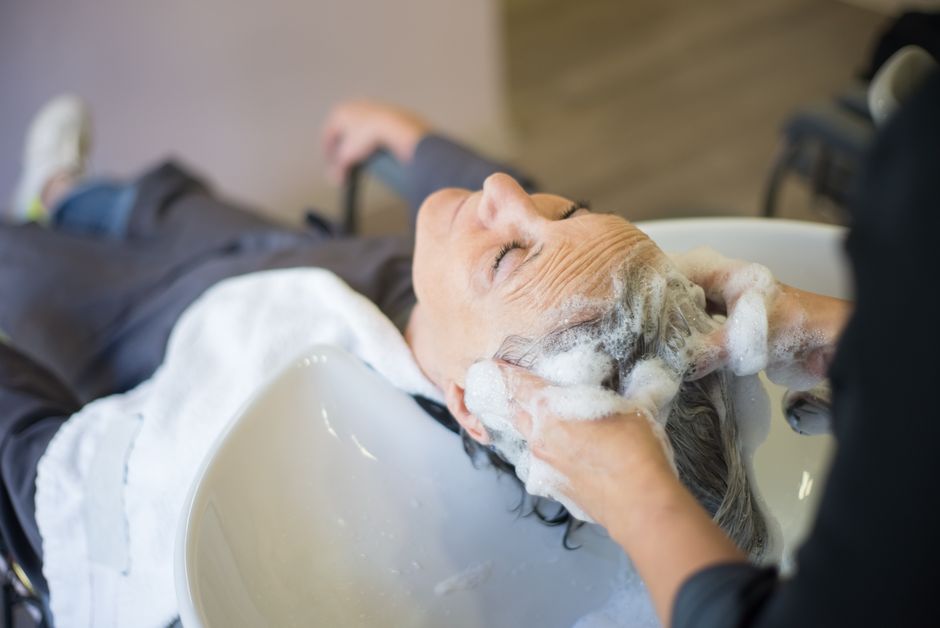
Shampoo does not “ruin” hair in the way a chemical burn does. What it can do is strip the natural oils that keep the hair shaft flexible, lift the cuticle layer that protects the inside of each strand, and leave hair drier, rougher, and more prone to breakage over time. The fix is not to stop washing. It is to wash less aggressively, choose a gentler formula, and put moisture back before the hair dries out.
Why Shampoo Ruins Your Hair And How To Fix It?
Shampoo works because of molecules called surfactants. One end of a surfactant molecule attaches to oil and dirt. The other end attaches to water. When you rinse, the water pulls the surfactant away, and the oil goes with it.
That is exactly what you want on a greasy scalp. The problem is that surfactants cannot tell the difference between oil you want gone and oil you need. Sebum, the oil your scalp produces, coats each hair strand and helps it stay supple. When shampoo removes too much of it, the strand loses its natural conditioner.
The strongest surfactants in common use are called sulfates. Sodium lauryl sulfate is the one most people recognize. It cleans well and lathers heavily, which is why it shows up in so many formulas. It is also efficient at stripping oils, and for some hair types that efficiency is the whole problem.
What happens to the hair shaft
Each hair has an outer layer of overlapping scales called the cuticle. When the cuticle lies flat, light reflects evenly and hair looks shiny. When those scales lift, the surface becomes rough and light scatters. That is what dull, frizzy hair actually is at the microscopic level.
Hot water and harsh surfactants both encourage the cuticle to lift. So does rubbing hair vigorously with a towel afterward. Over time, a cuticle that stays raised is more likely to chip and crack, and a cracked strand breaks.
This is why people who wash daily with a strong shampoo often describe their hair as dry at the ends but greasy at the roots. The scalp responds to oil removal by producing more oil. The ends, which are older hair and already more worn, just get drier.
Is Washing Your Hair Every Day Bad?
For most people, daily washing with a harsh shampoo is more cleansing than the hair needs. Hair does not get dirty at the same rate skin does, and the ends of long hair are typically years old by the time you cut them.
How often you should wash depends on your hair and scalp, and there is no single correct number. People with fine hair and an oily scalp often need to wash more frequently than people with thick, curly, or chemically treated hair. Curly and coily hair types tend to be drier because natural oils travel down a curved shaft more slowly than a straight one.
A common approach is to wash every two to three days and see how your scalp responds. Some people find they can stretch further over time. Others genuinely need more frequent washing, and that is not a failure — some scalps simply produce more oil.
One thing worth knowing: the popular idea that hair “trains itself” to need less washing is not well supported. Oil production is driven mainly by hormones and genetics, not by how often you shampoo. What changes when you wash less is how much oil is sitting on your scalp, not how much your scalp makes.
Which Ingredients Actually Damage Hair?
Sulfates get most of the attention, but they are not the only factor. A shampoo’s overall effect comes from the combination of cleansers, pH, and conditioning agents.
- Sulfates — Effective cleansers that can strip oils aggressively. Not inherently harmful, but often too strong for dry, colored, or textured hair.
- High pH formulas — Hair’s natural pH is mildly acidic, around 3.5 to 5.5. Products well above that range can lift the cuticle more than a lower-pH formula would.
- Alcohols — Short-chain alcohols like ethanol can be drying. Fatty alcohols like cetyl and stearyl alcohol are different molecules entirely and act as conditioners.
- Formaldehyde-releasing preservatives — Used in some products. Regulators consider them safe at permitted levels, but people with sensitivities may react.
That last point matters because “chemical-free” is a marketing phrase, not a scientific one. Water is a chemical. So is every plant extract in a bottle. The useful question is not whether a product contains chemicals, but which specific ingredients it contains and at what concentration.





How Do You Wash Hair Without Damaging It?
Technique matters as much as the bottle. A few changes make a measurable difference to how hair feels and behaves.
Focus shampoo on the scalp, not the length. The roots are where oil and dead skin accumulate. The ends get cleaned enough by the lather rinsing through. Applying shampoo directly to the ends adds stripping without adding benefit.
Use warm water, not hot. Hot water lifts the cuticle and dries the scalp. A lukewarm rinse cleans just as well.
Skip the vigorous towel rub. Wet hair is more fragile because water stretches the shaft and temporarily weakens the protein bonds inside it. Press the towel against your hair to absorb water instead of scrubbing.
Condition after every wash if your hair is dry or long. Conditioner works by smoothing the cuticle and replacing some of the lubrication that shampoo removed. Apply it mid-shaft to ends and avoid the scalp if your roots get greasy quickly.
Let hair air-dry when you can. If you use heat, keep the dryer moving and use the lowest heat setting that gets the job done. Repeated high heat exposure causes what researchers call bubble hair — small pockets of steam forming inside the shaft that make it snap.
Do You Need Sulfate-Free Shampoo?
Not everyone does. If your hair is short, oily, and resilient, a standard sulfate shampoo is unlikely to cause noticeable damage.
Sulfate-free formulas tend to be gentler and are worth trying if your hair is dry, color-treated, curly, coily, or prone to breakage. They clean less aggressively, which is the point.
The trade-off is real. Sulfate-free shampoos often lather less, and some leave a residue that builds up over time. People with fine hair sometimes find they feel weighed down. If that happens, a clarifying wash every few weeks — with a stronger shampoo — can remove the buildup.
Be skeptical of the claim that sulfates cause cancer or hair loss. Sodium lauryl sulfate is one of the most studied ingredients in personal care, and regulatory bodies in the US and EU consider it safe at the levels used in cosmetics. It can irritate skin and eyes, particularly for people with eczema or sensitive scalps. That is a different issue from systemic harm.
Can Damaged Hair Actually Be Repaired?
No. Hair is not living tissue. The part above your scalp is a protein structure, and once the cuticle is damaged or the cortex is exposed, it does not heal the way skin does.
What conditioners and treatments do is cosmetic and temporary. They fill gaps in the cuticle, smooth the surface, and reduce friction so the strand is less likely to break. The improvement is real, but it washes out.
The only permanent fix for damaged hair is to grow new hair and cut off the old. Hair grows roughly half an inch per month on average, though this varies by person. That means restoring several inches of damaged length takes months, not weeks.
Products marketed as repairing split ends do not repair them. A split end is a physical tear in the fiber. Some products can temporarily seal the split so it is less visible, but the tear remains and typically continues to travel up the shaft. Trimming is the only way to remove it.
What If Your Hair Is Still Breaking?
Shampoo is one possible cause of hair damage, but it is not the only one. If you have changed your washing routine and your hair is still shedding or breaking, other factors may be involved.
Common contributors include chemical treatments, tight hairstyles that pull on the roots, heat styling, thyroid conditions, iron deficiency, and certain medications. Sudden or patchy hair loss is worth a conversation with a doctor, because some causes are treatable and some are not related to hair care at all.
Diffuse shedding that starts a few months after a stressful event, illness, or childbirth is a recognized pattern called telogen effluvium. It usually resolves on its own, but the timeline varies and a clinician can confirm what is happening.
Frequently Asked Questions
Does shampoo cause hair loss?
Normal shampooing does not cause permanent hair loss. It can increase shedding of hairs that were already in the resting phase and about to fall out, but it does not damage the follicle.
How often should I wash my hair?
There is no single correct frequency — it depends on your scalp oil production, hair texture, and styling habits. Every two to three days works for many people, but daily washing is fine if your scalp needs it.
Is sulfate-free shampoo better for your hair?
Sulfate-free formulas are gentler and often a better choice for dry, curly, or color-treated hair. For short or oily hair, a standard sulfate shampoo is unlikely to cause problems.
Can split ends be repaired without cutting?
No. Split ends are physical tears in the hair fiber and cannot be permanently repaired. Some products temporarily seal them, but trimming is the only way to remove them.
