
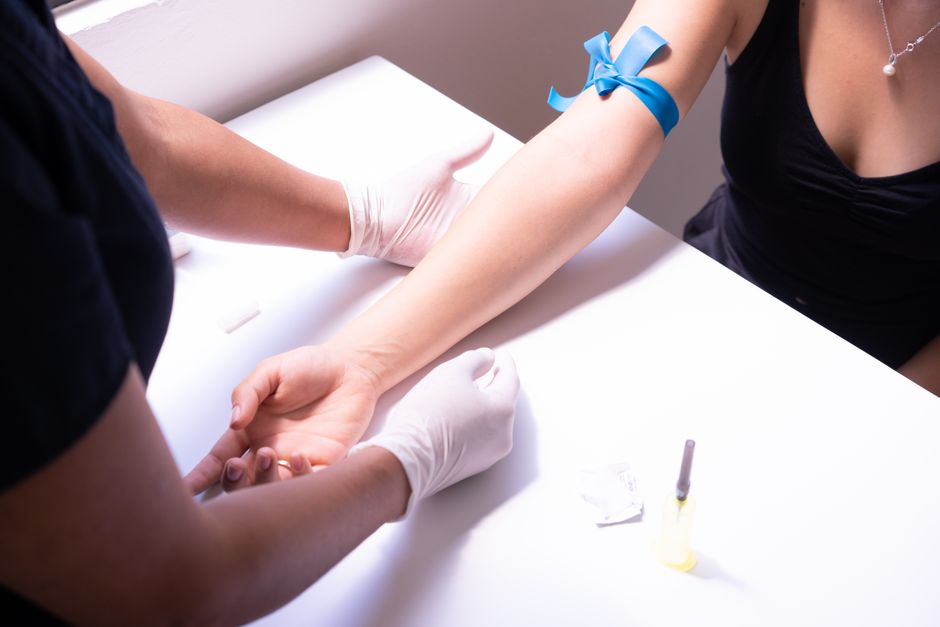
You have probably looked at the blue veins on your wrist or arm and wondered why they are not red. Blood is red. Veins carry blood. So why do they look blue through your skin? The short answer is that your veins are not actually blue. They look blue because of how light travels through your skin and how your eyes see that light. The blood inside your veins is dark red, not blue. This is one of those facts that surprises most people because what we see with our own eyes seems so clear. Let us walk through what is really going on.
What Color Are Veins Really?
Veins themselves are not blue. The tissue that makes up a vein wall is a pale whitish color, similar to the inside of your cheek. The blood inside veins is dark red. It looks dark red because it has already delivered oxygen to your cells and is carrying carbon dioxide back to your lungs. Oxygen-rich blood from your arteries is bright red. Oxygen-poor blood returning through your veins is a much deeper, darker red.
If you ever see a vein during surgery or in a medical diagram, it looks dark red or purplish, not blue. The blue color you see through your skin is an optical illusion caused by light and your skin’s layers. Your skin scatters blue light more than red light. So when light hits your skin, the blue wavelengths scatter back to your eye, and the red wavelengths get absorbed deeper in the tissue. Your brain interprets that scattered blue light as the color of the vein underneath.
This is not a new idea. Scientists have understood light scattering in skin for decades. The effect is similar to why the sky looks blue. Blue light scatters more easily than red light in the atmosphere. Your skin does something similar with the veins beneath it.
Does the Color of Blood Change in Veins?
Yes, blood color changes depending on whether it has oxygen or not. Arterial blood is bright red because hemoglobin in red blood cells is carrying oxygen. When hemoglobin releases that oxygen to your tissues, it changes shape slightly and becomes darker. Venous blood is that darker, maroon color.
Some people believe the myth that venous blood is blue and only turns red when it hits air. That is completely false. Blood is never blue inside your body. If you have ever had blood drawn from a vein, you saw it was dark red as it came out. It did not change from blue to red when it hit the tube. It was always red.
There is a common story that medical diagrams color veins blue and arteries red just to make them easier to tell apart. That is true. Those colors are teaching tools, not real colors. In real life, arteries and veins look very similar in color. Surgeons have to feel for pulses to tell them apart during procedures.
Why Do Veins Look Blue Through Skin but Arteries Do Not?
This is a fair question. Both arteries and veins are under your skin. But you can see veins clearly, and you almost never see arteries. There are two main reasons for this.
First, veins are closer to the surface of your skin. Arteries are deeper, buried under muscle and fat. Veins sit just under the dermis, which is why you can see them easily on your hands, wrists, and feet. Arteries are too deep for light to reach them and bounce back to your eye in a way that makes them visible.
Second, vein walls are thinner than artery walls. Arteries have thick muscular walls because they handle high pressure from the heart pumping blood. Veins have thinner walls and lower pressure. Thinner walls mean more light passes through them and scatters back to your eye. Thicker artery walls absorb more light, so you do not see them.
Some people also ask why veins look more blue on some people than others. Skin tone, skin thickness, and the amount of fat under your skin all affect how much blue light scatters back. People with lighter skin often see veins as more blue or greenish. People with darker skin may see veins as more purple or may not see them as clearly at all. This is normal and has nothing to do with health.





What Happens When Veins Look Green?
You might have noticed that some veins on your wrist or the back of your hand look greenish rather than blue. This is not a different type of vein. It is the same optical effect with a slight twist. Yellow fat under your skin combines with the blue scattered light to create a green appearance.
Think of it like mixing paint. Blue light scattering from the vein plus yellow light from the fat layer above it gives you green. This is more common on areas of the body where the skin is slightly thicker or where there is more fat just under the skin, like the wrist area.
Some people believe green veins mean you have a certain blood type or personality type. That is not based on any science. The color you see is just a result of your skin’s thickness, fat distribution, and how light hits that specific spot. It does not tell you anything about your health or your blood.
Is There Any Medical Reason to Worry About Vein Color?
For most people, the color of veins you see through your skin is not a health concern. It is just normal anatomy and light physics. However, there are a few situations where vein appearance can signal something worth checking with a doctor.
Varicose veins are enlarged, twisted veins that often look dark purple or blue. They are common, especially in the legs, and affect about 23 percent of adults in the United States. They are usually not dangerous, but they can cause pain, swelling, or discomfort. If varicose veins become painful or the skin over them gets red and warm, that could be a sign of inflammation or a blood clot.
Spider veins are smaller, red, blue, or purple veins that look like tree branches or spider webs on the skin’s surface. They are usually cosmetic and not a medical problem. But if you notice a sudden increase in visible veins, or if veins become very dark or bulge out, it is worth mentioning to your doctor. Sudden changes in vein appearance can sometimes be related to circulation problems or blood clots.
Deep vein thrombosis is a serious condition where a blood clot forms in a deep vein, usually in the leg. It does not make veins look blue through the skin. The symptoms are swelling, pain, warmth, and redness in one leg. If you have those symptoms, seek medical help immediately. Do not wait to see if the vein changes color.
Frequently Asked Questions
Are veins actually blue inside the body?
No, veins are not blue inside the body. The blood inside veins is dark red. The blue color you see through skin is caused by light scattering.
Why do my veins look green instead of blue?
Veins look green when yellow fat under your skin mixes with scattered blue light. This is normal and does not mean anything about your health.
Can vein color tell you something about your health?
Not usually. Normal vein color through skin is just an optical effect. But sudden changes in vein appearance or painful bulging veins should be checked by a doctor.
Do all people see their veins the same color?
No. Skin tone, skin thickness, and fat distribution all affect what color you see. Different people see different shades of blue, green, or purple.
