
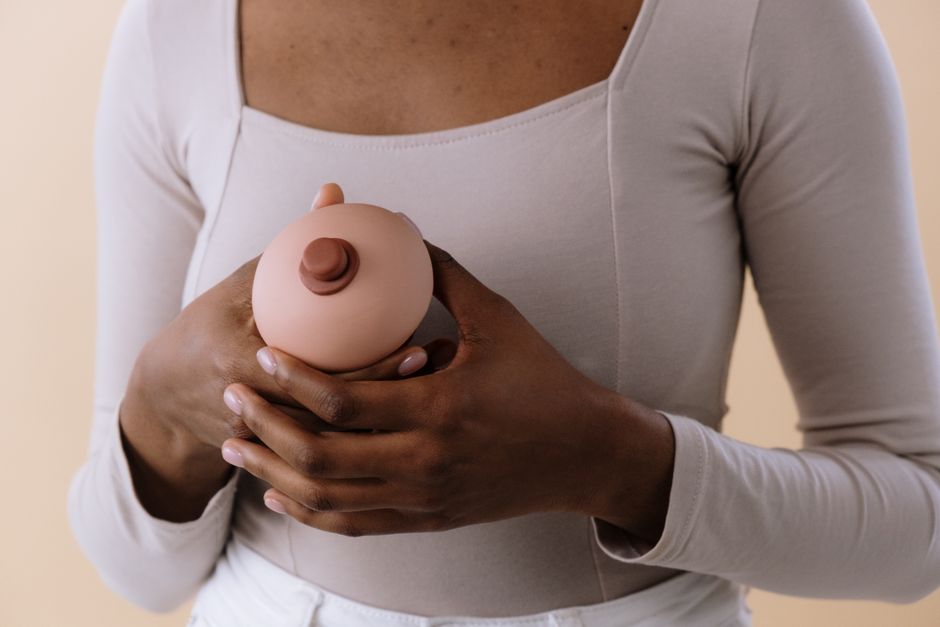
If your nipple has become hard and painful, you are likely feeling a mix of discomfort and worry. The most common cause is a temporary physical or hormonal trigger — cold, friction, or normal hormonal shifts — but persistent hardening with pain on one side deserves a medical look. Most cases are not cancer, and many clear up on their own or with simple changes.
Why Is My Nipple Hard And Painful? Common Causes
Nipple hardness comes from the tiny muscle fibers inside the nipple and areola contracting. That contraction is called the let-down reflex in breastfeeding women, but it happens in everyone to some degree. When the tissue stays contracted or becomes swollen, the nipple feels firm to the touch. Pain usually means there is added irritation, inflammation, or a blocked structure underneath.
The cause depends heavily on whether you are breastfeeding, what your menstrual cycle is doing, and whether the change is on one side or both. Here is what the evidence supports most strongly.
- Cold and friction — the most common everyday trigger. The nipple hardens briefly, then relaxes. Pain only appears if the skin is already cracked or chafed.
- Hormonal shifts — estrogen and progesterone fluctuations before a period can make nipples tender and more sensitive. This usually affects both sides.
- Breastfeeding problems — a poor latch is a leading cause of nipple pain in the early weeks. It causes cracking, blanching, and sometimes a hard, painful nipple.
- Infection — bacterial or fungal infections of the nipple or milk ducts can cause hardness, pain, and sometimes discharge.
- Duct problems — a blocked duct or a dilated duct (duct ectasia) can produce a firm, tender lump behind the nipple.
- Skin conditions — eczema or psoriasis on the nipple can cause thickening, scaling, and pain.
- Rare causes — Paget’s disease of the nipple and inflammatory breast cancer are uncommon but serious. They usually come with other signs, not hardness alone.
Notice that most of these are not dangerous. The goal is not to scare you but to help you tell the difference between a passing irritation and something that needs a doctor.
Is A Hard Nipple A Sign Of Pregnancy?
It can be, but it is not a reliable sign on its own. Early pregnancy raises estrogen and progesterone levels, which increases blood flow to the breasts and makes nipples more sensitive, darker, and sometimes firmer. Many women notice this in the first few weeks.
The problem is that the same hormonal changes happen before a normal period. A hard, tender nipple in the days before your period is common and does not mean you are pregnant. If you have missed a period and have other symptoms like fatigue or nausea, a home pregnancy test is far more reliable than nipple changes alone.
If you are breastfeeding and your nipples suddenly become hard and painful, pregnancy is possible but unlikely to be the first explanation. Look at latch, infection, and friction first.
Why Does It Hurt On One Side Only?
One-sided nipple pain and hardness is the detail that matters most. Hormonal causes almost always affect both breasts. When only one nipple is affected, the cause is more likely to be local — an infection, a blocked duct, a cyst, or a skin problem confined to that area.
This does not automatically mean something serious. A blocked duct on one side is very common, especially in breastfeeding women. A small cyst or an infected hair follicle can also cause one-sided firmness and pain.
That said, one-sided changes deserve a professional exam, particularly if they persist for more than a few weeks, if the nipple looks different from the other one, or if there is discharge, crusting, or a lump you can feel. Doctors generally take persistent unilateral nipple changes more seriously than bilateral ones. That is not because one-sided pain is usually cancer — it is because the serious causes tend to show up on one side.





Nipple Pain While Breastfeeding: What Is Actually Happening
Nipple pain in breastfeeding is extremely common in the first days and weeks. The evidence points to latch as the main driver. When a baby takes only the tip of the nipple instead of a good mouthful of breast tissue, the nipple gets compressed against the roof of the mouth with every suck. That causes trauma, cracking, and pain that can last the whole feed.
Other contributors include:
- Vasospasm — the nipple turns white, then blue, then red after feeding. This is a blood flow problem, sometimes linked to Raynaud’s phenomenon. It causes sharp, burning pain.
- Thrush — a fungal infection that causes burning, itching, and shiny or flaky nipple skin. It often affects both nipples and can pass back and forth between mother and baby.
- Bacterial infection — cracked skin lets bacteria in, leading to redness, swelling, and sometimes a hard, tender area.
- Pump problems — a flange that is too small or too large can cause friction and hardening.
If pain is severe, ongoing, or comes with fever or a red, hot area on the breast, see a doctor. A lactation consultant can help with latch, but infections need medical treatment.
When Should You See A Doctor?
See a doctor if any of the following apply. These are general red flags, not a complete list.
- Nipple hardness or pain that lasts more than two to three weeks
- Changes on one side only that do not improve
- Nipple discharge, especially bloody or spontaneous
- A lump you can feel in the breast or behind the nipple
- Skin changes: crusting, scaling, dimpling, or an inverted nipple that was previously normal
- Fever, chills, or a red, hot, swollen breast
- Pain that wakes you at night or interferes with daily life
Most of these will turn out to be benign. But the only way to know is to have someone examine you. Self-checking is useful, but it cannot distinguish between a blocked duct and something that needs imaging.
What Helps Nipple Hardness And Pain
What helps depends on the cause. There is no single fix, and some widely shared advice is not supported by good evidence.
For cold or friction-related hardness, warmth and a well-fitting bra usually resolve it. For breastfeeding pain, fixing the latch is the first step. Some clinicians recommend applying a small amount of expressed milk to the nipple after feeding and letting it air dry, though the evidence for this specifically preventing infection is limited. Lanolin is commonly used for cracked nipples, but studies comparing it to expressed milk have not consistently shown one is better.
For suspected thrush or bacterial infection, see a doctor. Antifungal or antibiotic treatment may be needed, and treating only the mother while the baby remains untreated often leads to recurrence.
For hormonal tenderness, a supportive bra, over-the-counter pain relief, and tracking your cycle can help you predict and manage it. Do not use pain relief as a way to ignore a change that is not going away.
One thing worth knowing: hardness alone, without pain, discharge, or a lump, is rarely a sign of anything serious. The nipple naturally firms up with cold, arousal, and stimulation. It is the combination of hardness, pain, and persistence that matters.
What Does Not Cause A Hard, Painful Nipple
A few claims circulate online that are not supported by evidence. Nipple hardness is not caused by “toxins” building up, and no detox, cream, or supplement has been shown to resolve it. Hormonal imbalance is sometimes blamed, but this is usually a vague label rather than a diagnosed condition.
Caffeine is often cited as a cause of breast pain. Some studies suggest a link, but the evidence is mixed and not strong enough to say caffeine causes nipple hardness. If you notice a pattern, you can experiment, but do not assume caffeine is the culprit without other signs.
Finally, nipple hardness is not a reliable early sign of breast cancer on its own. Paget’s disease of the nipple — a rare form of cancer — usually causes crusting, scaling, itching, or a sore that does not heal, not simple hardness. If you have those skin changes, get them checked.
Frequently Asked Questions
Why is my nipple hard and painful?
The most common causes are cold, friction, hormonal shifts, or a breastfeeding latch problem. Persistent one-sided hardness with pain should be checked by a doctor.
Can a hard nipple be a sign of pregnancy?
It can be, because early pregnancy raises hormone levels that make nipples more sensitive and firm. However, the same changes happen before a period, so a pregnancy test is more reliable.
Should I worry if only one nipple is hard and painful?
One-sided changes are more likely to have a local cause like a blocked duct or infection, and they deserve a medical exam. Persistent unilateral changes are taken more seriously than bilateral ones.
How long should nipple pain last before seeing a doctor?
If nipple hardness or pain lasts more than two to three weeks, or comes with discharge, a lump, or skin changes, see a doctor. Do not wait longer than that.
