
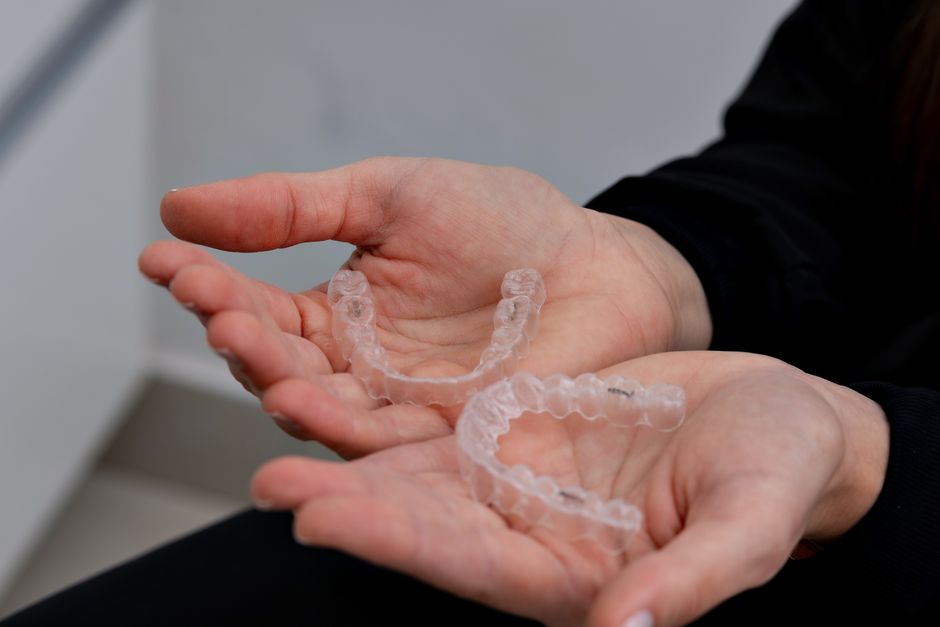
Clear aligners are made from a transparent plastic that can pick up color over time. If your Invisalign trays look yellow, the cause is almost always something in your mouth, not a defect in the plastic itself. The good news is that most yellowing is preventable, and some of it can be reversed with the right cleaning routine.
Why Is My Invisalign Yellow? Causes And Cleaning Tips
Aligners turn yellow because a thin film builds up on the plastic and holds onto color. That film is a mix of saliva proteins, plaque, and whatever you have been eating and drinking. Once it settles into the surface, the tray stops looking clear.
The plastic itself does not usually break down and change color on its own. What changes is what sits on top of it and, over time, what works its way into tiny scratches on the surface.
There is one detail worth knowing early. Aligners are not made of a solid block of plastic. They are made of a layered polymer material, and some research suggests the outer layers can absorb certain pigments more readily than the inner material. That is part of why stains can look uneven rather than uniform.
The most common causes
- Drinking coffee, tea, red wine, or dark soda while wearing the trays
- Eating without removing them, especially foods with strong color like curry, tomato sauce, or berries
- Not rinsing the trays after removing them
- Letting saliva and plaque sit on the plastic for hours
- Cleaning with the wrong products, which can dull or discolor the surface
- Smoking or vaping, which deposits tar and other residues
Time matters too. A tray you wear for one or two weeks has less chance to stain than one you wear for longer. Most standard aligner schedules change trays every one to two weeks, so staining is usually noticed toward the end of a tray’s life.
Does Wearing Invisalign While Eating or Drinking Cause Stains?
Yes. Eating and drinking with aligners in is one of the fastest ways to stain them. The American Dental Association and most orthodontists advise removing aligners before eating or drinking anything other than water.
The reason is simple. When you chew with aligners in, food and liquid get trapped between the tray and your teeth. The tray acts like a cover, holding the pigment against the plastic. Coffee, tea, and red wine are the usual suspects, but even seemingly light foods can leave color behind over repeated exposure.
Hot drinks add another problem. Heat can warp the plastic, which affects how well the tray fits. A tray that no longer fits properly does not move teeth the way it should.
What about water?
Plain water is fine. It does not stain and does not damage the plastic. Rinsing with water after meals, before you put the trays back in, helps remove loose food particles and reduces the film that holds color.
How Do You Clean Invisalign Without Damaging Them?
The safest routine is simple and consistent. Rinse the aligners every time you take them out. Clean them gently at least once a day. Avoid anything abrasive or overly hot.
Invisalign’s own guidance and general orthodontic advice point to a few reliable methods. You can use a soft toothbrush with a small amount of clear, non-abrasive toothpaste, or you can use the cleaning crystals or tablets made for aligners. Lukewarm water is important. Hot water can distort the plastic.
Steps that work
- Rinse the tray with lukewarm water as soon as you remove it
- Brush it gently with a soft toothbrush and a mild, clear soap or aligner cleaner
- Soak it in an aligner cleaning solution or dissolved cleaning crystal once a day
- Rinse thoroughly before putting it back in
- Keep the tray in its case when it is not in your mouth
Some people use denture cleaner tablets. These are widely used and generally considered acceptable for aligners, though it is worth checking the label, since some products contain ingredients that can dull the plastic over time. If you are unsure, the cleaning products sold specifically for aligners are the safest bet.





What Should You Avoid When Cleaning Aligners?
Certain cleaning habits do more harm than good. They can scratch the plastic, cloud it, or leave it more prone to holding stains.
Hot water is the biggest one to avoid. It can warp the tray so it no longer fits. Once a tray is warped, it cannot be fixed, and you may need a replacement.
Products to skip
- Hot or boiling water
- Harsh or colored mouthwash, which can stain the plastic
- Abrasive toothpaste with whitening grit or strong dyes
- Bleach or other strong household cleaners
- Colored soaps, which can transfer their dye to the tray
There is a common myth that soaking aligners in mouthwash keeps them fresh and clear. In reality, many mouthwashes contain dyes and alcohol that can discolor or weaken the plastic. Clear, mild options are better.
Can You Whiten Yellowed Invisalign Trays?
Once an aligner has taken on a deep yellow or brown tint, it is often hard to reverse. Surface stains from coffee or tea may lift with gentle cleaning, but pigment that has worked into the plastic usually stays.
This is where honesty matters. No cleaning method is guaranteed to restore a badly stained tray to its original clarity. If a tray is discolored and near the end of its wear period, most people simply move on to the next one. If it is early in the cycle and the staining is significant, contact your orthodontist. They can tell you whether the tray is still doing its job or needs to be replaced.
Do not try to whiten aligners with the same products you use on your teeth. Whitening gels and strips are designed for enamel, not plastic, and can damage the tray.
How Do You Prevent Invisalign From Turning Yellow?
Prevention comes down to three habits: keep them clean, keep them out of your mouth when you eat or drink, and store them properly.
The single most effective step is removing your aligners before anything other than water. That one habit prevents most staining before it starts.
Daily habits that protect your trays
- Take aligners out for all meals and snacks
- Drink only water while wearing them
- Rinse after every removal
- Clean at least once a day
- Brush and floss your teeth before putting aligners back in
- Store them in a clean case, not on a napkin or in your pocket
Keeping your teeth clean matters as much as keeping the tray clean. Plaque on your teeth transfers to the inside of the aligner. That film is one of the main things that holds color and makes the tray look dull.
When Should You Call Your Orthodontist?
Reach out if a tray is badly stained early in its wear cycle, if it has warped, or if it no longer fits snugly. A tray that does not fit properly may not move your teeth as planned.
Also call if you notice white spots, gum irritation, or unusual sensitivity. White spots on teeth can be an early sign of enamel damage, which is a separate concern from staining but can show up during aligner treatment.
Your orthodontist can advise whether to continue with the tray, replace it, or adjust your plan. This is a normal part of treatment and not a reason for alarm.
Frequently Asked Questions
Why is my Invisalign turning yellow so fast?
The most common reason is drinking coffee, tea, or other colored drinks while wearing the trays. Saliva and plaque also build up on the plastic and hold onto color over time.
Can I fix yellow Invisalign trays?
Light surface stains may lift with gentle cleaning, but pigment that has soaked into the plastic usually cannot be removed. A badly stained tray is often best replaced.
Does mouthwash stain Invisalign?
Yes, many mouthwashes contain dyes and alcohol that can discolor or weaken aligner plastic. Clear, mild cleaning options are safer.
How often should I clean my Invisalign aligners?
Rinse them every time you remove them and clean them gently at least once a day. Consistent daily cleaning is the best way to prevent staining.
