
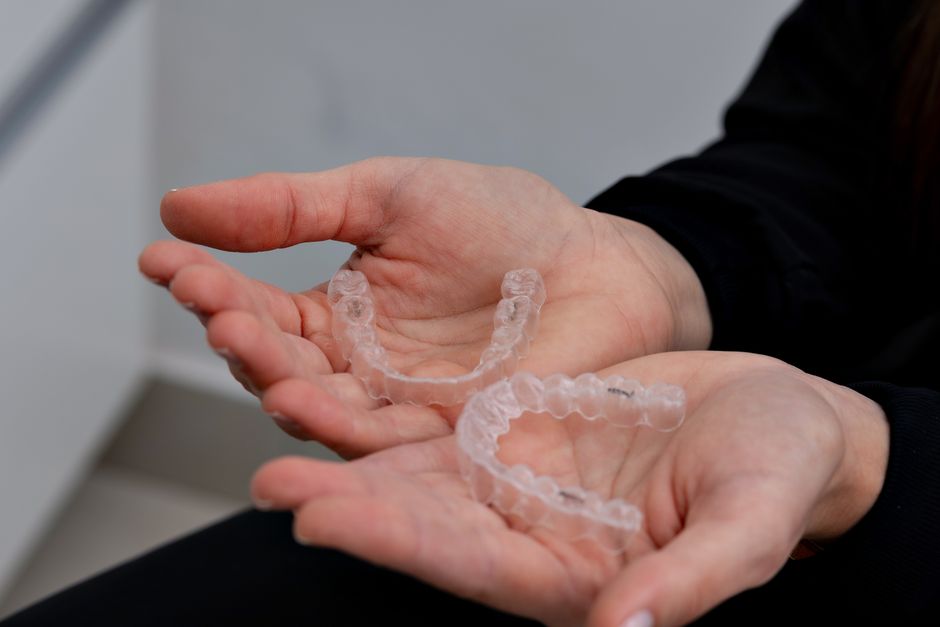
You finished your Invisalign treatment. Your teeth look straight. Now your orthodontist hands you a clear plastic retainer and tells you to wear it — a lot. Here is the short answer: a retainer does not move teeth. It holds them in their new position while the bone and gum tissue around them rebuild and stabilize. Without that hold, teeth tend to drift back toward where they started.
That tendency is called relapse, and it is the main reason retainers exist. The ligament that anchors each tooth in its socket has memory-like elastic properties. After months of pressure moved your teeth, that ligament and the surrounding bone need time to remodel around the new arrangement. A retainer keeps the teeth still during that process.
How Do Invisalign Retainers Work After Treatment?
A retainer works by applying light, continuous resistance to the forces that push teeth out of alignment. It is a passive appliance — meaning it is shaped to match your finished smile and simply prevents movement rather than creating it.
Three things happen at once when you wear it:
- The plastic shell or wire holds each tooth against the pull of the periodontal ligament.
- It blocks the small everyday forces from chewing, tongue pressure, and lip pressure from nudging teeth.
- It gives the bone surrounding each root time to mineralize and firm up in its new position.
The periodontal ligament is the key structure here. It is a thin band of connective tissue between the tooth root and the bone. During orthodontic treatment, this ligament stretches on one side and compresses on the other, allowing the tooth to move. After treatment ends, the ligament is still somewhat stretched and wants to recoil. The retainer resists that recoil long enough for the tissue to settle.
Bone remodeling is slower than most people expect. The bone that was broken down on one side of a moving tooth and built up on the other does not fully mature for many months. This is why retainer wear is heaviest right after treatment and gradually tapers.
Why Do Teeth Try to Shift Back After Invisalign?
Teeth drift back because the tissues that hold them have elastic memory. This is not a failure of your treatment. It is normal biology.
Several forces work against your new smile:
- Periodontal ligament recoil. The ligament fibers were stretched during treatment and pull back toward their original position.
- Natural age-related drifting. Teeth continue to shift slowly throughout life, even in people who never had braces.
- Chewing and tongue forces. Everyday pressure from the tongue, lips, and chewing pushes teeth in subtle ways over years.
- Late eruption of wisdom teeth. In some people, erupting wisdom teeth can contribute to crowding in the front teeth, though this is debated among researchers.
The front lower teeth are the most common area for relapse. They tend to crowd again first, which is why retainers focus heavily on holding that region.
One clarification worth knowing: relapse is not the same as treatment failure. Even a technically perfect Invisalign result can drift if retainers are not worn as directed. The retainer is not optional maintenance — it is part of the treatment itself.
What Is the Difference Between Fixed and Removable Retainers?
There are two main types, and many patients get both.
| Type | How it works | Wear schedule | Main drawback |
|---|---|---|---|
| Removable clear retainer | Custom plastic tray that fits over your teeth | Usually full-time at first, then nights only | Easy to lose or forget; can crack over time |
| Fixed (bonded) wire retainer | Thin wire glued behind the front teeth | Worn 24/7, not removable by you | Harder to clean; wire can break |
A removable clear retainer is the type most Invisalign patients receive, since it looks and feels similar to the aligners they already wore. A fixed wire retainer is often added behind the lower front teeth because that area relapses most often.
Some orthodontists recommend a fixed wire plus a removable retainer worn at night. Others use only a removable one. The choice depends on your specific bite, your treatment history, and your orthodontist’s clinical judgment. There is no single correct protocol that applies to everyone.




How Long Do You Have to Wear a Retainer?
For most people, retainer wear is lifelong in some form. That surprises patients, but it reflects how teeth behave over decades.
The typical pattern looks like this:
- First few months: Full-time wear, often 20 to 22 hours a day. This is when relapse risk is highest.
- After that: Many orthodontists reduce wear to nights only.
- Long term: Nightly wear, indefinitely, for most patients.
Exact timelines vary by orthodontist and by how much your teeth moved during treatment. Some clinicians taper faster. Some keep patients on full-time wear longer. No universal guideline sets a single schedule for everyone.
Skipping nights is where problems start. Teeth can shift within days to weeks of reduced wear. If a retainer starts to feel tight, that is a sign teeth have already moved slightly. Wearing it consistently usually corrects small shifts, but larger ones may require new aligners or a retainer adjustment.
Do Retainers Actually Prevent Relapse?
Yes — retainer wear is the single most reliable way to reduce relapse after orthodontic treatment. This is one of the more consistent findings in orthodontic research.
What the evidence shows clearly:
- Patients who wear retainers as directed have significantly less relapse than those who do not.
- Relapse risk is highest in the first year after treatment and continues for years afterward.
- No retainer design eliminates relapse entirely, but consistent wear reduces it substantially.
What the evidence does not support is the idea that you can stop wearing retainers once your teeth “feel stable.” Stability is not something you can feel. Teeth can shift without any sensation. The only reliable signal is how the retainer fits.
There is also a common myth that retainers “train” teeth to stay in place permanently. They do not. They hold teeth mechanically. Stop wearing them and the underlying tendency to drift returns.
What Happens If You Stop Wearing Your Retainer?
Teeth begin drifting back, often within weeks. How much depends on your original bite, how much your teeth moved, and your individual biology.
Early signs of relapse include:
- A retainer that feels tight or does not seat fully.
- Visible crowding returning in the lower front teeth.
- Small gaps reopening between teeth.
- A slight change in how your bite feels when you close your mouth.
If you catch it early, wearing the retainer consistently again often resolves minor shifts. If you have been away from your retainer for months or years, the retainer may no longer fit. In that case, you would need new aligners or a new retainer to correct the drift.
This is why orthodontists emphasize consistency over perfection. Missing a night here and there is usually not a problem. Going weeks without wearing it is where relapse becomes likely.
How Should You Care for Your Retainer?
Retainers collect bacteria, plaque, and sometimes stain if not cleaned regularly. Clean them daily with lukewarm water and a soft brush. Avoid hot water — it can warp the plastic and ruin the fit.
Keep your retainer in its case when not in use. Wrapping it in a napkin is a common way people accidentally throw them away. Do not leave them in a hot car or near a heat source.
Bring your retainer to every dental checkup so your dentist or orthodontist can inspect it for cracks, wear, or fit problems. Clear retainers typically need replacement every few years, though this varies.
Frequently Asked Questions
Do Invisalign retainers move teeth or just hold them?
Retainers only hold teeth in place — they do not move them. If teeth have already shifted, a retainer may not be able to push them back, and you may need new aligners.
Can I wear my Invisalign retainer only at night?
Many people switch to night-only wear after an initial full-time period, but the exact timeline depends on your orthodontist’s instructions. Wearing it less than directed raises the risk of relapse.
How long do I need to wear a retainer after Invisalign?
For most people, retainer wear continues indefinitely, often at night. Teeth can drift at any age, so there is no point at which retainers become unnecessary for everyone.
What happens if I lose my retainer?
Contact your orthodontist promptly, because teeth can shift within days to weeks without a retainer. A new one can usually be made from your records, but delay increases the chance of needing additional treatment.
