
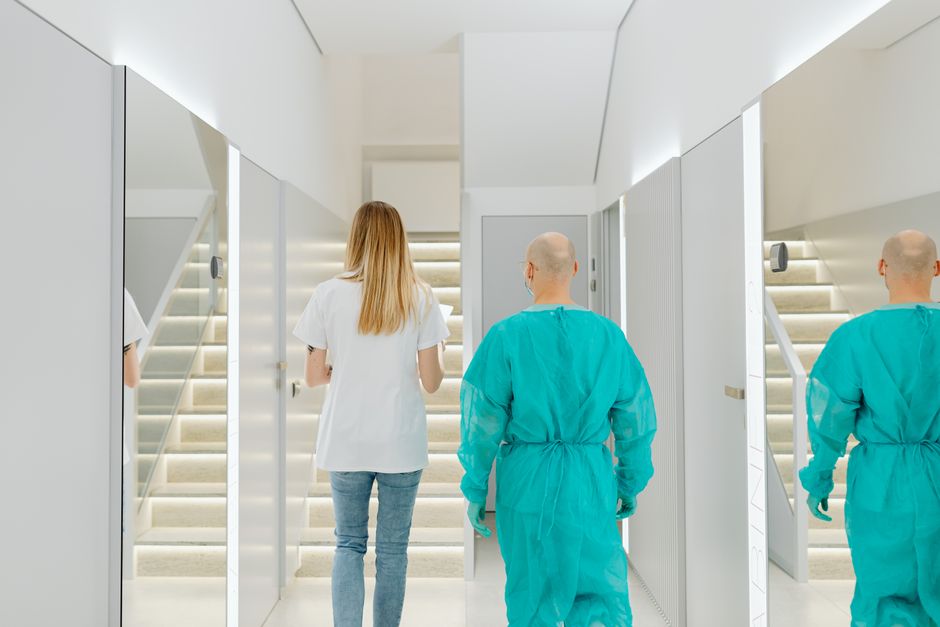
An isolation gown is a barrier garment worn over clothing to protect both the wearer and the people around them from contact with infectious material. To put one on safely, open it fully without letting the outside touch your body, secure the neck and waist ties, and make sure the front and sleeves are fully covered. To remove it safely, unfasten the ties, peel the gown away from your body by pulling it off your shoulders and arms so the contaminated outside folds inward, and dispose of it without touching your clothing or skin.
That is the short version. The details matter, because the way you take a gown off is where most contamination happens. This guide walks through the full sequence, the reasoning behind each step, and the mistakes that quietly defeat the purpose of wearing one.
What Is an Isolation Gown and What Does It Actually Do?
An isolation gown is a piece of personal protective equipment (PPE) designed to cover the torso, arms, and often part of the legs. It creates a physical barrier between your clothing and skin and whatever you are in contact with — body fluids, blood, respiratory secretions, or contaminated surfaces.
Gowns are used in healthcare settings and, since the COVID-19 pandemic, in homes, clinics, and workplaces by people with no medical training. That shift matters. A gown only works if it is put on and taken off correctly. Worn wrong or removed carelessly, it can spread contamination rather than block it.
Not all gowns are the same. Healthcare facilities choose gowns based on the level of fluid exposure expected. A gown that keeps out a splash is not the same as one rated for a high-pressure spray of fluid. The material, the seams, and the level of fluid resistance all vary. For most everyday situations, a standard disposable gown is adequate. For high-risk fluid exposure, healthcare workers use gowns tested to specific barrier standards.
One point that often gets lost: a gown protects against contact and splashes. It is not a substitute for hand hygiene, gloves, or a mask when those are indicated. Each piece of PPE covers a specific gap.
How To Put On an Isolation Gown Step by Step
Putting a gown on is sometimes called donning. The goal is to cover yourself fully without letting the outside of the gown touch your skin or clothing before it is in place.
Before you start, clean your hands. Hand hygiene before and after any PPE use is the single most important step, and it is the one most often skipped.
- Pick up the gown by the shoulders or the inside of the neckline. Try not to handle the front, which will face the contamination.
- Let the gown unfold and hang open. Do not shake it, which can spread particles.
- Slip your arms into the sleeves. Push your hands through until your wrists are covered.
- Bring the gown around your back and secure the neck ties. Tie them at the back of the neck or the side, not where they will dangle into your work area.
- Wrap the waist ties around your back and tie them at the front or side. Some gowns are open at the back and rely on these ties to hold them closed.
- Adjust so the gown covers from your neck down to your knees or lower, and your sleeves reach your wrists.
- Put on your gloves last, pulling them over the cuffs of the gown sleeves so no gap remains at the wrist.
If you wear a mask or eye protection, the order matters. The gown goes on before the gloves, and the mask and eye protection are typically put on before or alongside the gown depending on the setting. Gloves always go on last so they can overlap the sleeve cuffs.
Once the gown is on, keep your hands away from your face. The front of the gown is now considered contaminated even if nothing visible has touched it.
How To Remove an Isolation Gown Without Contaminating Yourself
Removing a gown is called doffing, and it is the higher-risk step. The outside of the gown is now the dirty side. Your job is to remove it so that the dirty side ends up folded inside, away from your body, and your hands never touch the contaminated surface with bare skin.
If you are wearing gloves, you generally remove the gown and gloves together in a coordinated way, or remove the gloves first and then the gown, depending on your training and setting. The key principle is the same either way: the outside of the gown never touches your skin or clothing.
- Untie the waist ties first, then the neck ties. Reach behind carefully so your hands do not brush the front.
- Peel the gown away from your shoulders by pulling from the inside, near the neck or shoulders, not the front.
- Slide your arms out of the sleeves one at a time. As you pull each arm out, let the sleeve turn inside out.
- Pull the gown down and away from your body, rolling or folding it so the contaminated outside is trapped on the inside.
- Hold the gown away from you and drop it directly into the waste or laundry bin. Do not set it down first.
- Clean your hands immediately, before touching anything else.
The most common mistake is grabbing the front of the gown with bare hands. Another is letting the gown brush against your legs or clothing as it comes off. A third is removing the gown and then touching a door handle, phone, or face before washing hands.





Why the Order of Removal Matters So Much
Contamination during doffing is well documented. Studies of healthcare workers have found that self-contamination happens even among trained staff, and the gown is one of the harder items to remove cleanly because it covers so much of the body.
The logic is simple. The front and sleeves of the gown have been exposed to whatever you were in contact with. Every time your bare hand touches that surface, contamination transfers to your skin. From your skin it can reach your face, your clothing, or the next surface you touch.
That is why the entire removal sequence is built around one rule: handle only the inside of the gown, and let the outside fold inward. The clean side — the part that was against your body — is the only part your bare hands should contact.
This is also why hand hygiene comes immediately after. Even careful removal can leave trace contamination on the hands. Washing or sanitizing right away closes that gap.
Common Mistakes That Make a Gown Useless
Most gown failures are not about the gown. They are about how it is worn or removed.
- Touching the front with bare hands during removal, which defeats the barrier.
- Reusing a disposable gown. Single-use gowns are meant to be discarded after one use, not stored for later.
- Leaving the gown open at the back or with loose ties, which exposes clothing and skin.
- Removing gloves and gown in the wrong order, leaving the wrists or forearms exposed to contamination.
- Skipping hand hygiene before putting on or after removing the gown.
- Wearing a torn or wet gown. Once the barrier is breached, it no longer protects.
- Adjusting the gown with contaminated gloves during use, which spreads material to the outside of the gloves.
A gown that is worn open, reused, or removed carelessly gives a false sense of protection. The protection comes from the full sequence, not the garment alone.
What to Do If You Have No Gown Available
In some situations, a proper isolation gown is not available. This happened widely during supply shortages, and it still happens in home care.
When no gown is available, the honest answer is that there is no perfect substitute. A disposable apron, a long-sleeved waterproof jacket reserved for the task, or a large plastic garment can reduce contact exposure, but none is tested to the same standard as a medical gown. If you use a substitute, treat it as contaminated after use and remove it the same careful way.
The more important point is that a gown is one layer among several. Hand hygiene, gloves, and a mask where indicated do a great deal of the work. If you cannot get a gown, focus on the steps you can control and clean your hands thoroughly afterward.
Frequently Asked Questions
Which side of the isolation gown is considered contaminated?
The outside, or front, of the gown is considered contaminated once it is in use. Your hands should only touch the inside surface when you remove it.
Do you tie the neck or the waist first when putting on a gown?
You secure the neck ties first, then wrap and tie the waist ties. This holds the gown in place before you close the front and back.
Can you reuse a disposable isolation gown?
No. Disposable gowns are designed for single use and should be discarded after each removal. Reusing one can spread contamination to your hands and clothing.
Do you remove gloves before or after the gown?
It depends on your training and setting, but the guiding rule is that the contaminated outside of the gown never touches your bare skin. Many protocols remove the gown and gloves together in one motion, then wash hands immediately.
