
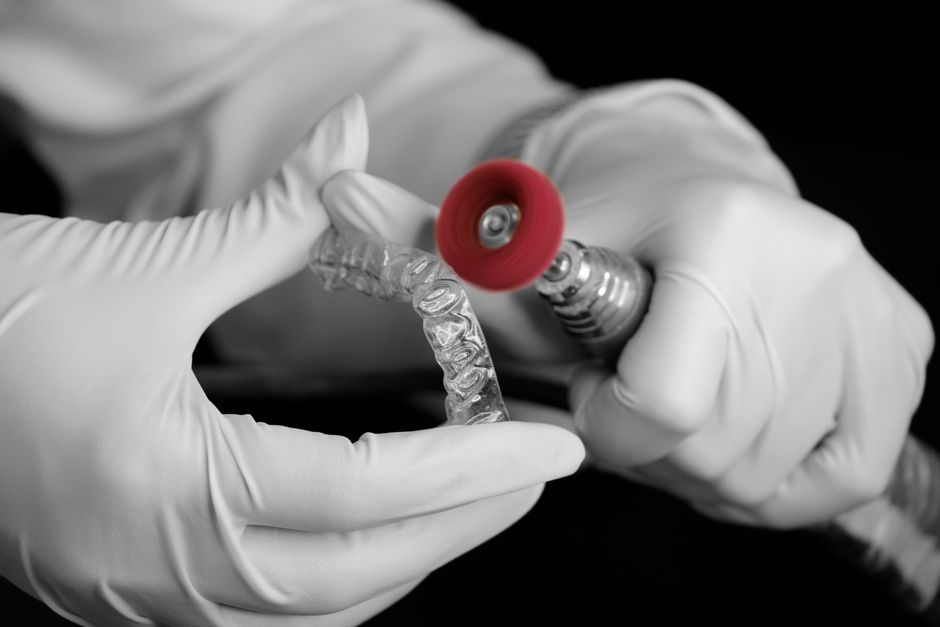
Invisalign retainers and aligners need more than a quick rinse to stay clean. The reliable daily routine is simple: rinse them with lukewarm water every time you remove them, brush them gently with a soft toothbrush and clear, fragrance-free soap or use Invisalign cleaning crystals, and soak them once a day to reach the spots a brush misses. Deep cleaning once a day plus a weekly thorough soak keeps bacteria, plaque, and odor from building up on the plastic.
That is the short answer. The details matter more than people expect, because the material is not like natural teeth and can be damaged by the wrong products. Heat warps it. Harsh chemicals scratch or cloud it. Skipping the soak leaves a biofilm that brushing alone does not fully remove. Get the method right and the routine takes two minutes.
Why Do Invisalign Retainers Get Dirty So Fast?
Clear aligners and retainers sit against your teeth and gums for 20 to 22 hours a day, which is the wear time most orthodontists recommend during active treatment. That creates a warm, moist, enclosed environment. Saliva, food particles, and the bacteria that cause plaque and cavities all collect on the plastic surface.
The problem is that plastic does not have the self-cleaning properties of enamel. Your tongue and saliva help clear natural teeth to some degree. A retainer has no such defense. Whatever lands on it stays there until you remove it.
Over hours, that film hardens into a biofilm. Biofilm is a structured layer of bacteria that sticks to surfaces and resists a simple rinse. This is why a retainer can look clear but still smell or taste off. The bacteria are not always visible.
There is a detail many people miss. Aligners are made of a plastic that is slightly porous at the microscopic level. That porosity gives bacteria places to settle that a smooth surface would not. It also means scratched or cloudy aligners are harder to clean, because the scratches become new hiding spots.
What Is the Best Daily Cleaning Routine?
A consistent daily routine has three parts: rinse, brush, and soak. Do all three and you cover the surface, the crevices, and the microscopic pores.
Rinse immediately. Every time you take the aligner or retainer out, rinse it with lukewarm water. Do not let saliva dry on the plastic. Dried saliva leaves a film that is harder to remove later. Rinse before it dries, not after.
Brush gently. Use a soft-bristled toothbrush and a small amount of clear, fragrance-free liquid soap. Brush the inside and outside of the aligner, plus the edges. Be gentle. Hard brushing scratches the plastic, and scratches trap bacteria.
Soak once a day. A daily soak reaches areas your brush cannot. You can use Invisalign cleaning crystals, which the manufacturer makes for this purpose, or a retainer cleaning product labeled for aligners. Follow the product’s instructions on timing.
Some people use denture cleaner tablets. These are widely used and generally effective for cleaning, but they are formulated for dentures, not aligners. If you use them, choose fragrance-free and colorless options, and keep the soak short. Long soaks in the wrong product can affect the plastic over time.
How To Clean Invisalign Retainers Daily Deep: The Soak Step
The daily soak is what separates a surface clean from a deep clean. Brushing removes what you can see and reach. Soaking lifts the biofilm and reaches the fine spaces between the plastic and the gum line.
Here is what a solid deep-clean soak looks like:
- Remove the aligner and rinse it first so loose debris does not sit in the soak.
- Place it in a clean container with the cleaning solution or dissolved crystals.
- Let it soak for the time the product specifies. Do not leave it overnight unless the product says that is fine.
- Take it out, rinse thoroughly with lukewarm water, and brush gently if any film remains.
- Rinse the container and let it air dry so it does not become a source of bacteria itself.
The container matters. A dirty retainer case reintroduces bacteria every time you close it. Wash the case with soap and warm water regularly, and let it dry open. Many people clean the aligner carefully and then store it in a case that has never been washed.




What Should You Never Use on Invisalign Retainers?
Some common cleaning habits damage aligners. Knowing what to avoid is as important as knowing what to use.
Hot water. Heat is the single biggest risk. Hot water can warp the plastic, and a warped aligner no longer fits correctly. That can set back your treatment. Always use lukewarm or cool water.
Harsh chemicals. Bleach, alcohol, and strong disinfectants can cloud the plastic, leave a chemical taste, and degrade the material. They are not meant for something you put in your mouth for most of the day.
Colored or strongly scented soaps. Dyes and fragrances can stain or leave residue. Clear, unscented soap is the safer choice.
Whitening toothpastes. Many whitening toothpastes are abrasive. They can scratch the aligner surface, which makes it cloudier and gives bacteria more places to cling.
Very hot dishwashers. Do not put aligners in a dishwasher. The heat alone rules it out.
One point worth stating plainly: no cleaning method makes an aligner sterile, and it does not need to be. The goal is to keep bacterial buildup low enough that it does not harm your teeth, your gums, or your treatment. Chasing perfect sterility with harsh products does more harm than good.
Does Cleaning Your Retainer Protect Your Teeth?
Yes, and this is the part that affects more than fresh breath. A dirty aligner presses a film of bacteria against your teeth for hours at a time. That is a setup for plaque buildup and, over time, tooth decay and gum irritation.
People wearing aligners sometimes notice their teeth feel less clean even with good brushing. The aligner can trap particles and limit the natural washing effect of saliva. Cleaning the aligner is part of protecting the teeth underneath it, not just a cosmetic habit.
There is also a comfort angle. A clean aligner fits and feels the same, but a dirty one can carry an odor or taste that makes you want to wear it less. Since aligners only work when worn, anything that makes you take them out more often works against your results.
How Often Should You Replace or Deep Clean Your Retainer?
Daily cleaning handles routine buildup. Beyond that, some periodic habits help. A more thorough soak, following the product directions, can address stubborn film that builds over a week.
Retainers last longer with good care, but they do not last forever. Plastic can discolor, crack, or lose its fit over time. If your retainer becomes cloudy, cracked, or starts to feel loose, that is a signal to check with your orthodontist rather than clean harder. Cleaning cannot fix a retainer that no longer fits.
For aligners during active treatment, you typically move to a new set on a schedule your orthodontist sets, so each set has a limited lifespan. Retainers worn after treatment are used long term, which makes consistent cleaning more important for them.
Can You Clean Retainers With Home Remedies?
Some popular home remedies are fine, and some are not. The evidence on effectiveness is limited for most of them, so it helps to separate what is safe from what is proven.
A diluted vinegar soak is sometimes recommended. Vinegar is acidic, and repeated or long soaks could affect the plastic over time. If you try it, keep it brief and rinse well. There is no strong clinical evidence that vinegar cleans better than a product made for aligners.
Baking soda is sometimes used as a gentle abrasive. It can help with light cleaning but does not replace a proper soak, and scrubbing with it can still scratch the plastic if you press hard.
The most reliable options remain the ones designed for the job: Invisalign cleaning crystals or a retainer cleaning product labeled for aligners. These are formulated to clean without damaging the plastic. Home remedies are a fallback, not a first choice.
What About Cleaning on the Go?
When you are out and cannot do a full routine, keep it simple. Rinse the aligner with water before you put it back in. Carry a small case so it does not sit loose in a pocket or bag where it picks up debris.
If you eat out, brush your teeth before putting the aligner back in when you can. If you cannot brush, at least rinse your mouth and the aligner. Then do the full clean when you get home. Skipping one soak is not a crisis. Letting it become the habit is what causes problems.
Frequently Asked Questions
How do you deep clean Invisalign retainers?
Soak them once a day in Invisalign cleaning crystals or a retainer cleaner made for aligners, after rinsing and gently brushing them. The soak reaches the fine spaces a brush cannot, which is what makes it a deep clean rather than a surface one.
Can I use toothpaste to clean my Invisalign aligners?
It is better to avoid it, especially whitening toothpaste, because many are abrasive and can scratch the plastic. Scratches make the aligner cloudier and give bacteria more places to collect.
How often should I clean my Invisalign retainers?
Rinse them every time you remove them, brush them gently at least once a day, and soak them once daily. That routine keeps bacterial buildup low without damaging the plastic.
Can I use hot water to clean my aligners?
No. Hot water can warp the plastic, and a warped aligner no longer fits correctly, which can affect your treatment. Use lukewarm or cool water instead.
