
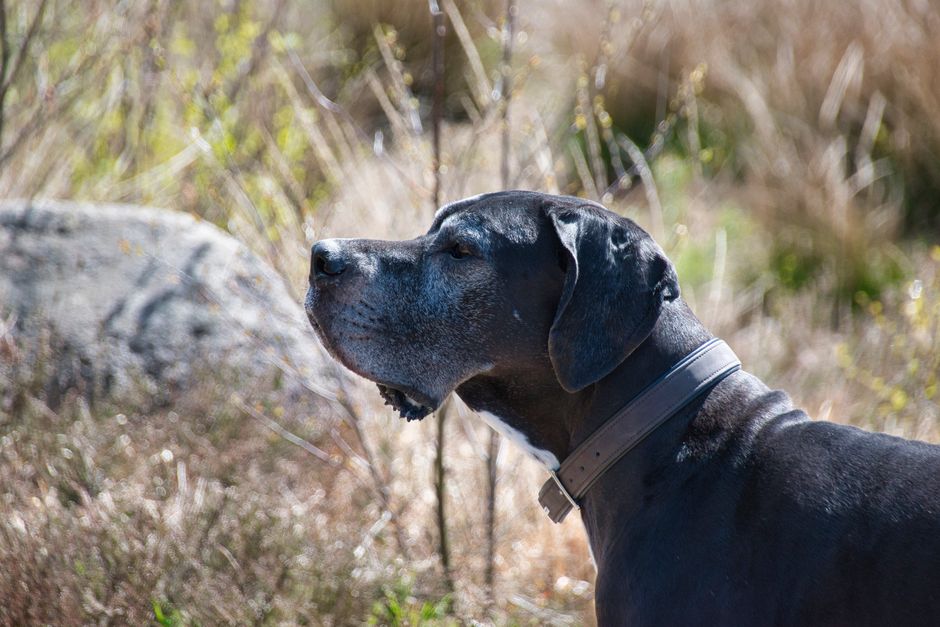
A Great Dane who looks thin may simply be built that way. Great Danes are one of the tallest dog breeds, and their frame often shows ribs and hip bones even when they are healthy. But sudden weight loss, a poor appetite, or a dog who looks bony rather than lean can point to a medical problem that needs a vet.
The main causes to check fall into a few groups: normal breed body type, feeding problems, parasites, digestion issues, and underlying disease. Your dog’s age, appetite, and how fast the change happened are the clues that matter most.
Is It Normal for a Great Dane to Look Thin?
Yes, many healthy Great Danes look lean. This is a giant breed with a deep chest and long legs, and the breed standard describes a well-muscled but sleek dog. A young Dane in its rapid growth phase can look especially lanky.
The reliable test is body condition, not appearance. You should be able to feel the ribs easily under a thin layer of fat, but not see every rib sharply. From above, there should be a visible waist behind the rib cage. From the side, the belly should tuck up toward the hind legs.
If your dog meets those markers and is active and eating well, thin is likely just their build. If ribs, spine, and hip bones are prominent, or if you can see the outline of the spine, the dog is likely underweight.
A non-obvious point: in giant breeds, the growth period matters. Great Danes keep growing until roughly 18 to 24 months. Feeding a growing Dane too much energy can push fast growth, and rapid growth in large and giant breeds is linked to a higher risk of developmental bone and joint problems. So a lean growing Dane is often preferable to a heavy one. Your vet can help you judge the right weight for your dog’s age and stage.
Why Is My Great Dane So Skinny? Causes To Check First
Start with the simplest explanations. Many skinny Danes are simply not getting enough calories, or they are getting the wrong kind.
Great Danes are large dogs with high energy needs, and a portion that suits a medium breed will leave a Dane hungry and thin. Food quality matters too. Diets that are mostly fillers deliver fewer usable calories per bite.
Other common causes to rule out early:
- Parasites. Roundworms, hookworms, whipworms, and giardia can steal nutrition and cause weight loss even when a dog eats well. A fecal test at the vet checks for these.
- Rapid growth. A young Dane can burn through calories faster than they take them in during a growth spurt.
- Stress or change. A new home, a move, or a change in routine can reduce appetite for a while.
- Dental pain. A sore mouth or a broken tooth can make eating uncomfortable.
If your dog is eating normally and still losing weight, that shifts the picture toward a medical cause rather than a feeding problem.
When Does Weight Loss Mean a Health Problem?
Unintended weight loss is the signal to call your vet. Losing weight while eating a normal amount is a red flag, because it suggests the body is not absorbing or using food properly.
Watch for these signs alongside the thin appearance:
- Eating less or refusing food
- Vomiting or diarrhea, especially lasting more than a day or two
- Lethargy or less interest in play
- Dull coat or flaky skin
- A pot-bellied look with a thin body, which can suggest worms or fluid
- Drinking more water than usual
Some of these signs overlap with many conditions, so they cannot confirm a diagnosis on their own. A vet exam with bloodwork and a fecal test is the way to sort them out.



What Medical Conditions Cause Thinness in Great Danes?
Several conditions can cause a Dane to lose weight or stay thin despite eating. The evidence for each varies, so a vet’s exam is what narrows it down.
Gastrointestinal disease is a common cause. Conditions that affect digestion or absorption, such as inflammatory bowel disease or chronic enteropathy, can leave a dog thin even with a good appetite. Some dogs also have food sensitivities that cause poor absorption.
Pancreatic problems can interfere with digestion. Exocrine pancreatic insufficiency (EPI) means the pancreas does not make enough digestive enzymes, so food passes through without being fully used. It causes weight loss and often loose, greasy stools. It is diagnosed with a blood test.
Kidney or liver disease can cause weight loss, often with other signs like increased thirst or changes in appetite. Bloodwork usually picks these up.
Cancer is a less common cause but one vets consider in older dogs with unexplained weight loss. Diabetes and thyroid problems can also affect weight, though thyroid disease more often causes weight gain in dogs.
Heart disease can cause muscle wasting in some dogs. A vet listening to the heart and chest is part of a standard exam.
None of these can be confirmed from appearance alone. The point of naming them is to show why a proper workup matters when a Dane is losing weight for no clear reason.
How Can You Tell If Your Great Dane Is Underweight?
Use your hands as much as your eyes. Run your palms along the rib cage. You should feel each rib with light pressure, like the bones on the back of your hand. If the ribs feel like your knuckles, the dog is likely too thin.
Check the spine and hips next. A little padding over the spine is normal. A sharp, prominent spine or hip bones that stick out sharply suggest the dog needs more nutrition or a vet check.
Weighing your dog regularly is the most reliable way to track change. A home scale may not handle a large Dane, so use a vet scale or a large pet scale. Record the weight and compare over weeks. A steady, unexplained drop is worth a call to your vet.
Take a photo from the side and from above every few weeks. Comparing photos over time shows change more clearly than memory does.
What Should You Feed a Thin Great Dane?
If your vet confirms the dog is underweight with no medical cause, the fix is usually more calories and a higher-quality diet. A diet formulated for large-breed dogs is a reasonable starting point.
Feed measured portions and increase gradually rather than all at once. Sudden large meals are not ideal for any dog, and in deep-chested breeds like the Great Dane, eating very fast or eating one huge meal is associated with a higher risk of bloat, a life-threatening emergency. Splitting food into smaller meals and using a slow feeder can help reduce that risk. Ask your vet about the best feeding schedule for your dog.
Do not add supplements or homemade extras without checking with your vet first. Some supplements can unbalance a complete diet, and the evidence for many weight-gain products is thin.
If the dog is a puppy, do not try to speed growth with extra calories. Feed to a healthy body condition and let the dog grow at its natural pace. Your vet can guide portion sizes for a growing giant breed.
When Should You See a Vet?
Call your vet if your Dane is losing weight without explanation, is eating less, or has vomiting or diarrhea that lasts more than a day or two. Also call if the dog seems tired, drinks more water than usual, or looks bony rather than lean.
Bring notes on what and how much the dog eats, any changes in stool, and how long the weight change has been going on. These details help your vet decide which tests to run first.
Weight loss in a large dog is rarely something to wait out. A prompt exam catches treatable problems earlier, and it rules out serious ones so you can stop worrying.
Frequently Asked Questions
Why is my Great Dane so skinny but still eating?
Eating well while staying thin often points to a problem with digestion or absorption, such as parasites, pancreatic issues, or intestinal disease. A vet exam with bloodwork and a fecal test is the way to find the cause.
Are Great Danes naturally skinny dogs?
Many Great Danes are naturally lean, with visible waist and easy-to-feel ribs, because of their tall frame and deep chest. If ribs, spine, or hips look sharp, the dog is likely underweight and needs a check.
How can I tell if my Great Dane is underweight?
You should feel the ribs easily but not see every rib sharply, and there should be a visible waist from above. Prominent hip bones or a sharp spine suggest the dog is too thin.
Could worms make my Great Dane thin?
Yes, intestinal parasites can cause weight loss even when a dog eats normally. A simple fecal test at your vet can check for worms and other parasites.
