
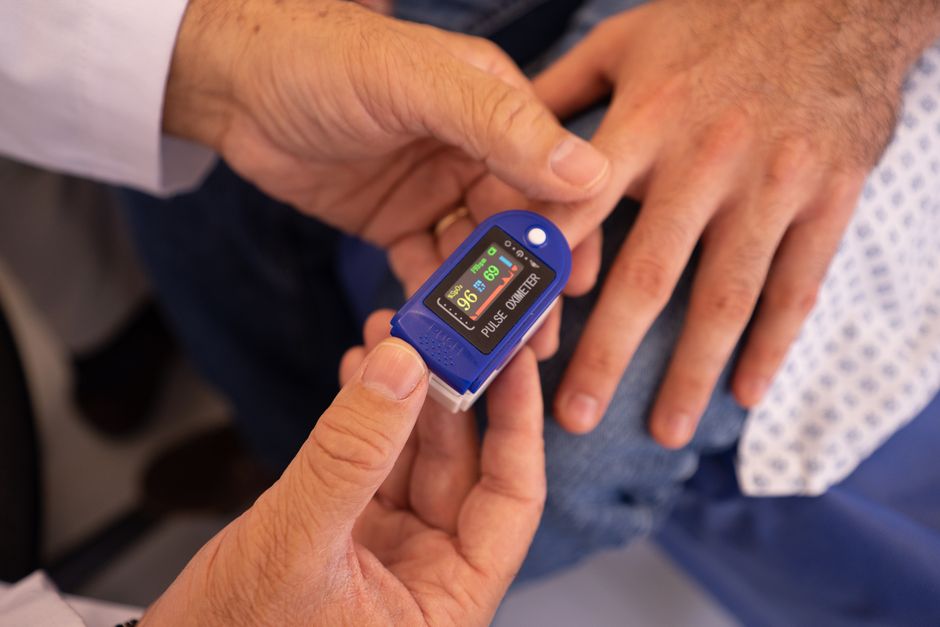
Respiratory rate is the number of breaths you take in one minute, and you can check it at home by counting each rise and fall of the chest for a full 60 seconds while the person rests quietly and does not know they are being watched. A normal resting rate for most adults falls between 12 and 20 breaths per minute. The trick is counting when the person is calm, because talking, moving, or knowing someone is timing them all push the number up.
How To Check Respiratory Rate
You need a watch with a second hand or a phone timer, and about a minute of quiet. That is the whole toolkit.
Here is the method clinicians use:
- Have the person sit or lie still for a few minutes first. Activity, talking, and even a recent laugh can raise the count.
- Watch the chest or belly. Count one breath each time the chest rises and falls once. If the chest movement is hard to see, place a hand lightly on the upper back or watch the shoulders.
- Count for a full 60 seconds. You can count for 30 seconds and double it, but only if the breathing is clearly regular. A full minute is more accurate and removes that guesswork.
- Do not tell the person you are counting their breathing. When people know, they often change it without meaning to.
- Write the number down. A single reading tells you less than a few readings taken at the same time each day.
That last point matters more than most people realize. One number in isolation is rarely useful. A pattern over several days is what tells you something may be worth mentioning to a doctor.
What Is a Normal Respiratory Rate?
For a resting adult, 12 to 20 breaths per minute is the standard range taught in clinical practice. Below 12 is called bradypnea, meaning slow breathing. Above 20 is called tachypnea, meaning fast breathing. Both terms describe a measurement, not a diagnosis.
Normal ranges change with age, and they change a lot in children. Newborns breathe much faster than adults, and the rate steadily drops as a child grows. A rate that would be alarming in an adult can be completely normal in a toddler.
Several everyday things shift your rate within the normal range. Fever raises it. So does pain, anxiety, and altitude. Some medications, particularly opioids and certain sedatives, can slow breathing. Pregnancy raises it slightly because the body is working with a larger demand for oxygen.
One detail worth knowing: respiratory rate is often called the forgotten vital sign. It is the measurement most likely to be skipped or estimated in a busy clinic, even though it can be one of the earliest signals that something is wrong. Nurses and doctors are trained to count it, but in practice it is sometimes guessed rather than measured. That is a reason to trust your own careful count at home.
How Do You Count Breaths If You Cannot See the Chest Move?
Not everyone has visible chest movement. Someone wearing a heavy sweater, lying under a blanket, or breathing shallowly can be hard to read. There are a few reliable alternatives.
Place a hand flat on the upper back between the shoulder blades. You will feel the gentle expansion and contraction of each breath. Count those. This works well for infants and for anyone lying face down.
Watch the base of the neck or the collarbone area. The slight rise and fall there tracks breathing even when the chest is hidden.
Listen if you can. A quiet room lets you hear the soft in and out of air. Count one full cycle, in then out, as one breath. Do not count the inhale and the exhale separately, or you will double your number.
For babies, the belly is often the best place to look. Infants use their diaphragm more than their chest, so the abdomen moves more than the ribcage. A hand on the belly is a simple way to feel each breath.




What Can Throw Off Your Count?
A lot, which is why technique matters. The biggest source of error is counting someone who knows they are being watched. Their breathing becomes deliberate and the number becomes meaningless.
Other common issues:
- Counting for only 15 or 30 seconds when the breathing is irregular. Short counts magnify small errors.
- Counting during or right after activity. Wait until the person has been still for a few minutes.
- Mistaking a sigh, a yawn, or a cough for a breath. Skip those and keep counting the steady cycles.
- Counting the inhale and exhale as two breaths instead of one.
- Taking a single reading and treating it as a verdict. One high or low number on its own usually means very little.
If you get a number that seems off, wait a few minutes and count again. A repeat measurement is more informative than the first one.
When Should a Respiratory Rate Concern You?
A rate outside the normal range that persists at rest is worth paying attention to. In adults, a resting rate above 20 or below 12 that does not return to normal after a few minutes of rest is a reason to check in with a clinician.
Breathing that looks like hard work is a separate and more urgent signal than a high number alone. Watch for the following:
- Skin pulling in around the ribs or above the collarbone with each breath
- Flared nostrils, especially in children and infants
- Grunting sounds on exhale
- Lips, face, or fingertips turning blue or gray
- Difficulty speaking a full sentence without stopping for air
- Confusion, extreme drowsiness, or trouble staying awake
Any of those signs mean seek medical help right away. They point to breathing that is failing to keep up, not just breathing that is fast.
For infants, the threshold for concern is different and lower. A baby who is breathing very fast, working hard to breathe, or pausing in their breathing needs prompt medical attention. Do not wait to see if it settles.
A persistently abnormal rate on its own is not a diagnosis. It is a signal that something may need looking at. Many causes are minor and treatable. Some are serious. Only a clinician can tell the difference, and that usually takes an exam, a history, and sometimes tests.
Does Counting Your Own Breathing Work?
It works, but with a catch. The moment you focus on your own breathing, you tend to change it. Most people either slow down or speed up when they pay attention.
If you want to check your own rate, try this. Count your breaths without trying to control them. Do not deepen or slow them on purpose. Just observe. It will not be perfect, but it can still give you a rough sense of your resting pattern.
A better approach for tracking your own breathing over time is to count right when you wake up, before you move or check your phone. Your breathing is still at its natural resting state then, and you have not had a chance to influence it.
For anything you plan to act on, have someone else count while you rest. An outside observer gets a cleaner number, because you cannot unconsciously adjust what you are not watching.
Why Respiratory Rate Matters More Than People Think
Respiratory rate is one of the earliest things to change when the body is under stress, and it often changes before other vital signs do. In hospital settings, an abnormal rate is treated as a warning sign that prompts closer monitoring.
That is why a careful count at home can be genuinely useful. It is simple, it costs nothing, and it does not require equipment. Done correctly, it gives you a real piece of information about how the body is functioning.
The key word is correctly. Count for a full minute, count at rest, and count without the person knowing. Get those three right and you have an accurate reading. Get them wrong and you have a number that means very little.
Frequently Asked Questions
What is a normal respiratory rate for adults?
A resting rate of 12 to 20 breaths per minute is the standard range for adults. Rates outside this range at rest are worth discussing with a doctor if they persist.
Can I count my own respiratory rate accurately?
You can get a rough reading, but focusing on your own breathing usually changes it. A count taken by someone else while you rest is more reliable.
How long should I count breaths for?
Count for a full 60 seconds for the most accurate result. A 30-second count doubled is acceptable only when the breathing is clearly regular.
When is a fast breathing rate an emergency?
Fast breathing with signs of hard work, such as skin pulling in around the ribs, flared nostrils, grunting, or blue lips, is an emergency. Seek help right away rather than waiting.
