
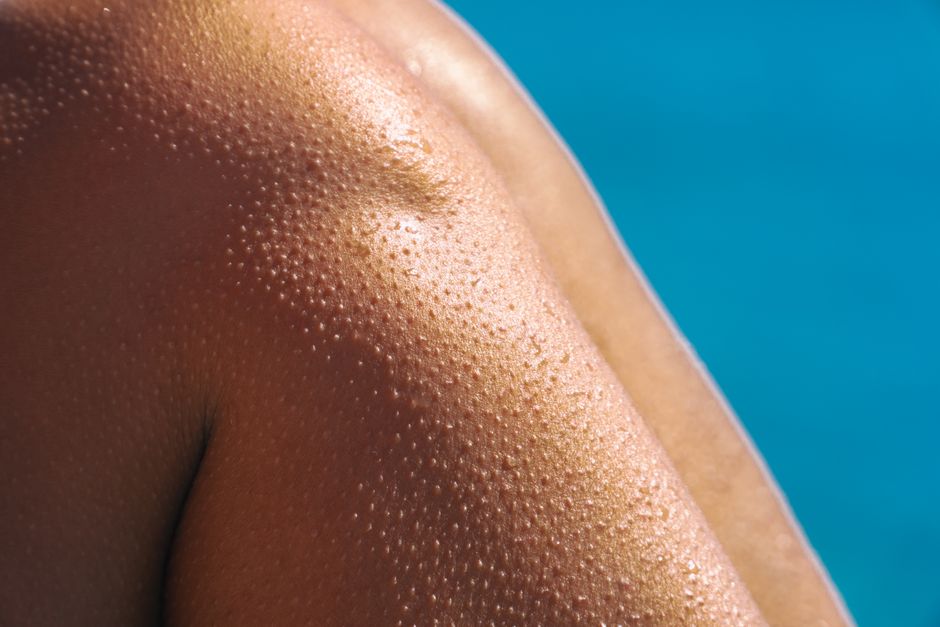
Seeing your baby wake up with damp hair or a sweaty back can be surprising. You might worry that something is wrong, but in most cases, heavy sweating in babies is completely normal. Babies have immature nervous systems and sweat glands that react to more than just heat, which means they sweat more easily than older children and adults. Understanding the difference between normal sweating and a sign of an underlying issue is the key to knowing when to relax and when to call your pediatrician.
Why Do Babies Sweat More Than Adults?
Babies are not just smaller versions of adults. Their bodies handle temperature and moisture differently. The most important reason is that a baby’s sweat glands are fully formed, but the nervous system that controls them is still developing. This means their sweat response is not always precise. They may sweat excessively in one area, like the head, while barely sweating anywhere else.
Another factor is body surface area. Babies have a larger surface area relative to their body weight compared to adults. This helps them release heat, but it also makes them more sensitive to changes in room temperature. When a baby is dressed too warmly, their body works harder to cool down, which triggers the sweat glands on the scalp and forehead first.
Finally, babies spend a lot of time in deep sleep. During this stage, their bodies naturally produce more heat. Combined with an immature nervous system, this often leads to a sweaty head and neck after a nap or a full night’s sleep.
Is It Just Overheating or Something Else?
The most common cause of baby sweating is simply being too warm. Parents often dress babies in one more layer than adults wear, which can be too much for a baby who is active or sleeping. Check the back of your baby’s neck to gauge their temperature. If it feels damp or hot, they are overdressed. Remove a layer and see if the sweating stops.
However, sweating can also happen without overheating. Some babies sweat heavily during feeding because sucking is hard work. The physical effort, combined with being held close to a warm body, raises their core temperature quickly. This is normal and usually stops as the baby gets older and feeding becomes easier.
If your baby is sweating but their skin feels cool and they are not flushed, overheating might not be the cause. In these cases, the sweating is often just an immature nervous system firing randomly. It is a harmless quirk that typically resolves by the time the child is a toddler.
When Is Baby Sweating a Sign of a Medical Problem?
While most sweating is harmless, there are specific situations where it warrants attention. Heavy sweating that happens without any obvious cause—like heat or physical effort—can sometimes point to an underlying condition. It is important to look at the whole picture rather than just the sweating itself.
One condition linked to unusual sweating is congenital heart disease. In this case, sweating is often accompanied by other symptoms. These include poor feeding, rapid breathing, a bluish tint to the lips or skin, and failure to gain weight. Sweating during feeding is a common symptom because the heart has to work harder to pump blood, and the body sweats as a stress response.
Another possibility is an overactive thyroid, though this is rare in infants. Babies with this condition may sweat heavily, but they also tend to have a rapid heart rate, irritability, and poor weight gain despite a good appetite. Again, the sweating is not the only symptom.
Infections can also cause sweating, especially if they come with a fever. The body sweats to regulate temperature during a fever spike. If your baby is sweating and feels warm, take their temperature. A fever in a baby under 3 months old is a medical emergency and requires immediate attention.



Does Sleep Apnea or Breathing Trouble Cause Sweating?
Sweating during sleep can sometimes be linked to breathing difficulties. When a baby works harder to breathe, the physical exertion causes sweating. This is different from the normal “sleep sweat” that happens during deep sleep.
Signs of breathing trouble include fast breathing, flaring nostrils, grunting, or retractions—when the skin pulls in around the ribs or collarbone with each breath. If you see these signs along with sweating, it is not normal and needs prompt medical evaluation. Sleep apnea in infants is rare, but when it happens, it can cause sweating because the baby briefly stops breathing and then works hard to catch their breath.
If your baby sweats heavily during sleep but breathes easily and quietly, the cause is almost certainly temperature or normal development. If you are unsure, watch their breathing for a few minutes. If it is smooth and unlabored, the sweating is likely harmless.
How to Manage and Prevent Baby Sweating
Managing sweating starts with managing the environment. Keep the nursery at a comfortable temperature. A good rule of thumb is to dress your baby in the same number of layers you are comfortable in, plus maybe one thin layer. If you are comfortable in a t-shirt, your baby is likely fine in a onesie and a light swaddle.
Choose bedding and clothing made from breathable natural fibers like cotton. Synthetic fabrics trap heat and moisture. Avoid heavy blankets and never use loose bedding for an infant under 12 months due to the risk of suffocation. A sleep sack is a safer alternative that also keeps the baby warm without overheating.
Keep your baby well-hydrated. Sweating causes fluid loss, and babies need fluids to maintain their temperature. For breastfed or formula-fed babies, offer regular feeds. If your baby is older than 6 months and eating solids, you can offer small amounts of water between feeds, but breast milk or formula should remain the primary source of hydration.
What Parents Often Get Wrong About Baby Sweating
Many parents assume that a sweating baby is a sick baby. That is usually not true. The opposite mistake is also common—ignoring heavy sweating because “babies just sweat.” The truth is in the details. Look at the pattern. Does the baby sweat only when bundled or active? That is normal. Does the baby sweat at rest in a cool room? That needs a closer look.
Another misconception is that night sweats mean rickets or a calcium deficiency. While severe vitamin D deficiency can cause rickets and increased sweating, this is very rare in developed countries where infants receive vitamin D supplements. Do not assume a mineral deficiency based on sweating alone. If you are worried, ask your pediatrician to check your baby’s vitamin D levels rather than self-diagnosing.
It is also worth noting that some babies simply have overactive sweat glands on their heads. This is a cosmetic issue, not a medical one. The heavy head sweating usually decreases significantly by 12 to 18 months as the nervous system matures.
When to Call the Doctor
Trust your instincts. You know your baby better than anyone. If the sweating seems excessive or is paired with other concerning signs, a call to your pediatrician is always appropriate. It is better to ask a question than to worry silently.
Call your doctor if the sweating is accompanied by:
- Poor feeding or refusal to eat
- Rapid or labored breathing
- A fever, especially in a baby under 3 months
- Lethargy or unusual sleepiness
- A bluish tint to the lips, tongue, or nail beds
- Poor weight gain or weight loss
These signs, combined with sweating, point to something more than just a warm room. They require a professional evaluation. In most cases, the doctor will find nothing wrong, but the peace of mind is worth the visit.
Frequently Asked Questions
Why is my baby’s head sweating so much at night?
Head sweating at night is usually normal because babies release most of their body heat through their scalps. It often happens during deep sleep when the body naturally warms up, and it typically decreases as the nervous system matures.
Can teething cause excessive sweating in babies?
Teething can cause a slight rise in body temperature, which may lead to some sweating. However, teething does not cause high fever or drenching night sweats, so if the sweating is severe, look for other causes.
Is it safe to let my baby sleep without a blanket if they sweat?
Yes, it is safer to use a sleep sack or just a onesie instead of a blanket. Loose blankets are a suffocation risk, and removing layers helps prevent overheating, which is a known risk factor for sudden infant death syndrome (SIDS).
