
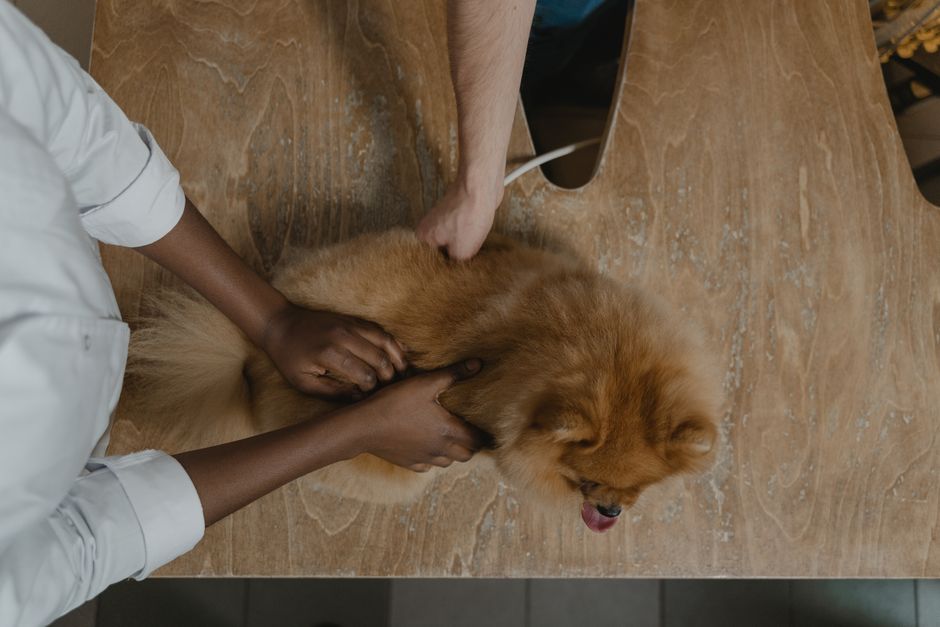
Finding blood in your puppy’s poop is alarming, but it is a common reason puppies visit the vet. The blood usually comes from inflammation or irritation in the digestive tract, and the cause can range from a minor stomach upset to a serious infection. You need to call your veterinarian promptly, because puppies dehydrate quickly and some causes require urgent treatment.
What Does the Blood in Puppy Poop Look Like?
The appearance of the blood tells your vet a lot about where the problem is. Bright red blood, known as hematochezia, typically comes from the lower digestive tract—the colon or rectum. This blood is fresh and has not been digested.
Dark, tarry, black stool is called melena. This means the blood has been digested, which points to bleeding higher up in the stomach or small intestine. Melena can look like black tar and often has a strong, foul odor.
Sometimes you will see mucus with the blood. This combination often signals colitis, which is inflammation of the colon. The mucus is the intestine’s way of protecting itself from irritation.
Why Does My Puppy Have Blood In His Poop?
Parasites are one of the most frequent causes in young puppies. Roundworms, hookworms, and coccidia are common in puppies and can damage the intestinal lining, causing bleeding. Hookworms specifically attach to the intestinal wall and feed on blood, which can lead to anemia in severe cases.
Another major cause is a bacterial or viral infection. Parvovirus is a highly contagious and life-threatening viral infection that causes severe bloody diarrhea, vomiting, and lethargy. This is a medical emergency. Bacterial infections like salmonella or campylobacter can also cause bloody stools, and some of these can spread to humans.
A sudden change in diet is a very common trigger. Puppies have sensitive stomachs. Switching foods too quickly or letting them eat rich treats, table scraps, or something they found outside can irritate the gut and cause mild bleeding.
When Is Blood in Puppy Poop an Emergency?
Some situations require immediate veterinary care. Do not wait to see if your puppy improves if you notice any of these signs:
- Blood combined with severe vomiting, especially if the puppy cannot keep water down
- Extreme lethargy or weakness, meaning the puppy will not play or interact
- Pale gums, which can indicate blood loss or shock
- Large amounts of blood, not just a streak or a few drops
- Signs of abdominal pain, such as crying when picked up or a tucked-up belly
- Bloody diarrhea in a puppy under six months old
Parvovirus is most dangerous in puppies between six weeks and six months old. The virus attacks rapidly dividing cells, including those in the bone marrow and intestinal lining. Without treatment, parvovirus is frequently fatal. With prompt veterinary care, survival rates improve significantly.
If your puppy is acting normal, eating well, and only has a small streak of blood, you still need a vet visit, but it is less urgent. Call your clinic and describe what you see. They will tell you whether to come in right away or schedule an appointment.



What Will the Vet Do?
Your vet will start with a physical exam and a fecal test. The fecal test checks for parasite eggs under a microscope. This test is quick and usually done in the clinic.
Depending on the findings, your vet may recommend blood work to check for infections, anemia, or organ function. In some cases, an abdominal X-ray or ultrasound is needed to look for foreign objects or structural problems.
Treatment depends entirely on the cause. Parasites are treated with deworming medications. Bacterial infections may require antibiotics, though some mild cases resolve on their own. Parvovirus requires hospitalization with intravenous fluids, anti-nausea medication, and supportive care. Dietary issues are managed with a bland diet and a gradual transition back to regular food.
Can Puppy Poop Blood Be Caused by Something They Ate?
Yes. Puppies explore the world with their mouths, and they will eat things they should not. Foreign objects like bones, toys, or sticks can scratch the intestinal lining or cause a blockage. A blockage is serious and often requires surgery.
Toxins can also cause bloody stool. Rat poison is a well-known cause because it prevents blood from clotting normally. If you suspect your puppy ate anything toxic, call your vet or a pet poison control hotline immediately. Do not wait for symptoms to appear.
Food allergies or intolerances can cause chronic inflammation and intermittent blood in the stool. This is less common than infections or parasites, but it is worth discussing with your vet if the problem keeps coming back.
How Is Blood in Puppy Poop Treated at Home?
There is no safe home treatment for bloody diarrhea in a puppy. You cannot know the cause without a vet examination, and some causes are deadly. The most important thing you can do at home is keep your puppy hydrated and get them to the vet.
Do not give your puppy over-the-counter human medications. Drugs like ibuprofen or acetaminophen are toxic to dogs. Even medications meant for dogs should not be given without a veterinary prescription.
If your vet diagnoses a simple dietary upset, they may recommend a bland diet of boiled chicken and white rice for a few days. Follow their instructions exactly. When you return to regular food, do it gradually over several days by mixing increasing amounts of the new food with the bland diet.
How to Prevent Blood in Puppy Poop
Prevention starts with regular veterinary care. Puppies need a series of deworming treatments and vaccinations starting at a few weeks of age. Follow the schedule your vet provides.
Keep your puppy away from areas where other dogs defecate until they are fully vaccinated. This reduces the risk of parvovirus and other infectious diseases. Parvovirus can survive in the environment for months, so be cautious about where your puppy walks.
Feed a high-quality puppy food and make any dietary changes gradually. A transition over seven to ten days is typical. Keep your puppy away from garbage, compost, and unknown animal feces during walks.
What Happens If Blood in Puppy Poop Is Left Untreated?
The outcome depends on the cause. A mild dietary indiscretion may resolve on its own. But serious causes do not improve without treatment.
Hookworms and other parasites can cause severe anemia in a small puppy. Anemia makes a puppy weak, and in extreme cases it can be life-threatening. Parvovirus destroys the intestinal lining, allowing bacteria to enter the bloodstream. This can lead to sepsis and death.
Intestinal blockages from foreign objects cut off blood supply to the bowel. Without surgery, the tissue dies, which is fatal. Never assume a small amount of blood is harmless. Let a professional make that call.
Is Blood in Puppy Poop Ever Normal?
No. Blood in the stool is never considered normal. It always indicates some degree of inflammation or injury in the digestive tract.
That said, a tiny streak of blood from a minor cause like a dietary indiscretion can resolve quickly with no lasting harm. The problem is that you cannot tell a minor cause from a serious one by looking at the stool alone. A puppy with parvovirus can have the same small streak of blood as a puppy with a mild upset stomach.
Your veterinarian is the only person who can determine whether this is a minor issue or a life-threatening one. When in doubt, call. Most veterinary clinics are happy to advise you over the phone about whether your puppy needs to be seen urgently.
Frequently Asked Questions
How long can a puppy have blood in its stool before seeing a vet?
See a vet the same day you notice blood in your puppy’s stool. Do not wait to see if it improves, because serious causes like parvovirus progress quickly.
Can worms cause blood in puppy poop?
Yes, hookworms and other intestinal parasites commonly cause bloody stool in puppies. A fecal test can identify the specific parasite.
What does parvo poop look like?
Parvo poop is typically severe, foul-smelling diarrhea that may be bloody. It often has a yellowish or reddish color and a distinct, unpleasant odor.
Will a puppy with bloody poop still act normal?
Sometimes. A puppy with a mild stomach upset may act completely normal, while a puppy with a serious infection will often be lethargic and refuse to eat. The absence of other symptoms does not rule out a serious cause.
