
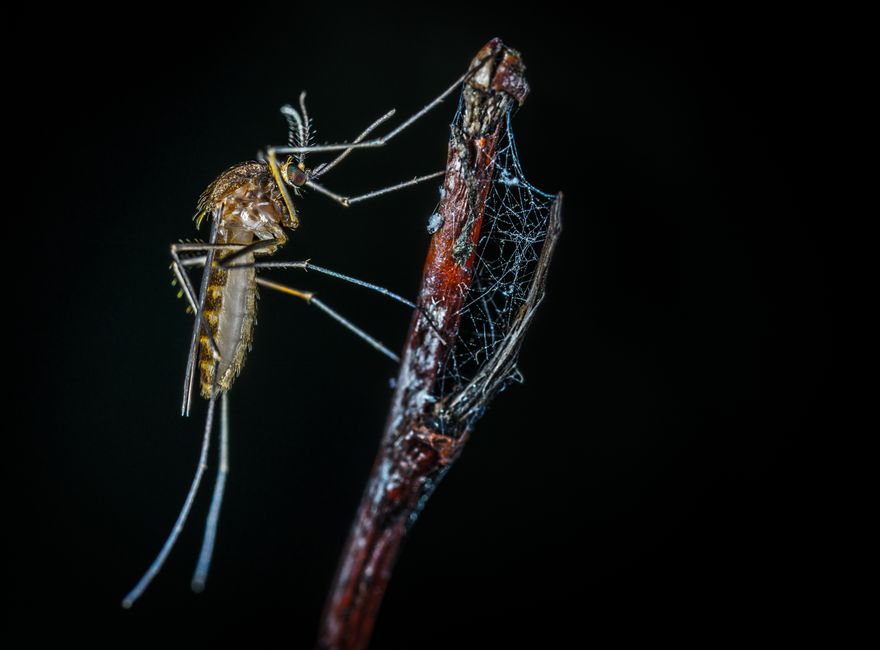
That swollen, itchy welt is not the mosquito’s bite doing damage. It is your own immune system reacting to proteins in the mosquito’s saliva. The size of the reaction depends mostly on how sensitive your immune system is to those proteins, whether you have been exposed to that species before, and how your body handles the inflammatory response afterward.
Two people can be bitten by the same mosquito and end up with very different reactions. One gets a tiny red dot that fades in an hour. The other gets a hard, hot lump the size of a quarter that itches for days. Neither response is abnormal. They are just different points on the same immune spectrum.
What Actually Happens When a Mosquito Bites You
A mosquito does not simply poke a hole and drink. It inserts a slender proboscis into your skin and searches for a blood vessel. During that process, it injects saliva. That saliva contains proteins that keep your blood from clotting and dampen your local immune response so the mosquito can feed without being noticed.
Your body notices anyway. Immune cells in the skin recognize the foreign proteins and release histamine and other chemical signals. Histamine widens blood vessels and makes their walls more permeable, which allows fluid and immune cells to move into the surrounding tissue. That fluid buildup is the swelling you see and feel.
The itch comes from the same process. Histamine binds to nerve endings in the skin and triggers the sensation. This is why antihistamine medications reduce both the swelling and the itch — they block histamine from doing its work.
Here is the part many people find surprising. The mosquito’s saliva is not just a blood thinner. It is a complex mix of dozens of proteins, and researchers have identified some of them as compounds that alter local immune signaling. Your reaction is shaped by which of those proteins your immune system has learned to recognize.
Why Do Your Mosquito Bites Get So Big? The Main Root Causes
The size of a bite reaction comes down to immune sensitivity, and that sensitivity is built over time through repeated exposure. Several factors determine where you land on that scale.
Prior exposure and immune memory
The first time you are bitten by a particular mosquito species, your reaction may be mild or delayed. Your immune system is still learning the saliva proteins. With repeated bites, it builds memory and responds faster and harder. This is why people who spend more time outdoors in mosquito-heavy areas often have more pronounced reactions than someone who rarely gets bitten.
There is a twist. With enough repeated exposure over years, some people develop a tolerance. Their immune system stops overreacting to the same proteins. Long-term residents of tropical regions sometimes barely react to bites that would cause a large welt in a first-time visitor. The immune system can learn to ignore what it sees constantly.
Individual immune variability
Not everyone’s immune system responds to mosquito saliva the same way. Some people have immune systems that release more histamine in response to the same trigger. Others release less. This is not a sign of a weak or strong immune system. It is a difference in how the inflammatory response is calibrated.
People with atopic conditions — eczema, allergic rhinitis, asthma — tend to have more reactive immune systems in general. They often get larger, itchier bites. This does not mean mosquito bites cause those conditions. It means the same immune tendency that drives those conditions also amplifies the response to mosquito saliva.
Mosquito species
Different mosquito species have different saliva proteins. A reaction to one species does not necessarily mean you will react the same way to another. If you move to a new region with different mosquito species, your reactions may change. Your immune system has to start learning a new set of proteins.
Skin sensitivity and location
Bites on thinner skin — around the eyes, lips, ears, and neck — tend to swell more visibly than bites on thicker skin. The tissue there is looser and has more room for fluid to accumulate. A bite on your forearm might look minor. The same bite near your eye can cause dramatic swelling.
Is a Big Reaction a Sign of an Allergy?
Not usually. A large local reaction to a mosquito bite is called a “skeeter syndrome” in clinical literature, and it refers to exaggerated swelling and redness that can span several centimeters. It is an allergic-type response to mosquito saliva proteins, but it is not the same as a systemic allergy that affects your whole body.
True mosquito allergy — the kind that causes hives far from the bite, wheezing, or difficulty breathing — is rare. Most people who get large welts are experiencing an intense but localized immune response. It is uncomfortable, sometimes dramatic, but it stays in one area.
The distinction matters because it guides what to do. A large local reaction can be managed with antihistamines, cold compresses, and time. A systemic reaction — swelling of the throat, trouble breathing, widespread hives — needs emergency medical attention. If you are unsure which one you are having, treat it as an emergency and get help.




Why Some Bites Itch More Than Others
Itch intensity follows the same logic as size. More histamine release means more nerve stimulation and more itch. But there is another factor: scratching.
When you scratch a bite, you damage the skin and trigger more inflammation. Your immune system responds to the damage by releasing more histamine and other mediators. The itch gets worse. The swelling gets bigger. This cycle can turn a minor bite into a major one over the course of a day.
Scratching also breaks the skin, which creates an entry point for bacteria. A bite that becomes red, hot, and increasingly painful over 24 to 48 hours may be infected. That is a different problem from the original bite reaction and may need medical evaluation.
What Affects How Long a Bite Lasts
Most mosquito bites resolve within a few days. The initial swelling peaks within minutes to hours and then gradually subsides as histamine levels drop and fluid is reabsorbed. The itch often lingers a bit longer than the visible swelling.
Large local reactions can take longer. Some people have swelling that lasts a week or more, especially if they keep scratching. The immune response has to run its course. There is no way to speed up that process beyond reducing the histamine response with medication and avoiding further irritation.
If a bite is still growing after 48 hours, or if it is accompanied by fever, increasing pain, or red streaks spreading from the site, that suggests infection rather than a simple bite reaction. See a doctor.
Why Do Some People Get Bitten More Than Others?
This is a separate question from why bites get big, but it comes up constantly. Mosquitoes are attracted to a combination of factors: body heat, carbon dioxide output, and certain chemical compounds in your skin.
Research has shown that mosquitoes can detect carbon dioxide from a distance. People who exhale more — larger individuals, people who are physically active — may attract more mosquitoes. Body heat also plays a role. Mosquitoes are drawn to warmer targets.
Skin chemistry matters too. Some people produce more lactic acid or other compounds that mosquitoes find attractive. Blood type has been studied as a factor, with some evidence suggesting type O may be slightly more attractive to certain mosquito species. The effect is modest and not something you can change.
The practical takeaway is that getting bitten more often is not a sign of anything wrong with you. It is a combination of physiology and chemistry that you largely cannot control.
What Helps Reduce the Size and Itch
Antihistamines are the most direct approach. They block histamine from binding to receptors, which reduces both swelling and itch. Oral antihistamines work systemically. Topical antihistamines or hydrocortisone creams can help with localized symptoms.
Cold compresses reduce blood flow to the area, which can limit swelling and numb the itch. Keeping the bite clean and covered reduces the risk of infection from scratching.
There is no evidence that home remedies like toothpaste, baking soda paste, or mud actually reduce the immune response. They may feel soothing because of the cold or the moisture, but they do not address the underlying histamine release. If they help you avoid scratching, they are not harmful. Just do not expect them to shrink the bite.
Prevention is the most effective strategy. Reducing the number of bites reduces the cumulative immune exposure that drives bigger reactions over time. Insect repellent with EPA-registered ingredients, protective clothing, and eliminating standing water around your home all reduce bite frequency.
When to See a Doctor
Most mosquito bites do not require medical attention. But some situations do.
- Swelling that continues to grow after 48 hours
- Red streaks spreading from the bite site
- Fever, chills, or increasing pain
- Swelling of the lips, tongue, or throat
- Difficulty breathing or widespread hives
- Signs of infection: pus, warmth, or increasing redness
The last three are signs of a systemic reaction or serious infection. They need prompt medical evaluation. Do not wait to see if they improve on their own.
Frequently Asked Questions
Why do my mosquito bites get so big compared to other people?
Your immune system is more sensitive to mosquito saliva proteins than the average person’s. This is shaped by genetics, prior exposure, and individual differences in how much histamine your body releases.
Do big mosquito bites mean I have a weak immune system?
No. A large reaction means your immune system is responding strongly, not weakly. The size of the bite reflects sensitivity to saliva proteins, not overall immune health.
How long do large mosquito bites usually last?
Most bites resolve within a few days, but large local reactions can last a week or more. If a bite is still growing after 48 hours or shows signs of infection, see a doctor.
Can I prevent mosquito bites from getting so big?
Reducing the number of bites you get over time may gradually reduce your immune sensitivity. Using repellent, wearing protective clothing, and avoiding standing water can all lower your exposure.
