
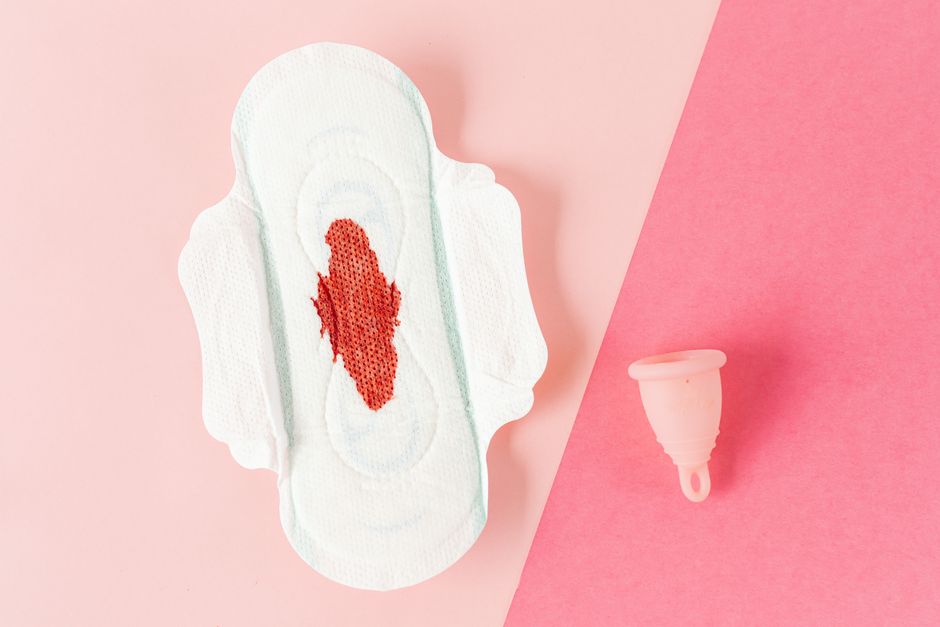
Passing blood clots during a period is normal. Passing clots larger than a quarter — roughly the size of a quarter coin — is not, and it is worth mentioning to a doctor. Large clots usually mean one of two things: your menstrual flow is heavy enough that blood is pooling and clotting inside the uterus before it exits, or something is interfering with how your uterus sheds its lining. Both are common, both have real explanations, and both can be evaluated.
Why Do I Have Big Blood Clots During My Period?
Menstrual blood clots form because blood that sits still long enough will coagulate. During a period, the uterus sheds its lining and the blood vessels that fed it. To keep that blood from clotting inside the uterus, the body releases anticoagulant proteins into the menstrual fluid. When flow is heavy, blood leaves the uterus faster than those proteins can keep it liquid. It pools, clots, and passes as a jelly-like mass.
So a large clot is often a sign of heavy flow, not a separate problem. The clot itself is not dangerous. What matters is what is causing the heavy flow behind it.
Clots range in color from bright red to dark maroon. Darker clots usually mean the blood sat longer before leaving the body. Color alone does not tell you much. Size and frequency do.
How Big Is Too Big?
A clot the size of a quarter or larger is the general threshold clinicians use to flag possible heavy menstrual bleeding. Passing one occasionally is common. Passing several large clots every cycle, especially with other symptoms, is a reason to get checked.
Doctors do not diagnose heavy bleeding by clot size alone. They look at the full picture: how often you change protection, whether you bleed through, how long your period lasts, and whether you feel tired or short of breath.
A practical way to track this is to note how many large clots you pass and on which days. That information is more useful to a clinician than a general description.
What Causes Heavy Flow That Leads to Clots?
Several conditions increase menstrual flow enough to produce large clots. They are not mutually exclusive, and more than one can be present.
- Uterine fibroids — noncancerous growths in the uterine wall. They are a common cause of heavy bleeding, though many fibroids cause no symptoms at all.
- Adenomyosis — when endometrial tissue grows into the muscular wall of the uterus. It often causes heavy, painful periods.
- Hormonal imbalance — when estrogen and progesterone are out of balance, the uterine lining can build up thicker than usual and shed more heavily.
- Polyps — small growths on the uterine lining that can increase bleeding.
- Thyroid disorders — both an underactive and overactive thyroid can affect menstrual flow.
- Bleeding disorders — conditions that affect clotting, such as von Willebrand disease, can cause heavy periods. This is more common than many people realize.
- Medications — blood thinners and some hormonal treatments can increase flow.
In many cases, no single cause is found, and the bleeding is managed as its own issue. That is a legitimate outcome, not a failure of diagnosis.





When Should I Be Concerned About Large Clots?
Contact a doctor if you are passing clots larger than a quarter, if you soak through a pad or tampon in an hour for several hours, or if your period lasts longer than seven days.
Seek care sooner if you have:
- Bleeding so heavy you need to change protection every hour for more than two hours
- Clots larger than a golf ball
- Severe pain along with the bleeding
- Dizziness, weakness, or shortness of breath — these can signal anemia from blood loss
- Bleeding between periods or after sex
Heavy menstrual bleeding is one of the most common reasons people who menstruate see a gynecologist. It is not something to push through silently. Iron-deficiency anemia is a frequent consequence of ongoing heavy flow, and it can develop gradually without obvious warning signs.
Could It Be Something More Serious?
Large clots are usually not a sign of cancer. But persistent heavy bleeding is worth evaluating because it can be a symptom of several conditions, and because the bleeding itself can harm your health over time.
Endometrial cancer can cause abnormal bleeding, particularly after menopause or in people with risk factors such as obesity or certain genetic conditions. This is uncommon in premenopausal women, but it is one reason doctors take persistent changes in bleeding seriously.
The more common concerns are anemia, fibroids, adenomyosis, and hormonal conditions. These are treatable. The point of evaluation is not to find the worst-case scenario. It is to identify what is actually happening so it can be addressed.
How Are Large Clots and Heavy Bleeding Evaluated?
A doctor will start with your history: how long this has been happening, how heavy the flow is, whether it has changed, and what other symptoms you have. Be specific. “I pass two or three clots the size of a quarter on my heaviest days” is more useful than “my periods are heavy.”
Testing usually includes:
- Blood tests — a complete blood count to check for anemia, and sometimes thyroid and clotting tests
- Pelvic ultrasound — to look for fibroids, polyps, or other structural causes
- Endometrial biopsy — a sample of the uterine lining, often done if there is concern about abnormal cells
- Hysteroscopy — a thin scope inserted through the cervix to see inside the uterus directly
Not everyone needs every test. The workup depends on your age, symptoms, and what the initial exam suggests.
What Treatment Options Exist?
Treatment depends on the cause and on whether you want to preserve fertility. Options range from medication to procedures.
Hormonal treatments — including certain birth control pills, hormonal IUDs, and other hormonal medications — are commonly used to reduce bleeding. Hormonal IUDs are among the more effective options for reducing menstrual flow, and the evidence supporting them for this purpose is strong.
Non-hormonal medications such as tranexamic acid can reduce bleeding during a period. This is a prescription medication and is not appropriate for everyone, particularly people with certain clotting risks.
For structural causes like fibroids or polyps, procedures may be recommended. These range from removing polyps to treatments that reduce or remove fibroids. In some cases, surgery to remove the uterine lining or the uterus itself is considered, usually when other options have not worked and childbearing is complete.
Iron supplementation may be recommended if you have anemia. This should be guided by a blood test, not taken routinely on assumption.
What works for one person may not work for another. The choice depends on the cause, your goals, and your medical history.
What Can I Do About It?
Track your cycles. Note the heaviest days, how many large clots you pass, how often you change protection, and any other symptoms. This makes medical visits more productive and helps you notice patterns.
Do not assume heavy periods are just something you have to live with. They are common, but common does not mean normal or untreatable. If bleeding is affecting your daily life, your energy, or your ability to work or sleep, that is reason enough to seek care.
If you are told your bleeding is normal but you are still concerned, it is reasonable to ask for a second opinion or to ask specifically what was checked and what was ruled out.
Frequently Asked Questions
Is it normal to pass big blood clots during my period?
Passing an occasional clot is normal, but clots the size of a quarter or larger are considered a sign of heavy menstrual bleeding and should be evaluated by a doctor. The clot itself is not dangerous, but the underlying cause may need treatment.
What does a large blood clot during a period look like?
Menstrual clots look like gelatinous blobs of blood, ranging from bright red to dark maroon. Size matters more than color — anything a quarter or larger is worth mentioning to a clinician.
Can large blood clots mean I have fibroids?
Fibroids are a common cause of heavy bleeding and large clots, but they are not the only cause. Hormonal imbalance, adenomyosis, polyps, and bleeding disorders can all produce the same symptom, so testing is needed to know for sure.
When should I see a doctor about blood clots during my period?
See a doctor if you pass clots larger than a quarter, soak through protection in an hour for several hours, or have periods lasting more than seven days. Dizziness, weakness, or shortness of breath are reasons to seek care sooner.
