
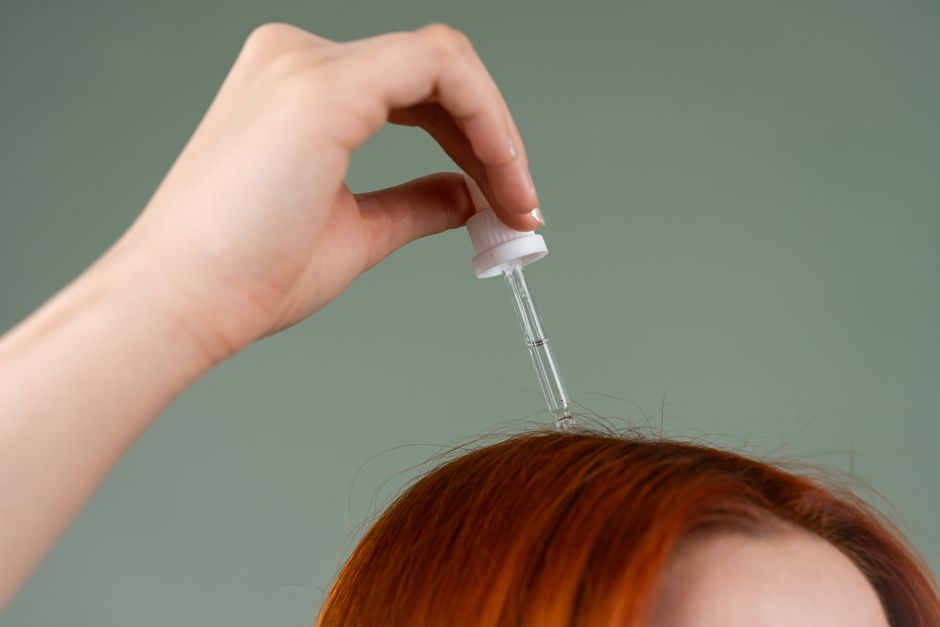
Scalp acne happens when hair follicles on your scalp become blocked by excess oil and dead skin cells, then get inflamed. It is the same process as acne on your face, just in a place that is harder to see and often harder to treat. The most common triggers are oily hair products, sweating, and a buildup of natural scalp oils. In many cases the bumps people call scalp acne are actually a different condition called folliculitis, which looks similar but has different causes.
Why Do I Get Acne On My Scalp Causes Treatments?
Acne on the scalp forms the same way acne forms anywhere else on the body. Your skin has tiny holes called pores, and each pore connects to a hair follicle. Inside that follicle are sebaceous glands that produce oil, called sebum. Sebum normally travels up the hair and out onto the skin, where it helps keep skin from drying out.
Problems start when three things happen together. The sebaceous gland produces more oil than usual. Dead skin cells that would normally shed get trapped inside the follicle. And a bacterium called Cutibacterium acnes that lives on everyone’s skin begins to multiply in the blocked follicle. The immune system responds with inflammation, and that inflammation is what creates the red, tender bump.
This is why scalp acne is not caused by poor hygiene. Washing more aggressively does not fix it and can make things worse by irritating the skin barrier.
Hormones play a major role. Androgens, a group of hormones present in both men and women, stimulate sebaceous glands to produce more oil. This is why acne often flares during puberty, around menstrual periods, and during times of hormonal change. Stress can also influence acne, partly through hormonal effects and partly because people tend to touch and scratch their scalp more when stressed.
When It Is Not Actually Acne
A large share of what people call scalp acne is folliculitis — inflammation or infection of the hair follicle itself. Folliculitis can be caused by bacteria, by a yeast called Malassezia, or by irritation from friction, sweat, or harsh products. It looks like small red bumps or pus-filled pimples around hair follicles.
The distinction matters because the treatments are different. A bacterial folliculitis may respond to a topical antibiotic. A yeast-driven folliculitis will not respond to antibiotics at all and needs an antifungal. Acne treatments may do nothing for either.
Other conditions that can be mistaken for scalp acne include seborrheic dermatitis, which causes flaking and inflammation, and in rare cases a more serious follicular disorder. Because several conditions look alike, a dermatologist can usually tell them apart by examining the scalp and, if needed, taking a small sample.
What Products And Habits Make Scalp Acne Worse?
Anything that adds oil or blocks the follicle makes scalp acne more likely. This includes heavy pomades, waxes, gels, and leave-in oils, especially when applied close to the scalp and not washed out. Products that sit on the scalp for days create a film that traps sebum and dead cells.
Sweat is another factor. When you sweat, the scalp stays warm and moist, which supports bacterial and yeast growth. Wearing a hat or helmet for long stretches traps that moisture against the skin. Athletes and people who wear headgear regularly often notice more breakouts along the hairline and crown.
Friction matters too. Tight hats, headbands, and helmets rub against hair follicles and can trigger irritation-based folliculitis. This is sometimes called acne mechanica when it results from pressure and rubbing.
Two habits that seem helpful but often backfire:
- Scratching or picking at bumps — this pushes bacteria deeper and increases inflammation and scarring risk.
- Overwashing with strong shampoos — this strips the skin barrier, which can lead to irritation and sometimes a rebound in oil production.
Diet is a common question. The evidence on diet and acne is mixed. Some studies suggest that high-glycemic diets — diets heavy in refined sugars and starches — may be associated with more acne, but the findings are not consistent across all research. Dairy has also been studied, with some evidence pointing to a possible link, particularly with skim milk. Neither connection is strong enough to be treated as a proven cause. If you notice a pattern with your own skin, that is reasonable information to bring to a doctor, but diet alone is unlikely to be the whole story.
What Does Scalp Acne Look Like And When Should You See A Doctor?
Scalp acne typically appears as small red bumps or pimples along the hairline, crown, or back of the head. Some have a white or yellow center. They may be tender to the touch, and they often itch.
Milder cases come and go. More persistent or severe cases can leave scarring and, in some situations, permanent hair loss if the follicle is damaged. This is one reason not to ignore scalp breakouts that keep returning.
See a doctor or dermatologist if:
- The bumps are large, deep, and painful — these may be cysts, which are more likely to scar.
- The condition does not improve after several weeks of basic scalp care.
- You notice hair thinning or bald patches in the affected areas.
- You have swelling, spreading redness, or you feel unwell.
- You have a weakened immune system.
A dermatologist can distinguish acne from folliculitis, seborrheic dermatitis, and other conditions. That distinction determines which treatment will actually work.



How Is Scalp Acne Treated?
Treatment depends on what is actually causing the bumps. For mild, garden-variety scalp acne, the first steps are usually about reducing oil and product buildup.
Basic scalp care is the starting point. Wash your hair regularly with a gentle shampoo — how often depends on your hair type and oil production, but for many people that means every day or every other day. Rinse thoroughly. Avoid heavy oils, waxes, and leave-in products near the scalp. If you sweat heavily, rinse or wash your scalp soon afterward.
Medicated shampoos are commonly used. Options include shampoos containing salicylic acid, which helps break down dead skin cells and oil, and shampoos with ketoconazole or zinc pyrithione, which target yeast and are especially useful if the problem is actually a yeast-related folliculitis. Some clinicians recommend rotating products. These are widely used in practice, though the strength of evidence varies by ingredient and by the specific condition being treated.
Topical treatments for acne, such as benzoyl peroxide or topical retinoids, are sometimes applied to the scalp. Benzoyl peroxide can bleach hair and fabric, so it is used carefully. Retinoids can be irritating, especially on the scalp where skin is thinner in some areas.
Prescription options exist for more stubborn cases. A doctor may prescribe topical or oral antibiotics for bacterial folliculitis, oral antifungals for yeast-related folliculitis, or other medications for severe acne. Oral isotretinoin is used for severe, scarring acne and requires medical supervision. These are decisions for a clinician, not something to self-prescribe.
It is worth being clear about what is not well supported. There is no strong clinical evidence that home remedies like apple cider vinegar, tea tree oil applied undiluted, or dietary supplements reliably clear scalp acne. Tea tree oil has been studied for mild acne in some small trials, but results are limited and it can irritate skin. If you want to try a home option, mention it to your doctor so it does not interfere with other treatment.
Can Scalp Acne Be Prevented?
You cannot control your hormones or your genetics, which are major factors in acne. What you can control are the habits that add fuel to the fire.
Keep the scalp clean without overdoing it. Choose products labeled non-comedogenic, meaning they are less likely to block pores. Wash out heavy styling products rather than letting them sit. If you wear hats or helmets, keep them clean and let your scalp breathe when you can.
Manage sweat when possible — rinse after workouts, and avoid wearing a hat on a sweaty scalp for hours afterward. Try not to scratch or pick, even when it itches.
If breakouts keep coming back despite good habits, that is a signal to get a proper diagnosis rather than trying more products. The right treatment depends entirely on what is causing the bumps, and guessing wrong wastes time and money.
One useful clarification: scalp acne is not contagious, and it is not a sign that you are unclean. It is a common skin condition with identifiable triggers and real treatment options. Getting the cause right is the part that most people skip.
Frequently Asked Questions
Is scalp acne the same as folliculitis?
No, they are different conditions that can look similar. Folliculitis is inflammation or infection of the hair follicle, often caused by bacteria or yeast, and it requires different treatment than acne.
Does washing my hair more often get rid of scalp acne?
Regular washing can help reduce oil and product buildup, but washing too aggressively can irritate the scalp and make things worse. If breakouts persist, the cause may need medical diagnosis.
Can scalp acne cause hair loss?
Mild scalp acne usually does not cause lasting hair loss. Deep, inflamed cysts or persistent folliculitis can damage hair follicles and lead to scarring or permanent hair loss, which is why severe cases should be evaluated by a doctor.
What shampoo is best for scalp acne?
Shampoos containing salicylic acid, ketoconazole, or zinc pyrithione are commonly used, depending on whether the cause is acne, bacteria, or yeast. A doctor or dermatologist can recommend the right option for your specific situation.
