
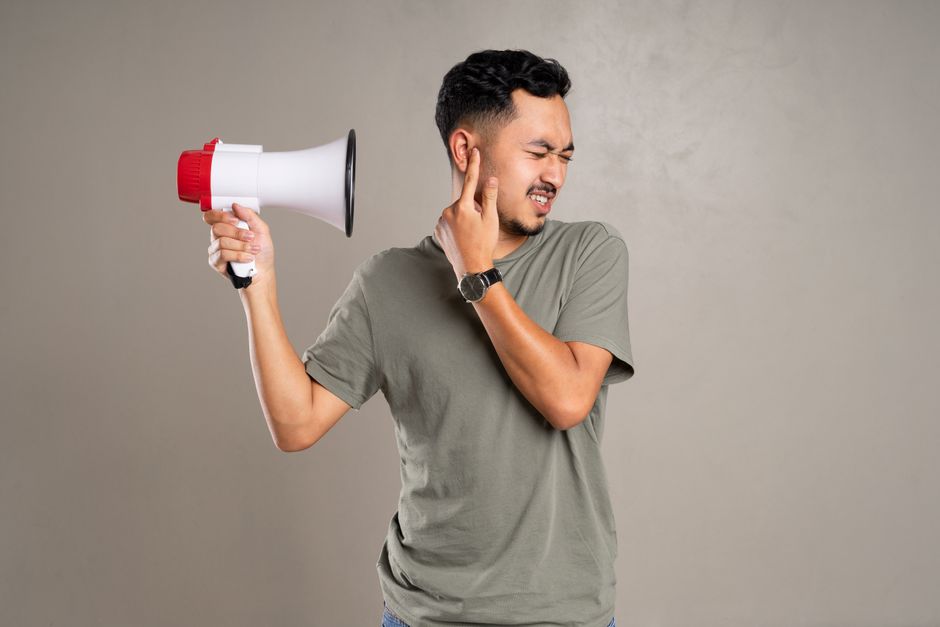
A flinch at a loud noise is a reflex, not a sign of weakness or anxiety. Your brainstem runs a fast, hardwired circuit that makes you startle before you are even aware of what you heard. The flinch itself is normal. What matters is whether it fades quickly or lingers, and whether it disrupts your daily life.
Most people startle and recover within a second or two. If your reaction is bigger, lasts longer, or comes with distress, that points to something different — and there are evidence-based ways to reduce it. This article explains the reflex, why some people flinch more than others, and what actually helps.
What Happens In Your Body When You Flinch At A Loud Noise?
The startle reflex is one of the fastest responses your nervous system produces. Sound travels to a cluster of cells in your brainstem called the cochlear nucleus, which sends a signal straight to motor centers in your spinal cord. Your muscles contract before your conscious mind has processed the sound.
This is why you cannot stop the first flinch by deciding to. The pathway bypasses the cortex — the thinking part of your brain — on the way out. The reflex exists because reacting fast to sudden noise has survival value. A branch snapping, a rockfall, a shout: the body that flinches first may live to flinch again.
The visible response usually includes a blink, a shrug of the shoulders, a slight forward hunch, and a tensing of the neck and jaw. Some people also get a quick spike in heart rate and a burst of sweat. These settle within seconds in most cases.
The reflex has two parts. The first is the automatic muscle jerk — fast, involuntary, and essentially the same in everyone. The second is the emotional response that follows, sometimes called startle modulation. That second part is where people differ a great deal.
Why Do Some People Flinch More Than Others?
Startle reactivity varies widely, and much of that variation is normal. A person who flinches hard at a balloon pop may simply have a lower threshold for the reflex, not a disorder.
Several factors shift how strongly you startle:
- Attention and expectation. If you know a noise is coming, the flinch is smaller. Anticipation dampens the reflex.
- Baseline arousal. When you are already tense, tired, or on edge, the same noise produces a bigger response.
- Context. A sudden noise at night in an unfamiliar place triggers more than the same noise in a busy kitchen.
- Genetics and temperament. Some people are born with a more reactive startle system. This runs in families.
- Past experience. Repeated exposure to threatening or traumatic sound can sensitize the reflex over time.
One point worth separating out: a strong startle reflex is not the same thing as post-traumatic stress disorder, an anxiety disorder, or a sensory processing condition. Those can involve an exaggerated startle response, but an exaggerated startle response alone does not indicate any of them. Many people with a lively startle reflex have no underlying condition at all.
When Is A Strong Startle Response A Medical Concern?
An exaggerated startle response can be a feature of several conditions, and clinicians sometimes use it as one clue among many. On its own, it is not diagnostic of anything.
Conditions where an amplified startle reflex has been described include:
- Post-traumatic stress disorder, where the reflex is often part of a broader hyperarousal pattern
- Anxiety disorders, particularly when the person is in a chronically vigilant state
- Certain neurological conditions that affect how the brainstem processes sudden stimuli
What shifts a flinch from ordinary to worth investigating is not the size of the reaction but the pattern around it. Signs that warrant a conversation with a doctor include:
- The flinch is followed by prolonged distress, not a quick return to normal
- You avoid places or situations because of the fear of being startled
- The reaction is accompanied by other symptoms — sleep problems, persistent tension, intrusive memories, or a feeling of being constantly on guard
- The startle response has changed recently, or appeared alongside other neurological symptoms
If any of those apply, a clinician can help sort out whether the startle is a symptom of something treatable. This is not a reason to panic. It is a reason to get a clear answer.




How Do You Stop Flinching At Loud Noises?
You cannot switch off the reflex itself, because it does not run through the part of the brain you consciously control. What you can change is the second part — the emotional and physiological response that follows. That is where most of the practical work happens.
Habituation is the core mechanism. Repeated, predictable exposure to a sound at a level you can tolerate teaches the nervous system that the sound is not a threat. Over time, the emotional response shrinks even though the basic reflex remains. This is the principle behind several approaches.
Approaches with reasonable support
- Graded exposure. Start with a recording of the sound at low volume and increase gradually over days or weeks. Doing this with a therapist trained in exposure work is more effective for anxiety-driven startle than doing it alone.
- Anticipation and reframing. Knowing a noise is coming reduces the reflex. Where you can predict a loud sound — fireworks, a blender, a slammed door — preparing for it genuinely blunts the response.
- Managing baseline arousal. Sleep, regular physical activity, and slow breathing practices reduce the background tension that amplifies startle. The effect on startle specifically is modest, but the general effect on reactivity is well documented.
- Treating an underlying condition. If the startle is part of PTSD or an anxiety disorder, treating that condition — through therapy, medication, or both — usually reduces the startle as a side effect.
What does not reliably work
Trying to suppress the flinch by willpower does not work, because the reflex fires before conscious control. Avoiding loud environments entirely may reduce distress in the short term but tends to make the sensitivity worse over time, since it removes any chance for the nervous system to learn the sound is safe.
There is no medication approved specifically to reduce a normal startle reflex. Some medications used for anxiety or PTSD may reduce startle as part of their broader effect, but this is a clinical decision, not a self-treatment option.
Can You Retrain A Sensitive Startle Reflex?
To a degree, yes — through the same learning process that created the sensitivity in the first place. The nervous system is not fixed. Repeated safe exposure to a sound changes how the brain tags that sound.
Two things make retraining more likely to work. First, the exposure has to be predictable enough that you are not caught off guard, because surprise keeps the threat response alive. Second, it has to be repeated. One calm encounter with a loud noise does not overwrite years of association.
For mild, everyday startle that does not cause distress, most people do not need any formal retraining. The reflex stays lively and life goes on. For startle that interferes with work, sleep, relationships, or your willingness to go places, structured help from a therapist trained in exposure-based therapy is the more reliable path. The evidence for exposure-based treatment of exaggerated startle within anxiety and trauma conditions is reasonably strong. The evidence for self-directed sound desensitization apps and similar products is much thinner, and no large trials have confirmed most of them work.
What About The Startle From Being Easily Spooked In General?
Being easily spooked and having a strong startle reflex are related but not identical. Being spooked usually involves a jump followed by a laugh or a moment of embarrassment. A clinically significant startle response tends to come with distress that does not resolve quickly.
If your flinch is the first kind — quick, harmless, and forgotten within seconds — there is nothing to fix. It is a normal feature of a functioning nervous system. If it is the second kind, the useful step is not to try harder to control it, but to look at what is driving the sensitivity and address that.
One clarification worth keeping in mind: a loud noise flinch is not the same as misophonia, which is a strong emotional reaction to specific repetitive sounds like chewing or tapping. Misophonia is about the meaning and pattern of a sound, not its volume. The two get confused often.
Frequently Asked Questions
Why do I flinch so easily at loud noises?
Your startle reflex is a fast brainstem circuit that fires before conscious thought, and some people simply have a lower threshold for it. Sleep, stress, and past experience can all make it more reactive.
Is flinching at loud noises a sign of anxiety?
Not by itself. A strong startle reflex is common in people with no anxiety disorder, though an exaggerated startle can be one feature of anxiety or PTSD when it comes with other symptoms.
Can you train yourself to stop flinching at loud noises?
You can reduce the emotional response that follows the flinch through repeated, predictable exposure, though the basic reflex itself stays. Working with a therapist trained in exposure therapy is more effective than trying alone for startle tied to anxiety or trauma.
When should I see a doctor about my startle response?
See a doctor if the flinch is followed by lasting distress, if you avoid situations because of it, or if it comes with other symptoms like poor sleep or constant vigilance. A clinician can determine whether an underlying condition is involved.
