
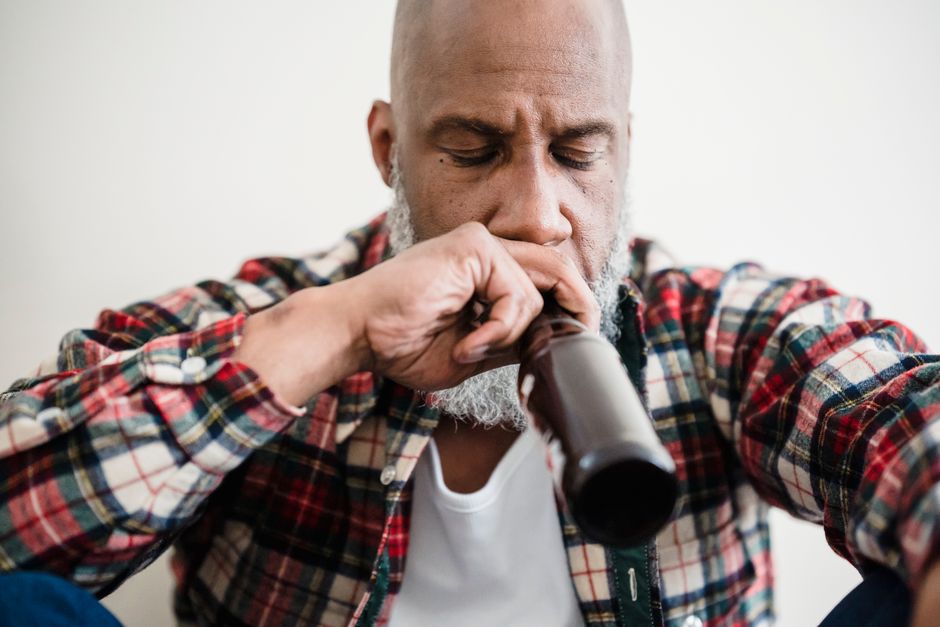
Thinking about alcohol constantly is exhausting. It drains mental energy and makes it hard to focus on anything else. The direct answer is that you stop thinking about alcohol for good by breaking the automatic thought loops that your brain has built around drinking. This happens through a combination of changing your environment, building new habits that compete with drinking, and retraining your brain’s reward system so it stops treating alcohol as a priority. It is not about willpower alone. It is about making the thought of alcohol boring and irrelevant to your daily life.
Why Does My Brain Keep Thinking About Alcohol?
Your brain is not trying to make you miserable. It is following a pattern it learned. Every time you drank, your brain released dopamine, the chemical that makes you feel good. Over time, your brain linked certain places, times, and feelings with that reward. Now when you see a bar, feel stressed at 5 PM, or smell a drink, your brain fires a “cue” that says it is time to drink.
This is called a conditioned response. It is the same reason you crave popcorn when you walk into a movie theater. The thought feels automatic because it is. Research published in Neuropsychopharmacology found that these cues activate the same brain regions in people who drink regularly as they do in people with other strong habits. Your brain is not broken. It is just well-practiced at a specific loop.
The good news is that these loops are plastic. They can change. But you have to stop feeding them first.
What Actually Happens When You Try To Stop Thinking About Alcohol?
Most people try to suppress the thought. They tell themselves “stop thinking about a drink.” This backfires. A well-known study by Daniel Wegner at Harvard showed that thought suppression actually makes the thought come back stronger. When you try to push a thought away, your brain checks in every few seconds to see if you succeeded. That checking is itself a thought about alcohol.
A better approach is called “surfing the urge.” You notice the thought and let it sit there without acting on it. You do not fight it. You do not follow it. You just watch it. The thought usually peaks and fades within 10 to 20 minutes. The urge to drink is a wave. You cannot stop the wave, but you can ride it until it passes.
This is backed by research from the University of Washington on urge surfing. People who practiced this technique reported fewer drinking episodes and less intense cravings over time. The key is that you stop treating the thought as a command. It is just a thought.
How To Stop Thinking About Alcohol For Good By Changing Your Environment
Your environment is the most powerful tool you have. Willpower is a limited resource. If you rely on it, you will run out. But if you change what you see, smell, and touch, you remove the cues that trigger the thoughts in the first place.
Start with your home. Remove all alcohol from your living space. This is not optional. If there is beer in the fridge, your brain will see it every time you open the door. That is a cue. The CDC reports that people who keep alcohol at home drink more on average than those who do not. The same logic applies to stopping the thoughts. If the bottle is not there, the cue is gone.
Next, change your routes. If you drive past your usual bar or liquor store, your brain fires the same cue. Take a different street. If you always drank while cooking dinner, change your cooking routine. Listen to a podcast instead of music. Cook something new. Small changes in context disrupt the automatic pattern.
Finally, change your social habits. The people you drink with are walking cues. The National Institute on Alcohol Abuse and Alcoholism notes that social environments strongly influence drinking patterns. You do not have to abandon friends. But you do need to avoid the specific places and activities where drinking was the main event for at least the first few weeks.




What Does Research Say About Retraining Your Brain Away From Alcohol?
Several evidence-based approaches show real results. Cognitive Behavioral Therapy, or CBT, is one of the most studied. It helps you identify the specific thoughts that lead to drinking and replace them with more accurate ones. For example, if you think “I need a drink to relax,” CBT helps you test that belief. You try other ways to relax and see if they work. Often, they do.
Another approach is called Habit Reversal Training. You pick a competing behavior to do when the drinking urge hits. Some people use exercise. Others call a friend. The key is that the competing behavior must be incompatible with drinking. You cannot go for a run and drink at the same time. Over weeks, the brain starts to link the urge with the new behavior instead of the drink.
There is also growing evidence for medications. Naltrexone is a prescription drug that blocks the opioid receptors in the brain. This reduces the pleasurable effects of alcohol. The American Journal of Psychiatry published a study showing that naltrexone reduced heavy drinking days by about 17 percent compared to placebo. It does not stop the thoughts completely, but it makes the reward smaller, which makes the thoughts weaker over time.
Common Misconceptions About Stopping Drinking Thoughts
Many people believe that thinking about alcohol means they are addicted. That is not always true. Intrusive thoughts about alcohol can happen to anyone who has built a strong habit around drinking. It is a sign that your brain has learned a pattern, not that you have lost control.
Another myth is that you have to hit rock bottom before you can stop. That is dangerous and false. The Substance Abuse and Mental Health Services Administration states that millions of people successfully change their drinking habits without ever experiencing a major crisis. You can decide to stop thinking about alcohol at any point.
Some people also think that if they still have cravings after a month, they have failed. That is not true either. Cravings can persist for months or even years after you stop drinking. The difference is that they become less frequent and less intense. A thought that lasts ten seconds is not a problem. A thought that lasts ten seconds is just a thought.
Comparison: What Works Versus What Does Not
The table below summarizes the main approaches people try and what the evidence says about each one.
| Approach | What It Involves | What The Evidence Says |
|---|---|---|
| Thought suppression | Telling yourself to stop thinking about alcohol | Makes thoughts return stronger. Generally ineffective. |
| Urge surfing | Noticing the urge without acting on it | Effective. Backed by research from the University of Washington. |
| Environmental change | Removing alcohol and cues from your surroundings | Highly effective. Removes the trigger before the thought starts. |
| Cognitive Behavioral Therapy | Identifying and challenging drinking-related beliefs | Strong evidence from multiple clinical trials. One of the best options. |
| Medication like Naltrexone | Blocks the reward from alcohol | Moderate evidence. Reduces heavy drinking days but does not eliminate thoughts. |
| Willpower alone | Relying on self-control to resist thoughts | Rarely works long-term. Willpower is a limited resource. |
Practical Steps You Can Take Starting Today
You do not need to wait for a perfect plan. Here are concrete actions that work.
- Remove all alcohol from your home. Pour it out or give it away. Do not keep it for guests. Your brain needs the break.
- Identify your top three triggers. Write down the time of day, place, and emotion that most often lead to drinking thoughts. Plan an alternative for each one.
- Set a 10-minute rule. When the thought comes, tell yourself you will wait ten minutes before deciding what to do. Most urges fade in that time.
- Find one competing habit. Choose something you can do immediately when the urge hits. A short walk, a breathing exercise, or a cold glass of water all work.
- Track your progress. Write down how many times you thought about alcohol each day for one week. You will see the number drop. That proof matters to your brain.
How Long Does It Take For Alcohol Thoughts To Go Away?
There is no single timeline. Some people notice a big drop in intrusive thoughts within two weeks. For others, it takes several months. Research on habit formation from University College London suggests that simple habits take about 66 days on average to become automatic. Alcohol thoughts are more complex because they are tied to emotions and social situations.
What matters more than the number is the trend. If your thoughts are less frequent and less intense than they were last month, you are on the right track. If they are not changing, you may need to adjust your approach. That might mean adding therapy, changing your social circle, or talking to a doctor about medication.
One thing is certain. The thoughts do not last forever. They only last as long as you keep responding to them the same way. If you stop treating them as important, they eventually stop showing up.
What To Avoid When Trying To Stop Thinking About Alcohol
Do not replace alcohol with another compulsive behavior. Some people switch to sugar, gambling, or excessive exercise. That just trains the same brain loop with a different reward. The goal is not to find a new addiction. It is to break the pattern of automatic reward-seeking.
Do not isolate yourself. Loneliness makes intrusive thoughts worse. The National Institute on Drug Abuse notes that social support is one of the strongest predictors of successful behavior change. Stay connected with people who support your goal, even if you have to avoid the places where you used to drink together.
Do not expect perfection. You will have days where the thoughts are loud. That is normal. It does not mean you are failing. It means your brain is still learning. Each time you let the thought pass without acting on it, you weaken the connection a little more.
Frequently Asked Questions
How long does it take to stop thinking about alcohol every day?
Most people see a noticeable drop in daily alcohol thoughts within two to four weeks of consistent effort. Full relief can take several months, but the thoughts become less frequent and less intense over time.
Can I stop thinking about alcohol without quitting completely?
Some people reduce thoughts by cutting back rather than quitting entirely. But if alcohol thoughts are strong and frequent, complete abstinence for at least 30 days is usually more effective at breaking the cue-reward loop.
Does exercise help stop alcohol thoughts?
Yes. Exercise releases endorphins and dopamine in a healthy way, which can reduce cravings. Research shows that even short bursts of physical activity can lower the intensity of alcohol-related thoughts within minutes.
Why do I still think about alcohol months after quitting?
Your brain’s reward pathways take time to rewire. Months-old thoughts are usually weaker and shorter. They are echoes of the old habit, not a sign that you are stuck. They will fade further with continued practice.
