
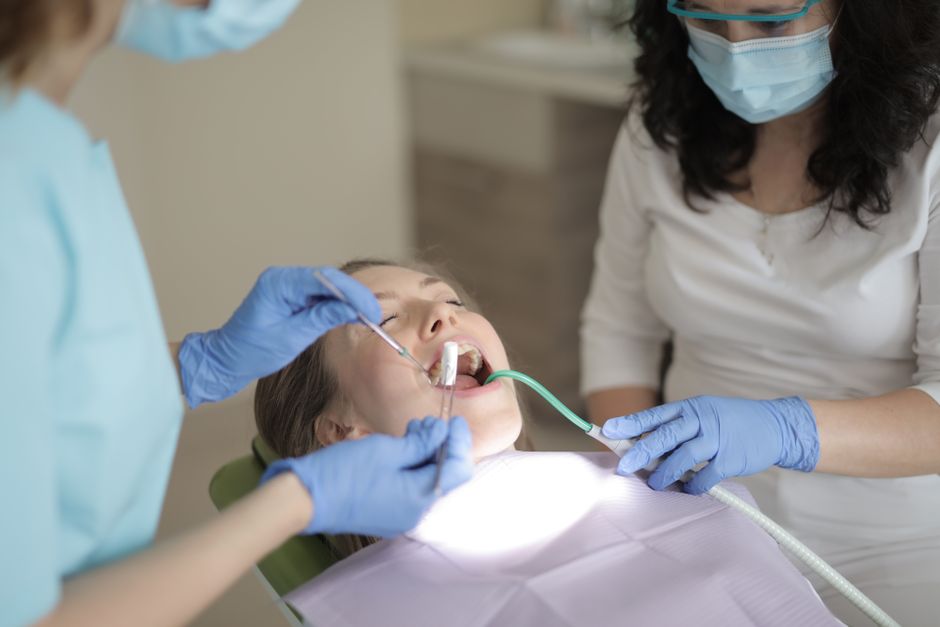
Dental fear is one of the most common anxieties people carry into adulthood, and it is not a character flaw. Surveys over the years have consistently found that a large share of adults report some level of fear or unease about dental visits, and a smaller group avoids care altogether because of it. The reasons usually trace back to pain, loss of control, embarrassment, or a bad experience that never got resolved. The good news is that dental anxiety responds well to practical strategies, and you do not have to white-knuckle your way through a cleaning to get there.
Why Are People Scared Of The Dentist And How To Cope?
Dental fear usually comes from one of a few sources: a painful or frightening past experience, fear of losing control while reclined in a chair, embarrassment about the condition of your teeth, or anxiety that spreads from hearing other people’s dental horror stories. These causes often overlap.
What makes dental fear different from many other anxieties is the sensory environment. You are lying back, your mouth is open, you cannot easily speak, and someone is working inches from your face with instruments that make noise. That combination triggers a real stress response in some people, not just nervousness.
Dentists and researchers often separate two related ideas. Dental anxiety is a general feeling of unease before or during a visit. Dental phobia is more intense and can lead to complete avoidance of care, sometimes for years. The two exist on a spectrum, and the coping strategies overlap.
Understanding your specific trigger matters, because the fix is different depending on the cause. Someone afraid of pain needs different support than someone afraid of being judged for neglected teeth.
What Actually Happens In The Body When You Fear The Dentist?
Fear of the dentist triggers the same stress response as any other perceived threat. Your body releases adrenaline and cortisol, your heart rate climbs, your breathing gets shallow, and your muscles tense. This is your nervous system doing exactly what it evolved to do.
The problem is that this response works against you in a dental chair. Shallow breathing and a tense jaw make the appointment feel longer and more uncomfortable. A racing heart can feel like something is wrong when nothing is.
Some people also have a strong gag reflex that gets worse under stress. Others feel their mouth go dry, which makes impressions and some procedures harder. None of this is dangerous, but it feeds the cycle: you feel the physical symptoms, interpret them as a sign that something bad is happening, and the fear deepens.
Recognizing the physical response for what it is can take some of its power away. It is a stress reaction, not a warning that you are in danger.
Is Dental Pain Still A Real Concern Today?
Modern dentistry has changed a great deal, and much of the pain people remember from decades ago is not part of routine care now. Local anesthetics are highly effective when administered properly, and most common procedures — cleanings, fillings, simple extractions — are done with numbing that patients generally tolerate well.
That said, it would be dishonest to claim dental work is always painless. Some people are harder to numb than others, a phenomenon that is well documented and can relate to anatomy, infection, or individual variation. Anxiety itself can also make numbing less predictable, which is one more reason managing fear matters.
The key point is that pain during a procedure is usually something you can speak up about in the moment. If you feel something, saying so is not rude. It is information the dentist needs. Many dentists will stop and add more anesthetic.





How Do You Cope With Dental Fear Before The Appointment?
The work of coping often starts days before you sit in the chair. Preparation reduces the unknown, and the unknown is a major fuel for anxiety.
- Write down what specifically worries you. Vague dread is harder to address than a concrete fear like “the drill noise” or “not being able to breathe.”
- Tell the office about your anxiety when you book. Many practices have experience with nervous patients and can schedule extra time or a quieter slot.
- Visit the office ahead of time if that helps. Seeing the room when nothing is happening can lower the fear of the unknown.
- Plan something calming for the day of the visit, and avoid scheduling it right before a stressful obligation.
- Bring headphones or ask if you can play music. Distraction genuinely helps some people.
- Skip a heavy caffeine load beforehand. It can amplify the physical symptoms of anxiety.
Agreeing on a signal with your dentist is one of the most useful tools. A simple raised hand meaning “stop” gives you back a sense of control, which is often the core issue.
What Can You Do During The Appointment To Stay Calm?
Slow, deliberate breathing is the most reliable in-the-moment tool. Anxiety tends to produce fast, shallow breathing, and deliberately slowing it can calm the stress response. Breathe in through your nose, out slowly through your mouth, and focus on making the exhale longer than the inhale.
Some people find it helps to count or to focus on a specific point in the room. Others do better closing their eyes. There is no single right method, so it is worth testing what works for you.
Communicate. If you need a pause, ask for one. If you want to know what is happening next, ask. Dentists generally prefer a patient who speaks up over one who endures silently and then never returns.
For more significant anxiety, some dentists offer sedation options, ranging from mild nitrous oxide to deeper sedation for complex cases. These are real options and worth asking about, though they are not right for everyone and carry their own considerations. Discuss them with the dentist and, depending on your health history, your physician.
Can Dental Fear Be Treated Like Other Anxieties?
Yes. Dental anxiety responds to some of the same approaches used for other specific fears. Cognitive behavioral therapy, which helps people change how they interpret and respond to feared situations, has been studied for dental anxiety and shows benefit in some research. The evidence is not uniform across every study, but the general direction supports it.
Gradual exposure — starting with a low-stakes visit and building up — is another approach some clinicians use. For some people, a short course of anti-anxiety medication before appointments is part of the plan, but this is a medical decision that needs a prescriber, not a self-managed solution.
If your fear is severe enough that you have avoided the dentist for years, it may be worth talking to a mental health professional as well as a dentist. Treating the anxiety and treating the teeth are not competing goals. They support each other.
Why Avoiding The Dentist Makes The Fear Worse
Avoidance feels like relief in the short term, but it almost always makes dental fear harder to manage over time. This is the same pattern seen in many anxiety conditions.
The longer you stay away, the more the problem in your mouth can grow. Small issues that would have been simple to address can become larger, more expensive, and more uncomfortable to treat. That outcome then confirms the original fear, and the cycle tightens.
This is why early, small steps matter more than waiting until you feel completely ready. You may never feel completely ready. Going anyway, with support, is what breaks the pattern.
Finding A Dentist Who Understands Dental Anxiety
The right dentist can make an enormous difference, and it is reasonable to look for one who is comfortable treating anxious patients. Many practices describe themselves this way, and some focus on it.
When you call, ask directly how they handle nervous patients. A good sign is a clear, specific answer — extra time, agreed stop signals, sedation options — rather than a vague reassurance that everything will be fine.
You are allowed to change dentists if the fit is not right. Fear of the dentist is common enough that a good practice will not be surprised by the conversation.
Frequently Asked Questions
Why am I so scared of the dentist?
Most dental fear traces back to a painful or frightening past experience, fear of losing control, or embarrassment about the state of your teeth. These causes often overlap, and the fear is a learned response rather than a personal weakness.
How do I cope with dental anxiety during a visit?
Slow, deliberate breathing, agreeing on a stop signal with your dentist, and asking questions during the appointment are practical tools that help many people. If your anxiety is significant, ask the office about sedation options before your visit.
Can dental fear be treated?
Yes, dental anxiety responds to approaches like cognitive behavioral therapy and gradual exposure, and some research supports their use for this specific fear. For severe cases, a mental health professional can help alongside your dental care.
Does avoiding the dentist make fear worse?
Yes, avoidance tends to deepen dental fear over time because it prevents you from learning that the visit is manageable. It also allows dental problems to grow, which can make future treatment more involved.
