
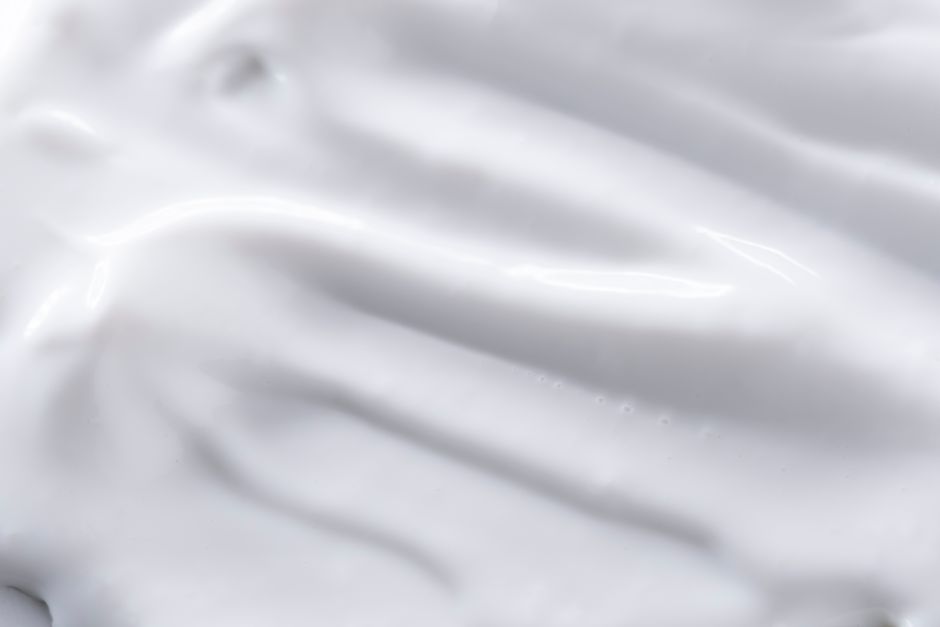
An emulsion in skincare is a blend of oil and water held together by an emulsifier. In simple terms, it is a lightweight moisturizer that feels like a lotion but absorbs quickly. You use it after cleansing and before heavier creams to hydrate the skin without leaving a greasy film. Because the formula is mostly water, it delivers hydration while allowing your skin to breathe.
What exactly is an emulsion in skincare?
An emulsion is a mixture of two liquids that normally do not mix, like oil and water. In skincare, this means a product combines water-based ingredients with oil-based ingredients. Without an emulsifier, these two layers would separate, like salad dressing left sitting on the counter.
Emulsifiers are molecules with one end that loves water and one end that loves oil. They hold the two phases together in a stable, uniform blend. The result is a cream or lotion that feels smooth and spreads evenly across the skin.
Most emulsions in skincare are oil-in-water emulsions. That means tiny droplets of oil are suspended in a larger amount of water. This structure makes the product feel light and fast-absorbing. A water-in-oil emulsion, where water droplets sit in oil, is heavier and more occlusive — think of thick night creams and balms.
How is an emulsion different from a serum or a cream?
The main difference is the ratio of oil to water. Serums are almost entirely water-based with active ingredients dissolved in them. They deliver concentrated ingredients but provide little to no barrier protection. Creams have a higher oil content, making them thicker and more protective.
An emulsion sits between the two. It has more water than oil, so it is thinner than a cream but more nourishing than a serum. The texture is often described as a fluid lotion or a milky gel.
Think of the order this way. Serums deliver actives. Emulsions add hydration and light moisture. Creams seal everything in with a protective layer. Some people layer all three. Others pick one based on their skin type and the season.
What are the benefits of using an emulsion?
The primary benefit is lightweight hydration. Because the formula is mostly water, it absorbs quickly and does not clog pores the way heavier creams sometimes do. This makes it a good option for people with oily or combination skin who still want moisture.
Emulsions also layer well under makeup and sunscreen. They do not pill or roll off when you apply other products on top. The thin texture means you can apply a generous amount without feeling sticky or weighed down.
For people with dry skin, an emulsion can work as a middle layer in a multi-step routine. You can apply it after a hydrating serum and before a richer cream. This adds a boost of hydration without changing the texture of your final layer.
Many emulsions contain humectants like glycerin or hyaluronic acid. These draw water into the outer layer of the skin. Some also contain ceramides or niacinamide, which support the skin barrier. The specific benefits depend on the formula, not the fact that it is an emulsion.
How should you apply an emulsion in your routine?
Apply an emulsion to clean, slightly damp skin. The water on your skin helps pull the product in and improves absorption. Use your fingertips and press the product into your face rather than rubbing it in aggressively.
A pea-to-nickel-sized amount is usually enough for the face and neck. Start with less and add more if needed. Emulsions are spreadable, so a little goes further than you might expect.
The typical order is: cleanser, toner, serum, emulsion, then a heavier cream or sunscreen. If you are using a sunscreen, apply it after the emulsion has fully absorbed. This usually takes about a minute.
You can use an emulsion twice a day, morning and night. Some people prefer it only in the morning because it is light enough to wear under makeup. Others use it at night when they want a breathable layer of moisture. There is no rule that applies to everyone.
Who should use an emulsion?
Emulsions are especially useful for people with oily or combination skin. These skin types often need hydration but react poorly to heavy creams. An emulsion delivers moisture without the heavy, shiny finish.
People with normal skin can also use emulsions as their daily moisturizer, especially in warm and humid weather. In winter, when indoor heating dries the skin out, you might need a heavier cream instead.
People with dry or very dry skin may find an emulsion alone is not enough. It can still be part of the routine, but it should be paired with a more occlusive product to lock in moisture.
Sensitive skin types should patch-test any new product, including emulsions. The lightweight texture does not automatically mean it is non-irritating. Check the ingredient list for fragrance or essential oils if those bother you.
Can you use an emulsion with other active ingredients?
Yes. Emulsions layer well with most other skincare products. Because they are mostly water, they do not interfere with the absorption of serums applied underneath.
If you use retinoids or exfoliating acids, an emulsion can be a good moisturizer to apply afterward. It hydrates without trapping heat or irritating the skin the way some heavy creams might. This is a common approach for people managing acne or signs of aging.
One thing to watch is the order of application. Water-based products go first, then oil-based ones. An emulsion is mostly water, so it goes after serums and before creams or oils. If you apply a facial oil first, the emulsion will not absorb well.
Is an emulsion the same as a moisturizer?
An emulsion is a type of moisturizer, but not all moisturizers are emulsions. The word moisturizer is a broad category that includes gels, lotions, creams, and ointments. An emulsion is specifically a water-and-oil blend with a light texture.
In practical terms, you can use an emulsion as your daily moisturizer if your skin tolerates it. The label on the bottle may say “emulsion,” “lotion,” or “fluid.” These terms are often used interchangeably in marketing, even when the formulas differ slightly.
What matters more than the name is the texture and how your skin responds. A product that feels comfortable and keeps your skin from feeling tight is doing its job. If it leaves you dry an hour later, you need something richer.
Common mistakes when using an emulsion
One common mistake is applying an emulsion to dry skin. Water-based products absorb better on damp skin. Rubbing the product in harshly can also reduce effectiveness and irritate the skin. Press and pat instead.
Another mistake is skipping sunscreen because the emulsion feels like it is enough. An emulsion with SPF is not the same as a dedicated sunscreen. Unless the label clearly states the SPF level and you are applying the proper amount, use a separate sunscreen.
Some people also use too much product. Emulsions are concentrated enough that a small amount covers the whole face. Using more does not increase the benefit and can leave a sticky residue.
Frequently Asked Questions
Can an emulsion replace my moisturizer?
Yes, if your skin feels comfortable and hydrated after using it. People with oily or combination skin often find an emulsion is enough on its own.
When should I apply an emulsion in my skincare routine?
Apply it after cleansing and any serums, but before heavier creams or sunscreen. The order follows the texture rule: thinnest products first, thickest last.
Is an emulsion good for oily skin?
Yes, it is often a good match for oily skin because it hydrates without adding heavy oils. The water-based formula absorbs quickly and does not leave a greasy shine.
Can I use an emulsion under makeup?
Yes, it works well under makeup because it absorbs quickly and leaves a smooth base. Give it a minute to sink in before applying foundation or concealer.
Emulsions are a practical middle ground in skincare. They offer real hydration without the weight of a traditional cream. If your current moisturizer feels too heavy or your skin still feels dry with just a serum, an emulsion may be the missing step.
