
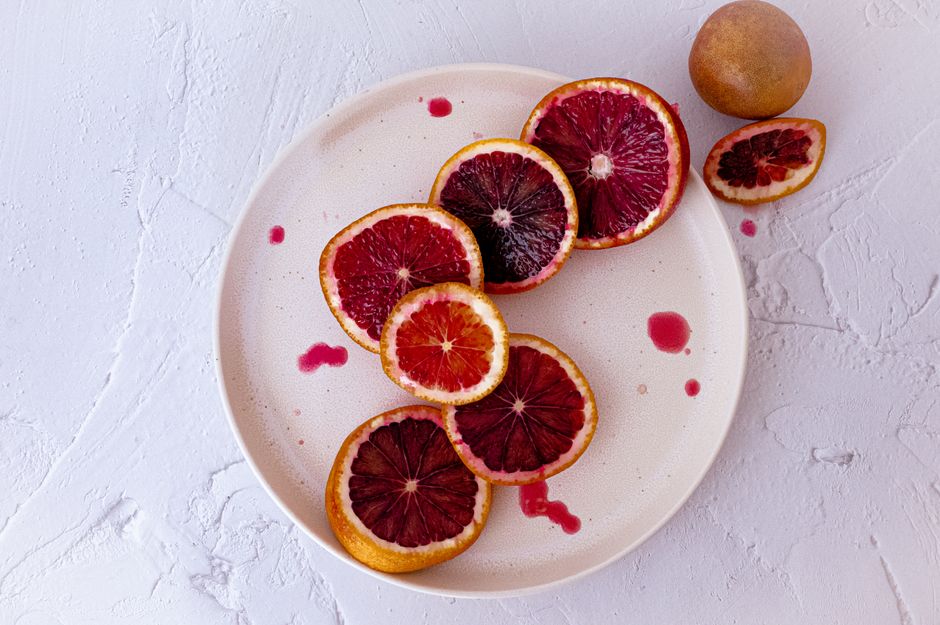
Blood oranges get their name from their dark red flesh, which can range from streaky crimson to deep burgundy. This dramatic color is caused by a natural pigment called anthocyanin — the same type of pigment found in blueberries and blackberries. Most oranges do not produce anthocyanins, but blood oranges do, and the color develops only under specific temperature conditions during the growing season.
Why Are Blood Oranges Called Blood Oranges?
The name comes directly from the fruit’s appearance. When you cut open a blood orange, the flesh is red or dark purple-red, resembling blood. The color can be so intense that it stains fingers and cutting boards. The name is not a marketing gimmick — it is a literal description used for centuries. Blood oranges are a natural mutation of the sweet orange (Citrus sinensis), and their red pigmentation is the result of anthocyanins, which are not present in standard oranges.
What Causes the Red Color in Blood Oranges?
The red color comes from anthocyanins, a class of water-soluble pigments that are rare in citrus fruits. In blood oranges, the specific anthocyanin is called cyanidin-3-glucoside. Unlike the orange color of regular oranges (which comes from carotenoids like beta-carotene), anthocyanins are sensitive to temperature and light.
Research has shown that blood oranges produce anthocyanins only when exposed to cool night temperatures — typically between 40°F and 50°F (4°C to 10°C) — during the ripening period. Warm nights prevent the pigment from forming, which is why blood oranges grown in consistently warm climates often have little to no red color inside. The variety most commonly grown in the United States, the ‘Moro’ blood orange, develops the deepest color when grown in regions like California’s Central Valley where nighttime temperatures drop in the winter.
Are Blood Oranges Genetically Modified?
No. Blood oranges are a natural mutation of the sweet orange that occurred centuries ago. They are not genetically modified organisms (GMOs). The mutation affects a gene that controls anthocyanin production. This mutation is stable and has been passed down through traditional cultivation. Blood oranges have been grown in Sicily since at least the 9th century, and they are still propagated by grafting, just like other orange varieties.





How Do Blood Oranges Differ From Regular Oranges?
The most obvious difference is color. Regular oranges have orange or yellow-orange flesh. Blood oranges have red, maroon, or purple-tinged flesh. The skin of blood oranges may also have a reddish blush, though not always — some varieties look identical to navel oranges on the outside.
Nutritionally, blood oranges contain similar amounts of vitamin C and fiber as regular oranges. The key difference is the presence of anthocyanins, which act as antioxidants. Some research suggests that the anthocyanins in blood oranges may offer additional anti-inflammatory and cardiovascular benefits, but the evidence is still emerging and not conclusive for specific health claims.
Taste is another distinction. Blood oranges tend to be less acidic and have a more complex flavor — often described as berry-like or raspberry notes, with a sweetness that is less sharp than standard orange juice. The intensity of the flavor and color varies by variety and growing conditions.
What Do Blood Oranges Taste Like?
Blood oranges taste like oranges, but with noticeable differences. They are generally sweeter and less tart than navel oranges, with a flavor that many describe as having berry or floral undertones. Some people detect a hint of raspberry or cranberry. The juice is less acidic, which makes it taste smoother. The taste can vary depending on the variety – for example, ‘Moro’ oranges have a strong berry-like flavor, while ‘Tarocco’ oranges are known for being very sweet and less acidic. ‘Sanguinello’ is similar to Moro but often milder.
When Are Blood Oranges in Season?
Blood oranges are a winter fruit. In the United States, they are typically available from December through April. The peak season is usually January through March. They are grown primarily in California and to a lesser extent in Texas and Florida. Fresh blood oranges are imported from Italy (mostly Sicily) during the same period. The growing season timing is important because the cool nights required for color development occur naturally in winter. If you buy blood oranges in summer, they are likely from a different hemisphere or stored, and they may not have the same depth of color or flavor.
Can You Get Red Juice From a Blood Orange?
Yes, and it is one of the main reasons people buy them. Fresh-squeezed blood orange juice has a vibrant ruby red to deep purple color, depending on the variety and ripeness. The color can shift with pH — adding lemon juice (acid) makes it brighter red, while adding baking soda (alkaline) turns it blue or purple. This is a characteristic of anthocyanins. The juice stains easily, so handle it with care. The color fades over time with exposure to light and heat, so fresh juice is best consumed soon after squeezing.
Are Blood Oranges Healthier Than Regular Oranges?
Both are healthy. They provide comparable amounts of vitamin C, potassium, and dietary fiber. The unique benefit of blood oranges is the anthocyanin content. Some laboratory studies have shown that anthocyanins have antioxidant and anti-inflammatory properties, but these effects have not been proven in large human trials to translate into specific health outcomes. Eating a blood orange is not proven to prevent disease more effectively than eating a regular orange. The main advantage is variety in taste and color. If you enjoy them, they are a nutritious choice — but they are not a clinically superior food.
Frequently Asked Questions
What gives blood oranges their red color?
The red color comes from a natural pigment called anthocyanin, specifically cyanidin-3-glucoside, which develops in the flesh when the fruit is exposed to cool nighttime temperatures during ripening.
Are blood oranges genetically modified?
No, blood oranges are a natural mutation of the sweet orange that occurred centuries ago. They are grown through traditional grafting, not genetic engineering.
Do blood oranges taste different from regular oranges?
Yes, blood oranges are generally sweeter, less acidic, and often have berry or floral undertones that regular oranges do not have.
When are blood oranges available in the US?
Blood oranges are in season from December through April, with peak availability from January to March.
