
In 1848, a railroad foreman named Phineas Gage survived a terrible accident. A three-foot-seven-inch iron rod shot through his skull, entering under his cheekbone and exiting through the top of his head. What happened next changed how scientists understand the human brain forever. Gage did not die. He could still walk, talk, and remember his past. But his personality shifted so dramatically that his friends said he was “no longer Gage.” This single case gave neuroscience its first clear evidence that specific brain regions control specific human behaviors — especially personality, decision-making, and social conduct. Before Gage, the idea that different parts of the brain have different jobs was mostly theory. After Gage, it became a proven fact.
What Exactly Happened to Phineas Gage?
Phineas Gage worked for a railroad construction company in Vermont. His job involved blasting rock to clear paths for tracks. On September 13, 1848, Gage was packing gunpowder into a hole with a tamping iron. He got distracted for a moment. The iron struck a spark against the rock. The gunpowder exploded.
The tamping iron — 13 pounds, over three feet long, and about an inch and a quarter in diameter — shot upward like a missile. It entered Gage’s left cheek, passed behind his left eye socket, and exited through the top of his skull. The rod landed about 80 feet away, covered in blood and brain tissue. Gage fell to the ground but was conscious within minutes. He walked to a nearby cart and his coworkers drove him three-quarters of a mile to a hotel in town where a doctor was called.
The doctor, John Harlow, arrived about an hour later. He found Gage sitting in a chair outside the hotel, talking to a crowd. Gage reportedly greeted the doctor by saying, “Doctor, here is business enough for you.” Harlow cleaned the wound, removed bone fragments, and did what he could with the medical tools of the 1840s. Remarkably, Gage survived the infection that followed. Within a few months, he was physically well enough to travel.
How Did Gage’s Personality Change After the Accident?
Before the accident, Phineas Gage was described as a capable, hardworking, and well-liked man. His employers called him the “most efficient and capable foreman” they had. He was known for being balanced, smart with money, and respected by his crew.
After the accident, those who knew him said he was “no longer Gage.” He became impatient, impulsive, and prone to outbursts of anger. He swore frequently, which he had not done before. He made plans for his future and then abandoned them without reason. He could not hold a job. He could not manage money. He drifted from place to place, working odd jobs, and eventually ended up in San Francisco.
His doctor, John Harlow, wrote that the “balance between his intellectual faculties and animal propensities” seemed destroyed. Gage could still reason and remember. But he could no longer make good decisions or control his emotions. This was the first documented case showing that damage to the frontal lobe — the front part of the brain behind the forehead — could destroy a person’s ability to function socially while leaving their intelligence intact.
Why Is Phineas Gage So Important to Neuroscience?
Before Phineas Gage, most scientists believed the brain worked as one single unit. The dominant theory was that all parts of the brain did the same job. If one area was damaged, other areas could take over completely. Gage’s case proved this was wrong.
Here is what the case established:
- Different brain regions control different mental functions. The frontal lobe specifically manages personality, impulse control, and decision-making.
- Damage to one area can destroy specific abilities while leaving others untouched. Gage could still speak, move, and remember. He could not plan, control his temper, or make sound judgments.
- The brain is not a single organ that works as one whole. It is a collection of specialized regions that work together.
Modern neuroscience would not exist without this insight. Every brain scan you see today — every MRI, every CT scan — relies on the idea that specific brain areas do specific jobs. That idea started with Phineas Gage.
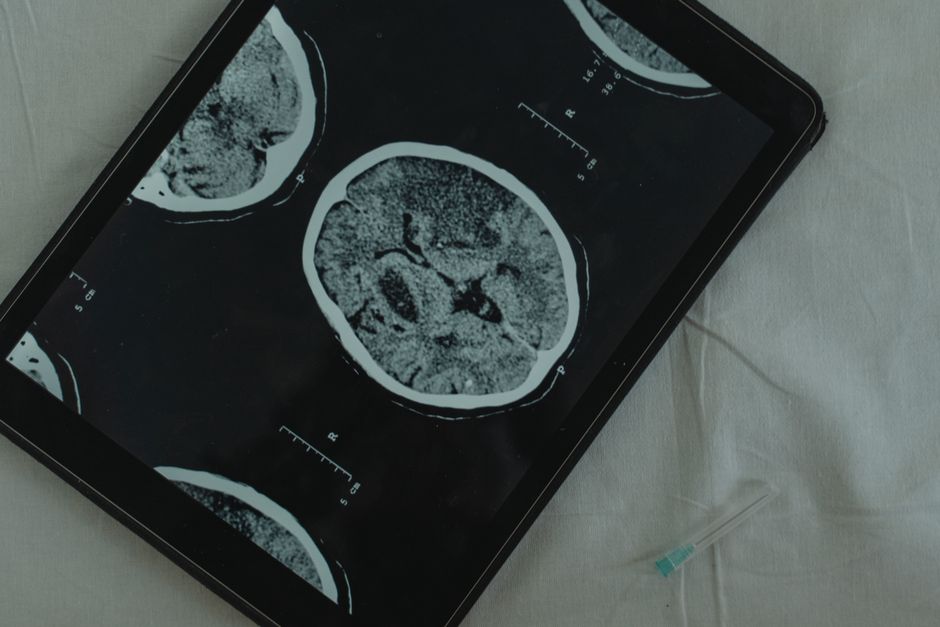
Research published in the Journal of Neuropsychiatry and Clinical Neurosciences has confirmed that Gage’s injury specifically damaged the ventromedial prefrontal cortex, a region now known to be critical for social decision-making and emotional regulation. Scientists have reconstructed his injury using modern CT scans of his preserved skull. The damage pattern matches exactly what you would expect to cause the behavioral changes described in historical records.





What Can We Learn from Gage’s Case Today?
Phineas Gage is not just a history lesson. His case has direct relevance to how doctors understand brain injuries today. Every year, thousands of Americans suffer damage to the frontal lobe from car accidents, falls, and sports injuries. Many of these patients look physically fine. They can walk and talk normally. But their personality changes. They become impulsive, irritable, or unable to make decisions. Families often describe them as “a different person.”
This is called dysexecutive syndrome. It is exactly what happened to Gage. The person looks the same but is not the same. Doctors now know to check for this after head trauma. They use cognitive tests that measure planning, impulse control, and social judgment — not just memory or intelligence.
Gage’s case also changed how courts handle brain injury cases. Before Gage, a person who acted differently after a head injury was often seen as faking or just “acting out.” Now, the legal system recognizes that frontal lobe damage can fundamentally change personality. This has implications for criminal responsibility, competency hearings, and disability claims.
What Myths About Phineas Gage Should You Ignore?
Several myths about Phineas Gage have spread widely. Here are the ones that are not supported by the evidence:
Myth: Gage became a violent criminal after the accident.
The truth is more complicated. Gage did become irritable and impulsive. But there is no evidence he committed crimes or became dangerous. He worked odd jobs, traveled, and eventually died of a seizure in 1860 at age 36. His behavior was difficult, not criminal.
Myth: Gage was a “different person” with no memory of his old life.
Gage remembered everything. He knew who he was, who his family was, and what had happened to him. His basic cognitive functions — memory, language, perception — remained intact. Only his personality and decision-making changed.
Myth: The rod went through the exact center of his brain.
Modern reconstructions show the rod passed through the left frontal lobe only. It did not damage the center of the brain, the brainstem, or the right hemisphere. This is why Gage survived at all. Damage to those other areas would likely have killed him instantly.
Myth: Gage’s case proves the brain cannot recover from injury.
Actually, Gage did recover some function over time. His doctor noted that in the years after the accident, Gage learned to manage his behavior better. He held a job as a stagecoach driver in Chile for several years. The brain can adapt, even after severe injury. But the underlying damage to the frontal lobe never fully healed.
How Did Scientists Reconstruct the Gage Case?
For decades, scientists relied on written accounts from Gage’s doctors. Then in 1994, researchers at UCLA used modern imaging technology to study Gage’s preserved skull, which is housed at the Warren Anatomical Museum at Harvard. They created a 3D reconstruction of the injury path.
The results confirmed the historical descriptions. The rod entered through the left cheek, passed behind the eye socket, and exited through the top of the skull. The path went directly through the ventromedial prefrontal cortex. This is the brain region responsible for integrating emotion with decision-making. Damage to this area explains exactly the behavioral changes Gage showed.
In 2012, a team from Harvard used diffusion tensor imaging — a type of MRI that maps brain connections — to estimate which neural pathways the rod severed. They found that the injury disrupted connections between the frontal lobe and other brain regions involved in emotion, memory, and social behavior. This gave an even more precise picture of why Gage changed the way he did.
What Does This Mean for Understanding Your Own Brain?
Phineas Gage’s story is not just about a man from 1848. It is about how fragile and specialized your brain really is. Your personality, your ability to make decisions, your self-control — these are not vague concepts. They are physical functions of specific brain tissue. Damage that tissue, and the function disappears.
This is why protecting your brain matters. Every concussion, every blow to the head, every fall that jars your skull can potentially damage the frontal lobe. The effects may not show up immediately. They may appear as subtle changes in mood, impulse control, or judgment weeks or months later.
The CDC reports that about 2.5 million Americans suffer a traumatic brain injury each year. Many are mild. But even mild injuries can cause lasting changes to frontal lobe function. If you or someone you know has had a head injury and feels “different” — more irritable, less patient, more impulsive — that is not just stress. It could be a real neurological change that deserves medical evaluation.
Frequently Asked Questions
Did Phineas Gage die from his brain injury?
No, Gage survived the accident by 12 years. He died in 1860 from a severe seizure, likely related to epilepsy caused by the injury.
Can modern medicine fix the kind of damage Gage had?
No, there is no cure for severe frontal lobe damage. Rehabilitation focuses on helping patients develop coping strategies and behavioral routines to manage impulsivity and poor judgment.
Is Phineas Gage’s skull still available to see?
Yes, his skull and the tamping iron are preserved at the Warren Anatomical Museum at Harvard Medical School in Boston. They are available for research by appointment.
Did Phineas Gage ever return to normal?
No, he never returned to his original personality. He did learn to manage his behavior better over time and held a job as a stagecoach driver, but his friends and family said he was never the same person.
