
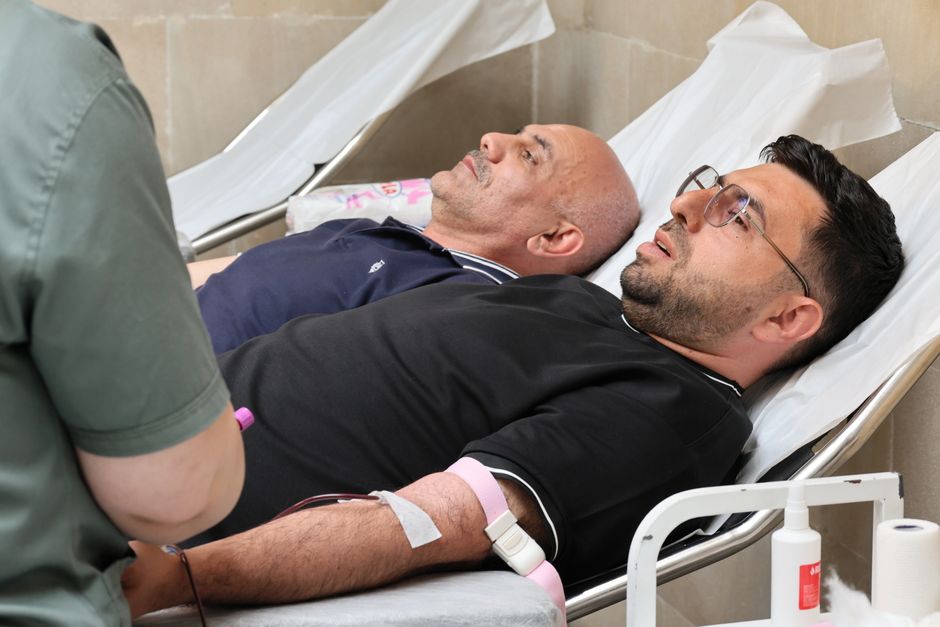
Blood donation saves lives, but not everyone can donate. Eligibility rules exist to protect both the donor and the person receiving the blood. Some conditions permanently disqualify you from donating, while others only require a waiting period. Knowing the rules before you arrive at a donation center saves time and prevents disappointment. This guide covers the main conditions that disqualify you from donating blood and explains why those rules exist.
Who Cannot Donate Blood Conditions That Disqualify You?
Several medical conditions permanently disqualify a person from donating blood. These include certain blood cancers, Creutzfeldt-Jakob disease, active hepatitis B or C, HIV, and a history of intravenous drug use without a prescription. Other conditions like heart disease, diabetes, or anemia may disqualify you depending on severity and treatment. The rules exist to protect recipients from infection and to protect donors from harm during the donation process.
Blood banks screen donors carefully. They ask detailed health questions before every donation. These questions are not optional. They exist because blood transfusions carry real risks, and the screening process is the main defense against transmitting disease through donated blood.
Why Do Blood Banks Have Strict Eligibility Rules?
Blood banks have two main concerns. First, they must ensure the blood is safe for the recipient. Second, they must ensure the donation process is safe for the donor.
For the recipient, the biggest risk is contracting an infection through a transfusion. Even with modern testing, some infections cannot be detected during the window period — the time between infection and when tests can find it. Donor screening questions help close that gap.
For the donor, the main risk is a drop in blood pressure or fainting during donation. People with certain heart conditions or severe anemia face higher risks. Donating blood removes about one pint of blood, which is roughly 10 percent of an adult’s total blood volume. Most healthy adults handle this fine, but some conditions make it dangerous.
Infectious Diseases That Permanently Disqualify Donors
Some infections permanently disqualify a person from donating blood. These rules are strict because the infections can be transmitted through transfusion and may cause serious illness in recipients.
HIV and AIDS are permanent disqualifiers. There is no exception, regardless of treatment status or viral load. The same applies to hepatitis B and hepatitis C. Chronic active infections of either virus disqualify a donor permanently.
Creutzfeldt-Jakob disease (CJD) and its variant form (vCJD) also permanently disqualify donors. CJD is a rare, fatal brain disorder caused by prions. Prions are not destroyed by standard blood processing methods. A history of receiving human growth hormone derived from cadavers, which was used before synthetic versions existed, also disqualifies a donor permanently because it carries a risk of CJD transmission.
Other infections may temporarily or permanently disqualify you depending on the specific disease. For example, active tuberculosis disqualifies you until treatment is complete and you are cleared by a doctor. Babesiosis, a parasitic infection transmitted by ticks, disqualifies donors for two years after diagnosis.



Cancer and Blood Donation Eligibility
Cancer history affects blood donation eligibility, but the rules depend on the type of cancer and treatment. The main concern is whether cancer cells could be transmitted through blood. Certain cancers carry a higher risk than others.
Blood cancers — including leukemia, lymphoma, and multiple myeloma — permanently disqualify a person from donating. These cancers involve blood cells directly, and there is a theoretical risk of transmitting malignant cells through transfusion.
Solid tumors may not permanently disqualify you. If you had a cancer that was treated with surgery alone and you have been cancer-free for a specific period, you may be eligible. The waiting period varies by blood bank but is often around one year after completing treatment. Cancers that required chemotherapy or radiation typically require a longer waiting period, and some blood banks require permanent deferral for certain aggressive cancers.
Skin cancers such as basal cell carcinoma and squamous cell carcinoma generally do not disqualify donors if the cancer was completely removed and has not spread. Melanoma, however, is treated more cautiously due to its higher risk of spreading.
Heart Disease and Blood Donation
Heart disease affects donation eligibility because of the physical stress donation places on the body. When you donate blood, your body loses red blood cells and fluid. Your heart must work slightly harder to maintain circulation. For most healthy people this is not a problem. For people with certain heart conditions, it can be.
People with severe heart disease, such as unstable angina or heart failure, are permanently disqualified from donating. The risk of complications during or after donation is too high. People who have had a heart attack may be permanently disqualified, although some blood banks allow donation after a waiting period if the person has fully recovered and has clearance from a cardiologist.
People with well-controlled high blood pressure can donate if their blood pressure is within an acceptable range on the day of donation. Most blood banks require a systolic reading below 180 and a diastolic reading below 100. Blood pressure medications do not disqualify you from donating.
Heart rhythm problems are evaluated case by case. If you have an irregular heartbeat that is controlled with medication and you have no other disqualifying conditions, you may be eligible. A history of heart surgery, such as bypass surgery or valve replacement, typically requires a waiting period of at least six months after recovery.
Anemia and Low Hemoglobin Levels
Anemia is one of the most common reasons people are turned away from donating blood. Before each donation, blood banks test your hemoglobin level. Hemoglobin is the iron-containing protein in red blood cells that carries oxygen. If your level is too low, you cannot donate.
The minimum hemoglobin level for blood donation is typically 12.5 g/dL for women and 13.0 g/dL for men. These thresholds exist because donating blood lowers your hemoglobin further. If your level starts too low, you could become symptomatic after donation. You might feel dizzy, fatigued, or short of breath.
If you are turned away for low hemoglobin, it does not mean you are permanently disqualified. You may be able to donate once your iron levels recover. Iron supplementation and dietary changes can help, but you should discuss this with your doctor. Repeatedly low hemoglobin levels warrant a medical evaluation to identify the underlying cause.
Pregnancy, Recent Birth, and Blood Donation
Pregnancy is a temporary disqualification for blood donation. The rules exist to protect both the mother and the developing baby. During pregnancy, a woman’s blood volume increases significantly to support the fetus. Donating blood during pregnancy could reduce blood flow to the baby and increase the mother’s risk of anemia.
Women cannot donate during pregnancy. After giving birth, there is a waiting period before donation is allowed. Most blood banks require a wait of at least six weeks after delivery. This waiting period allows the mother’s blood volume to return to normal and gives her body time to recover from the blood loss that occurs during childbirth.
If a woman had complications during pregnancy or delivery, the waiting period may be longer. Women who are breastfeeding can typically donate once they meet the postpartum waiting period, provided they are otherwise healthy and have adequate iron stores.
Medications That Affect Donation Eligibility
Certain medications disqualify you from donating blood, either temporarily or permanently. The concern is that medication residues in the blood could harm the recipient. Some medications also indicate an underlying condition that makes donation unsafe.
Blood thinners such as warfarin, apixaban, and rivaroxaban require a waiting period. These medications affect blood clotting, and donating while on them could cause excessive bleeding at the donation site. The waiting period varies by medication and can range from a few days to a week after the last dose.
Isotretinoin, used for severe acne, requires a one-month waiting period after the last dose because of its potential to cause birth defects if transfused into a pregnant woman. The same applies to finasteride and dutasteride, which are used for prostate enlargement and hair loss.
Some medications permanently disqualify you because of the condition they treat. For example, medications used for HIV or chronic hepatitis B disqualify you because the underlying infection is a permanent deferral. Growth hormone derived from human cadavers also permanently disqualifies you.
If you take medication and are unsure whether you can donate, contact the blood bank directly. They have access to the most current medication deferral lists.
Recent Travel and Blood Donation Rules
Travel history matters because of the risk of transmitting infections that are rare in the United States. The most well-known example is malaria. If you have traveled to a country where malaria is common, you must wait before donating blood.
For travel to a malaria-risk area, the waiting period is typically three months after returning. If you have had malaria, you must wait three years after treatment and being symptom-free. These rules exist because malaria parasites can survive in the blood and be transmitted through transfusion.
Travel to the United Kingdom or certain European countries has historically affected eligibility due to concerns about variant Creutzfeldt-Jakob disease. The FDA has revised these rules over time. If you spent significant time in these countries during specific periods, you may have been deferred in the past. Current rules are less restrictive, but you should answer travel questions honestly and let the blood bank determine your eligibility.
Other Conditions That Disqualify You
Several other conditions can disqualify a person from donating blood. Some are permanent, and some are temporary.
Active infections such as a cold, flu, or COVID-19 require a waiting period. You must be symptom-free for a specified time before donating. For most common infections, the waiting period is a few days to two weeks after symptoms resolve.
Recent tattoos or piercings require a waiting period in some states. If the tattoo was done at a state-regulated facility with sterile needles, there may be no waiting period. If the facility is not regulated, the waiting period is typically three months.
Organ transplants from other people generally disqualify you permanently. The exception is corneal transplants and some tissue grafts. The concern is the risk of transmitting infections from the donor organ.
Severe asthma may disqualify you if you have active symptoms. Well-controlled asthma does not typically prevent donation. The same applies to diabetes. Well-controlled diabetes does not disqualify you, but diabetes that requires insulin may have additional screening requirements.
Frequently Asked Questions
Can I donate blood if I have high blood pressure?
Yes, if your blood pressure is below 180/100 on the day of donation. Blood pressure medications do not disqualify you.
How long after getting a tattoo can I donate blood?
If the tattoo was done at a state-regulated facility with sterile needles, you can donate immediately. Otherwise, the waiting period is three months.
Can I donate blood if I take antidepressants?
Yes, most antidepressants do not disqualify you from donating blood. The underlying condition must be well-controlled, and you must be otherwise healthy.
Does having diabetes prevent me from donating blood?
Well-controlled diabetes does not disqualify you. If you take insulin, you may need additional screening, but many insulin-dependent diabetics can donate.
Blood donation eligibility is not a judgment of your health or worth. It is a safety measure. The rules protect recipients from infection and protect donors from harm. If you are disqualified, it does not mean you cannot help. Many blood banks accept volunteer support and financial donations. And some disqualifications are temporary. If you were turned away for low hemoglobin or a recent infection, you may be eligible at a later date. The most important step is to be honest during screening. Your honesty protects lives.
