
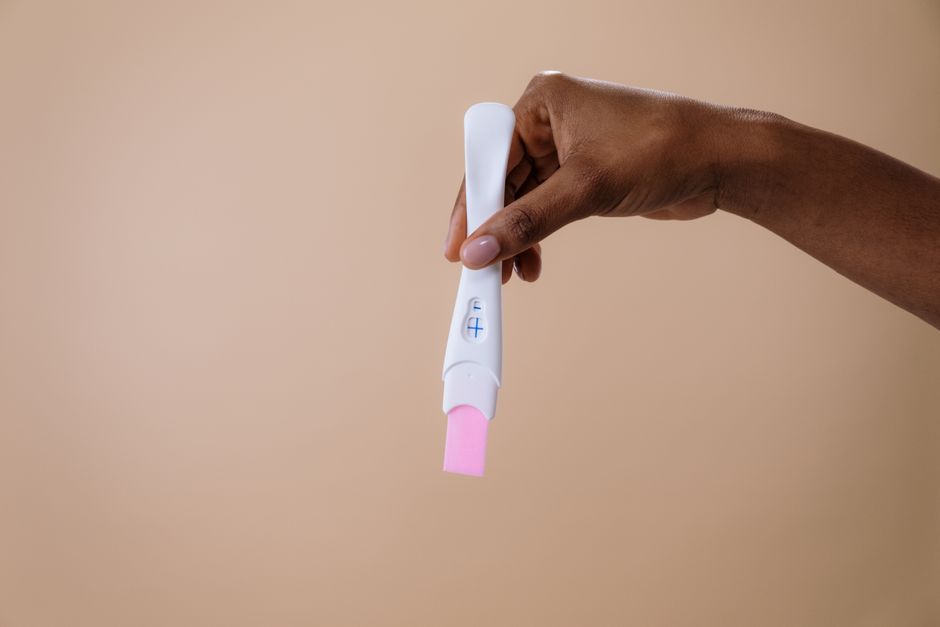
When you need to know if you’re pregnant, waiting even a few days can feel like forever. The best pregnancy test for early detection is a midstream digital test with a sensitivity of 10 mIU/mL, such as the Clearblue Early Digital, because it can detect the pregnancy hormone before your missed period. For the most accurate early result, test in the morning when your urine is most concentrated, and use a test labeled specifically for early detection rather than a standard test.
How Do Early Pregnancy Tests Actually Work?
All home pregnancy tests work the same basic way. They detect human chorionic gonadotropin, or hCG, in your urine. This is a hormone your body only makes when you are pregnant, after a fertilized egg implants in your uterus.
Implantation typically happens 6 to 10 days after ovulation. After that, hCG levels rise quickly. They usually double every 48 to 72 hours in early pregnancy. The amount of hCG in your urine is what determines whether a test can give you a positive result.
Standard tests require more hCG to show a positive line. Early detection tests are designed to pick up much smaller amounts. This is why they can work a few days before your period is due.
What Does mIU/mL Sensitivity Mean?
Test sensitivity is measured in milli-international units per milliliter, or mIU/mL. This number tells you the lowest amount of hCG the test can detect in your urine. The lower the number, the more sensitive the test.
Standard pregnancy tests typically have a sensitivity of 25 mIU/mL. Early detection tests commonly have a sensitivity of 10 mIU/mL. Some tests, like the Clearblue Early Digital, are labeled as 10 mIU/mL. This means they can detect a smaller amount of hCG than a standard test.
This difference matters because hCG levels are very low in the days just before your missed period. A 10 mIU/mL test can often give you a positive result 4 to 5 days before your expected period. A 25 mIU/mL test usually cannot.
Which Pregnancy Test Is Best For Early Detection?
The Clearblue Early Digital is one of the most sensitive tests available at 10 mIU/mL. It also displays the words “Pregnant” or “Not Pregnant” on a digital screen, which removes any guesswork about reading lines.
First Response Early Result is another strong option. It is also highly sensitive and can detect hCG at low levels. Many women find it reliable for testing before a missed period, though it uses traditional line results rather than a digital readout.
Store brand early detection tests can work well too. The key is to check the package for the sensitivity level. Look for a test that states 10 mIU/mL on the label. If the label does not list sensitivity, assume it is a standard 25 mIU/mL test.
Digital tests are not inherently more sensitive than line tests. The digital feature only changes how the result is displayed. A digital test at 25 mIU/mL is no better for early detection than a line test at 25 mIU/mL. Always check the sensitivity number, not the display type.




When Is the Best Time to Take an Early Test?
Timing matters more than the brand in many cases. The earlier you test, the lower your hCG level will be. Testing too early can give you a false negative even with the most sensitive test available.
The best time to take an early detection test is first thing in the morning. Your urine is most concentrated after a night of sleep. This gives the test the best chance of detecting low levels of hCG.
If you test in the afternoon, your urine may be more diluted. This is especially true if you have been drinking fluids throughout the day. A diluted sample can result in a negative test even when you are pregnant.
For the most reliable early result, wait until about 4 to 5 days before your expected period. This timing gives hCG enough time to build up to detectable levels in most pregnancies. Testing earlier than this increases your chance of a false negative.
If you get a negative result but your period does not arrive, wait 3 days and test again. Your hCG levels may simply not have been high enough yet. A negative result on an early test does not mean you are not pregnant. It only means the test did not detect hCG at that moment.
Can Medications or Medical Conditions Affect Test Results?
Most medications do not affect pregnancy test results. Antibiotics, pain relievers, and birth control pills do not change hCG levels. This is a common myth, but it is not supported by evidence.
However, some fertility medications do contain hCG. These include injections like Pregnyl or Ovidrel, which are sometimes used to trigger ovulation. If you have taken one of these medications, you can get a false positive. The test is detecting the hCG from the injection, not from a pregnancy.
Certain rare medical conditions can also cause hCG to appear in your urine without pregnancy. These include some types of tumors and certain ovarian conditions. These situations are uncommon. If you get a positive result and later find out you are not pregnant, talk to your doctor.
Ectopic pregnancies and early miscarriages can also affect test results. An ectopic pregnancy produces hCG, so a test will be positive. But hCG levels may rise more slowly than in a normal pregnancy. If you have a positive test followed by bleeding or severe pain on one side, seek medical care immediately.
How Accurate Are Early Detection Tests?
Early detection tests are highly accurate when used correctly and at the right time. When taken on the day of your missed period, most early detection tests are over 99% accurate at detecting pregnancy. This is a well-established figure from manufacturer data and clinical studies.
Before your missed period, accuracy drops. Testing 4 to 5 days early, the accuracy is lower because not all pregnancies have reached detectable hCG levels yet. Some studies suggest that testing this early can miss about 40% of pregnancies. The exact percentage depends on the test and the individual.
False positives are rare with early detection tests. If you get a positive result, especially a clear one, it is highly likely you are pregnant. False negatives are much more common, simply because you may have tested too early.
Reading the test too late can also cause problems. Most tests have a time window for reading results, usually 3 to 10 minutes after the test develops. Reading after this window can show an evaporation line that looks like a faint positive. This is not a true positive result.
What Is the Difference Between Digital and Line Tests?
Digital tests show the words “Pregnant” or “Not Pregnant” on a small screen. Line tests show one line for negative and two lines for positive. Both types detect the same hormone in the same way.
Digital tests remove the guesswork of interpreting faint lines. This can reduce anxiety and confusion. However, digital tests are often more expensive than line tests.
Line tests can be more sensitive at the same price point. The First Response Early Result line test is known for its high sensitivity at a lower cost than some digital options. If cost is a concern, a sensitive line test is a practical choice.
Some women prefer to buy a pack of line tests for early testing and confirm with a digital test later. This approach combines low cost with clear confirmation. There is no medical reason to prefer one type over the other as long as the sensitivity is the same.
What Should You Do After a Positive Test?
A positive result on any home pregnancy test is a strong indicator of pregnancy. The next step is to contact your healthcare provider. They can schedule a blood test to confirm the pregnancy and check your hCG levels.
Blood tests are more sensitive than urine tests. They can detect hCG at levels as low as 5 mIU/mL. They also provide a numerical value, which can help your doctor monitor the early pregnancy. This is especially useful if you have had previous miscarriages or fertility treatments.
Begin taking a prenatal vitamin with folic acid if you have not already. Folic acid helps prevent neural tube defects in early development. The recommended dose for pregnancy is 400 to 800 micrograms daily. Your doctor may recommend a higher dose based on your health history.
Do not be surprised if your doctor does not schedule an ultrasound immediately. An ultrasound may not show a pregnancy until about 5 to 6 weeks along, when a heartbeat can be detected. Early blood tests and monitoring are often more useful in the first weeks.
What Are the Common Mistakes to Avoid When Testing?
The most common mistake is testing too early. Even the most sensitive test cannot detect hCG before implantation occurs. Testing before 10 days past ovulation frequently leads to false negatives and unnecessary disappointment.
Another mistake is not following the instructions on the package. Each test has specific steps for how long to hold the test in urine and how long to wait for results. Deviating from these steps can affect accuracy.
Using the first morning urine is important for early testing. If you test later in the day, hold your urine for at least 4 hours before testing. Avoid drinking large amounts of fluid in those hours to keep your urine concentrated.
Checking the test outside the recommended time window is also a common error. A test left sitting for 30 minutes may develop a faint line that was not there at the correct reading time. This can cause confusion and false hope. Set a timer and read the result exactly when the instructions say.
Frequently Asked Questions
Can a pregnancy test be positive at 3 days before a missed period?
Yes, a highly sensitive test at 10 mIU/mL can detect pregnancy 4 to 5 days before your missed period. However, not all pregnancies produce detectable hCG that early, so a negative result at 3 days early does not rule out pregnancy.
Is a digital pregnancy test more accurate than a line test?
No, digital and line tests are equally accurate when they have the same sensitivity level. The digital feature only changes how the result is displayed, not how well the test detects hCG.
Why did I get a negative result but still miss my period?
You may have tested too early, or your urine may have been too diluted. Wait 3 days and test again with your first morning urine. If you still get a negative result, contact your doctor to investigate other causes of a missed period.
Can stress delay a period and cause a false negative?
Stress can delay ovulation, which delays your period and can make you test too early. The test itself is not affected by stress, but the timing of your cycle may be. If your period is late and the test is negative, wait a few days and test again.
