
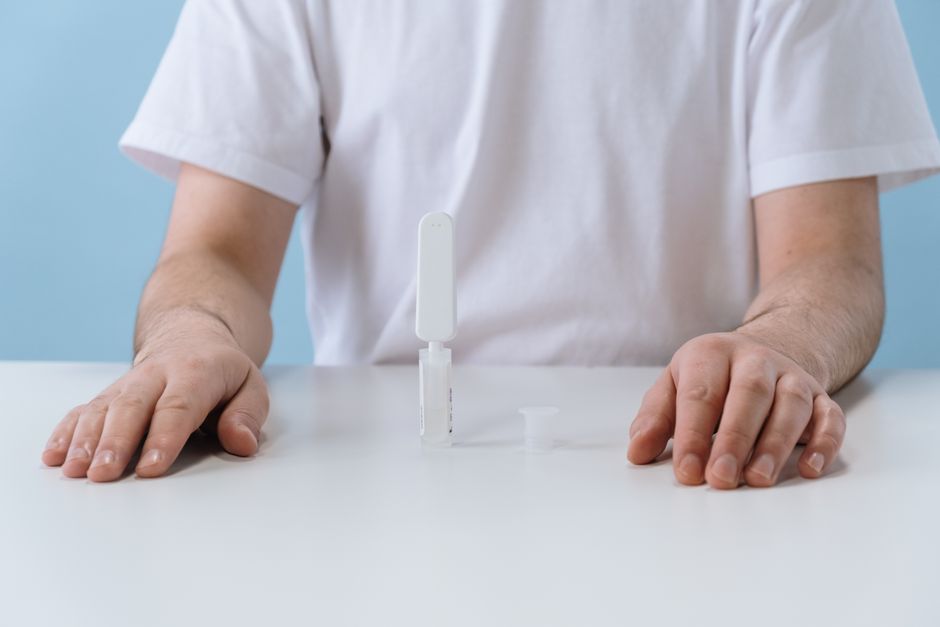
Yes, a urine test can detect pregnancy with high accuracy when used correctly. Home pregnancy tests check for human chorionic gonadotropin (hCG), a hormone your body makes after a fertilized egg attaches to the uterus. Most tests are about 99% accurate when taken after a missed period. But timing, how you use the test, and certain medical conditions can affect the result.
How Do Urine Pregnancy Tests Work?
Urine pregnancy tests detect the presence of hCG in your urine. After implantation, hCG levels rise quickly—they double about every 48 to 72 hours in early pregnancy. The test uses antibodies that react specifically to hCG. When hCG is present, a line or symbol appears on the test stick.
Home tests and clinic urine tests work the same way. The main difference is sensitivity. Some tests can detect very low levels of hCG, while others need a higher concentration to give a positive result.
How Accurate Are Urine Pregnancy Tests?
When used correctly, home pregnancy tests are very accurate. Manufacturers report over 99% accuracy when testing on the day of the missed period. In real-world use, accuracy can be lower because of user mistakes—testing too early, using diluted urine, or misreading the result.
For the most reliable result, wait until the day of your missed period. Testing earlier increases the chance of a false negative because hCG levels may still be too low.
When Is the Best Time to Take a Urine Pregnancy Test?
The best time is first thing in the morning. Your urine is most concentrated after a night of sleep, so hCG levels are highest then. Testing later in the day after drinking fluids can dilute your urine and make it harder for the test to detect hCG.
If you test before your missed period, you may get a negative result even if you are pregnant. Some sensitive tests claim to detect pregnancy up to six days before a missed period, but accuracy is lower that early. The later you test, the more reliable the result.




What Can Affect the Accuracy of a Urine Pregnancy Test?
Several factors can change the result. Testing too early is the most common cause of a false negative. Other factors include:
- Diluted urine – Drinking a lot of fluids before testing can lower hCG concentration.
- Expired or damaged test – Always check the expiration date and packaging.
- Medical conditions – Rarely, ovarian tumors or certain cancers produce hCG, causing a false positive.
- Medications – Fertility drugs containing hCG (like those used for ovulation) can cause a false positive. Most other medications, including birth control and antibiotics, do not affect results.
- Ectopic pregnancy or miscarriage – hCG levels may be lower or rise slowly, leading to a negative or faint positive test.
How to Read and Interpret Results Correctly
Read the instructions for your specific test brand. Most tests use a control line and a test line. A control line always appears to show the test is working. A second line or symbol in the test area means positive—you are pregnant.
Even a faint second line usually means pregnancy. The darkness of the line depends on how much hCG is in your urine, not on how far along you are. A faint line is still a positive result if it appears within the read time window (usually 3–5 minutes). Lines that appear after the read window are not reliable.
What If the Test Is Negative but You Still Think You’re Pregnant?
A negative result can be wrong if you tested too early or your urine was too dilute. If your period does not start within a few days, test again. If you still get a negative result and your period is late, see a healthcare provider. They can do a blood test, which is more sensitive than a urine test.
Blood tests can detect hCG as early as 6–8 days after ovulation. They are also used to measure hCG levels over time, which helps monitor a pregnancy’s progress.
Comparing Urine Tests to Blood Tests
| Feature | Urine Test | Blood Test |
|---|---|---|
| When it can detect pregnancy | Usually after missed period (some sensitive tests earlier) | 6–8 days after ovulation |
| Accuracy | High (over 99% with correct use after missed period) | Very high—more sensitive and specific |
| Cost and convenience | Low cost, done at home | Higher cost, requires lab visit |
| Measures hCG level | Yes/No only (some digital tests give “pregnant” or “not pregnant”) | Yes—gives exact number (quantitative) or yes/no (qualitative) |
For most women, a home urine test is reliable enough. Blood tests are usually reserved for medical situations where early detection or exact hCG level is needed.
Frequently Asked Questions
Can a urine test detect pregnancy before a missed period?
Some sensitive tests may detect pregnancy up to six days before a missed period, but the chance of a false negative is higher that early.
How accurate is a urine pregnancy test if taken at night?
Accuracy may be lower at night because your urine is more diluted. Testing first thing in the morning gives the most reliable result.
Can a urine test give a false positive?
Yes, but it is rare. Causes include recent miscarriage, ectopic pregnancy, fertility drugs with hCG, or certain medical conditions like ovarian tumors.
What should I do if my test is positive?
Contact a healthcare provider to confirm the pregnancy with a blood test and start prenatal care.
