
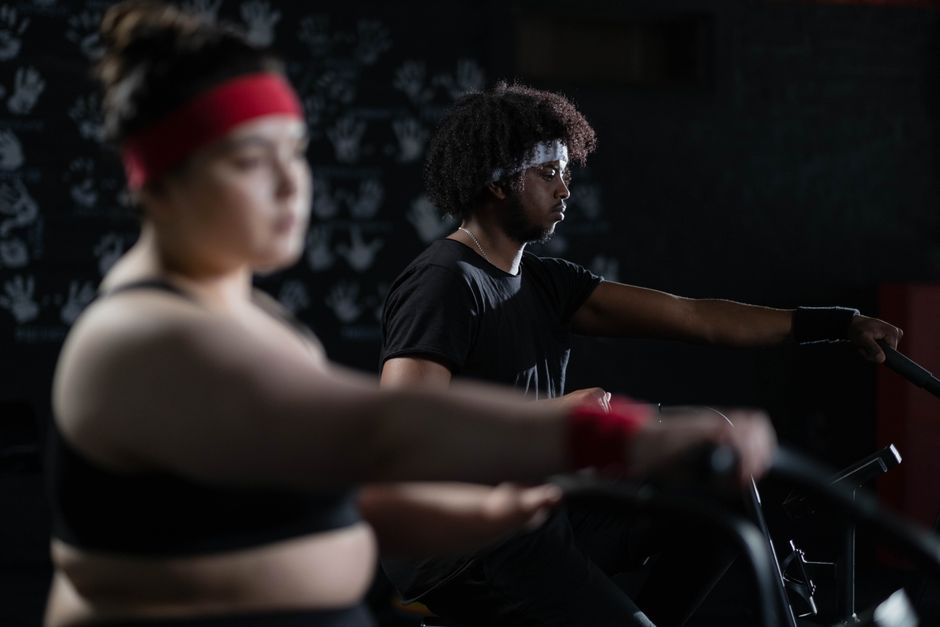
The treadmill, the elliptical, the rower, and the stationary bike all get your heart rate up, but which one actually burns the most fat? The honest answer is that the machine you will use consistently and push yourself on is the one that burns the most fat for you. However, when comparing machines at the same effort level, research consistently shows that the treadmill and the stair climber typically demand the most energy from your body, leading to higher calorie burn per minute than the bike or elliptical.
What Does “Burning Fat” Really Mean During Exercise?
To understand which machine works best, you have to understand how your body fuels exercise. Your body uses a mix of carbohydrates and fat for energy. The ratio depends on how hard you are working, not which machine you are on.
At a lower intensity, your body relies more on fat for fuel. At a higher intensity, it shifts toward carbohydrates because they can be converted to energy faster. This leads to a common misconception: if you want to burn fat, you should keep your heart rate low. That idea misses the bigger picture.
What matters most for weight loss is total calories burned, not the percentage of fat used during the workout. A high-intensity workout may use a smaller percentage of fat, but it burns far more total calories. That larger calorie deficit is what leads to fat loss over time.
Which Cardio Machine Burns Most Fat?
When comparing machines side by side, the treadmill and the stair climber come out on top for total calorie expenditure. Running on a treadmill, especially at a pace faster than a jog, requires your body to support its full weight and move it forward. This demands more energy than sitting on a bike or standing on an elliptical.
The stair climber is similarly demanding. You are constantly lifting your entire body weight against gravity. Studies have found that both running and stair climbing can burn roughly 300 to 400 calories in 30 minutes for a person weighing around 155 pounds, depending on speed and intensity.
The elliptical and stationary bike typically burn fewer calories per minute at comparable perceived effort. This is partly because the elliptical supports your body weight, and the bike supports your weight entirely. Less weight to move means less energy required.
That does not mean the treadmill is automatically the best choice. The best machine is the one you can sustain at a challenging intensity without pain or boredom.
How Intensity Changes the Answer
Machine choice matters less than how hard you work on it. A vigorous session on a rowing machine can burn more calories than a leisurely walk on a treadmill. The machine is a tool. Your effort is the deciding factor.
Interval training is one way to increase intensity on any machine. Short bursts of near-maximal effort followed by recovery periods have been shown to increase calorie burn both during and after the workout. This afterburn effect, known as excess post-exercise oxygen consumption, means your body continues burning extra calories for hours after you stop.
If you are comfortable running, a treadmill interval workout is hard to beat for calorie burn. If running hurts your knees or back, the rower or an elliptical with arm handles can give you a similar metabolic challenge without the impact.




Comparing Machines by Calorie Burn
Calorie estimates vary by body weight, age, sex, and effort level. The following ranges are based on a 30-minute session for a person weighing approximately 155 pounds working at a moderate to vigorous pace.
| Machine | Approximate Calories Burned in 30 Minutes |
|---|---|
| Running on treadmill (6 mph) | 350–400 |
| Stair climber | 300–380 |
| Rowing machine (vigorous) | 280–350 |
| Elliptical (moderate to vigorous) | 250–320 |
| Stationary bike (vigorous) | 250–300 |
These numbers are estimates, not exact measurements. Most machines have built-in calorie counters that are notoriously inaccurate. They often overestimate by 20 to 30 percent. If you are tracking calories for weight loss, treat the machine’s number as a rough guide rather than a precise measurement.
Why Muscle Mass Matters for Fat Loss
Cardio machines are not just about the calories you burn during the workout. They also influence how much muscle you maintain or build, which affects your resting metabolic rate. Muscle tissue burns more calories at rest than fat tissue does.
The treadmill and stair climber engage the large muscles of your legs and glutes heavily. The rowing machine is unique because it works your legs, back, arms, and core simultaneously. This full-body engagement can contribute to maintaining muscle mass while you lose fat.
This matters because a common problem with aggressive calorie restriction and steady-state cardio is muscle loss. Losing muscle slows your metabolism, making it harder to keep weight off. Choosing a machine that challenges your muscles, not just your lungs, helps preserve the metabolic engine you are trying to protect.
Practical Considerations Beyond Calories
Calorie burn is only one factor in choosing a cardio machine. Joint health, injury history, and personal preference all play a major role in long-term success.
The treadmill has the highest impact of the common gym machines. If you have knee, hip, or back problems, running may aggravate those issues. The elliptical and bike provide lower-impact options that still allow for a vigorous workout. The rower is also low-impact and places minimal stress on the knees and ankles.
There is also a skill element. The rower requires proper technique to be effective and safe. Many people use it with poor form, which reduces calorie burn and increases injury risk. If you choose the rower, spend time learning the correct sequence: leg drive, then back swing, then arm pull, and reverse on the way back.
The stair climber can be surprisingly difficult for beginners. Many people hold onto the handrails for support, which significantly reduces the work your legs have to do. If you use the handrails for balance only, not for pulling yourself up, you will get a more accurate workout.
How to Design a Cardio Routine That Burns Fat
Consistency beats intensity when you are just starting. Aim for at least 150 minutes of moderate-intensity cardio or 75 minutes of vigorous-intensity cardio per week, as recommended by general physical activity guidelines. You can split this however you like across the week.
To maximize fat loss, combine steady-state cardio with interval training. For example, you might do three steady-state sessions on the elliptical or bike and two interval sessions on the treadmill or rower each week. This approach keeps your joints fresh while still challenging your cardiovascular system.
Do not ignore strength training. Lifting weights two to three times per week is one of the most effective ways to support fat loss. It builds muscle, which raises your resting metabolic rate, and it improves your performance on cardio machines.
Finally, remember that exercise is only half the equation. Fat loss ultimately comes down to a sustained calorie deficit. No cardio machine can outwork a diet that provides more calories than your body needs.
Frequently Asked Questions
Is the treadmill or elliptical better for burning fat?
The treadmill burns more calories per minute than the elliptical at the same effort level because you move your full body weight. The elliptical is a better choice if you have joint pain and still want a solid cardiovascular workout.
How long should I use a cardio machine to burn fat?
Most research supports sessions of 20 to 60 minutes, depending on your fitness level and intensity. Shorter high-intensity sessions can be as effective as longer moderate sessions for fat loss.
Does the stair climber burn belly fat specifically?
No exercise can target fat loss from a specific area of your body. The stair climber burns calories and contributes to overall fat loss, but where you lose fat first is determined by your genetics.
What is the best cardio machine for someone with knee pain?
The elliptical, stationary bike, and rowing machine are all low-impact options that are generally easier on the knees than the treadmill or stair climber. The bike is often the most comfortable because it fully supports your body weight.
