
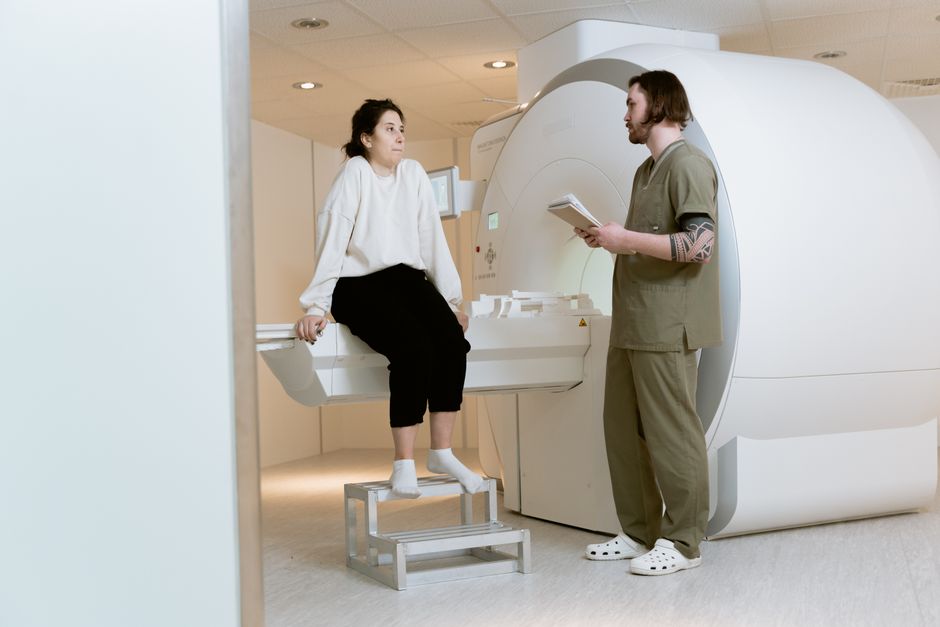
A DEXA scan measures bone density and body composition with a low-dose X-ray. You can get one at hospitals, radiology centers, and some medical clinics. Your doctor usually needs to order the test, though some facilities offer it without a referral.
What Exactly Is a DEXA Scan?
DEXA stands for Dual-Energy X-ray Absorptiometry. The machine uses two X-ray beams at different energy levels to measure bone mineral density. It is the standard test for diagnosing osteoporosis and assessing fracture risk.
The scan is quick, usually 10 to 20 minutes. It is painless. The radiation exposure is very low — about the same as a few hours of natural background radiation. This is far less than a standard chest X-ray or CT scan.
Most people get a DEXA scan of the lower spine and hip. These are the most common sites for osteoporotic fractures. Some scans also include the forearm. Body composition scans measure fat mass, lean mass, and bone mass across the whole body.
Where Can You Get a DEXA Scan?
DEXA scanners are not in every medical office. They are specialized machines. Most are found in larger healthcare settings.
Common locations include:
- Hospital radiology departments
- Outpatient imaging centers
- Osteoporosis clinics
- Some large medical group practices
- Specialized body composition testing centers
Imaging centers are the most common place for a referral-based scan. These facilities often have multiple types of scanners. They are staffed by trained radiologic technologists. A radiologist reads the results and sends a report to your doctor.
Body composition testing centers are different. They focus on athletes or people tracking fitness progress. These centers may offer scans without a doctor’s order. The results focus on fat percentage and lean muscle mass rather than fracture risk.
Do You Need a Doctor’s Referral?
For medical purposes, yes. Most insurance plans require a doctor’s order for a DEXA scan. Medicare covers the test when a doctor orders it for specific reasons. These include being a woman age 65 or older, a man age 70 or older, or having certain risk factors.
Risk factors that may prompt a doctor to order a scan include a prior bone fracture after age 50, long-term steroid use, rheumatoid arthritis, or a body weight under 127 pounds. Some chronic conditions also increase fracture risk, including diabetes, liver disease, and thyroid disorders.
You can pay out of pocket without a referral at some facilities. Costs vary widely. Prices typically range from $50 to $200 depending on the facility and your location. This option is more common at body composition centers than at hospital radiology departments.


How to Find a DEXA Scan Location Near You
Start with your doctor’s office. They usually have a list of approved imaging centers. This is the safest route because the facility will be covered by your insurance and familiar with your doctor’s protocols.
If you want to find options on your own, the International Society for Clinical Densitometry maintains a list of accredited facilities. Accreditation matters. It means the facility meets specific quality standards for equipment and staff training. Not all centers are accredited, and accreditation status is worth checking.
You can also call your insurance company. They can tell you which imaging centers are in-network. This prevents surprise bills. Before scheduling, confirm that the facility accepts your insurance and that your specific plan covers bone density testing.
What Happens During the Scan?
You will lie on a padded table. The scanner arm passes over your body. You need to stay still during the scan. The technologist may position your legs to rotate your hip inward for a proper measurement.
Wear comfortable clothing without metal. Zippers, buttons, or underwire bras can interfere with the scan. You may be asked to change into a hospital gown. Do not take calcium supplements for 24 hours before the scan. The calcium can affect the measurement accuracy.
Tell the facility if you might be pregnant. DEXA scans are generally not recommended during pregnancy. The radiation dose is low, but the precaution is standard practice.
Understanding Your DEXA Results
Your results include a T-score. This compares your bone density to that of a healthy young adult of the same sex. The T-score is the standard used to diagnose osteoporosis.
A T-score of -1.0 or above is normal. A score between -1.0 and -2.5 indicates osteopenia, which means low bone mass. A score of -2.5 or lower indicates osteoporosis. Lower scores mean lower bone density and higher fracture risk.
Your report also includes a Z-score. This compares your bone density to people of the same age, sex, and body size. A low Z-score may prompt your doctor to look for secondary causes of bone loss, such as medication side effects or underlying illness.
It is important to understand that a DEXA scan is a screening tool, not a diagnosis on its own. Your doctor interprets the results in the context of your overall health, fracture history, and other risk factors. The scan is one piece of a larger picture.
Who Should Get a DEXA Scan?
The U.S. Preventive Services Task Force recommends screening for osteoporosis in women age 65 and older. The task force also recommends screening in younger women whose fracture risk equals that of a 65-year-old woman. This is based on a formal risk assessment tool.
For men, the evidence is less clear. The task force found insufficient evidence to recommend routine screening in men. However, many organizations recommend screening for men at higher risk, including those over 70 or those with significant risk factors.
If you have had a fragility fracture — a fracture from a minor fall or no trauma at all — you should discuss screening with your doctor regardless of age. A fragility fracture is a strong predictor of future fractures.
Body composition scans are a different matter. They are not medically necessary for most people. They can be useful for athletes tracking training progress or people monitoring body composition changes. But they are not a substitute for medical evaluation of bone health.
DEXA Versus Other Bone Density Tests
DEXA is the gold standard for bone density measurement. It is the most accurate and reproducible method available. This is why it is used for diagnosis and for monitoring treatment response.
Other tests exist, including peripheral DEXA, quantitative ultrasound, and quantitative CT. Peripheral DEXA measures bone density in the heel, wrist, or finger. Ultrasound uses sound waves and is often done at health fairs or pharmacies. These tests can identify people at risk, but they cannot replace a central DEXA scan for diagnosis.
If a peripheral test shows low bone density, your doctor will likely order a central DEXA scan to confirm the finding. The central scan of the hip and spine remains the standard for diagnosis because it predicts fracture risk at those critical sites better than peripheral measurements.
How Often Should You Repeat a DEXA Scan?
There is no single answer that fits everyone. For people starting osteoporosis medication, a repeat scan is often done after one to two years. This checks whether the treatment is working. Once bone density is stable, the interval may extend to every two to three years.
For people with normal bone density, repeat screening may not be needed for several years. Some guidelines suggest waiting five years or more. Your doctor will base the interval on your specific risk factors and any changes in your health status.
More frequent scanning is not necessarily better. Bone density changes slowly. Annual scans rarely show meaningful changes in the short term. The goal is to detect significant changes that would alter treatment decisions, not to track minor fluctuations.
Limitations of DEXA Scanning
DEXA scans are excellent tools, but they have limitations. The measurement can be affected by arthritis, prior fractures, or spinal degeneration. These conditions can artificially increase the bone density reading.
Body composition results have their own limitations. The accuracy can vary by machine and by the person being scanned. Hydration levels and recent meals can affect the measurement. For tracking changes over time, it is best to use the same machine and similar conditions for each scan.
Bone density is not the only factor in fracture risk. Bone quality matters too. This includes the microarchitecture of the bone, which a DEXA scan does not measure. Two people with the same T-score can have different fracture risks. That is why doctors use additional risk assessment tools that incorporate age, weight, fracture history, and other factors.
Frequently Asked Questions
How long does a DEXA scan take?
The scan itself takes 10 to 20 minutes. Plan for about 30 minutes total, including check-in and positioning.
Is a DEXA scan covered by insurance?
Medicare covers DEXA scans for qualifying individuals when ordered by a doctor. Most private insurance plans also cover the test when medically necessary.
Can I get a DEXA scan without a doctor’s order?
Some facilities offer self-pay scans without a referral, especially body composition centers. Medical DEXA scans typically require a doctor’s order.
What is the difference between a T-score and a Z-score?
The T-score compares your bone density to a healthy young adult. The Z-score compares it to people of your own age, sex, and body size.
