
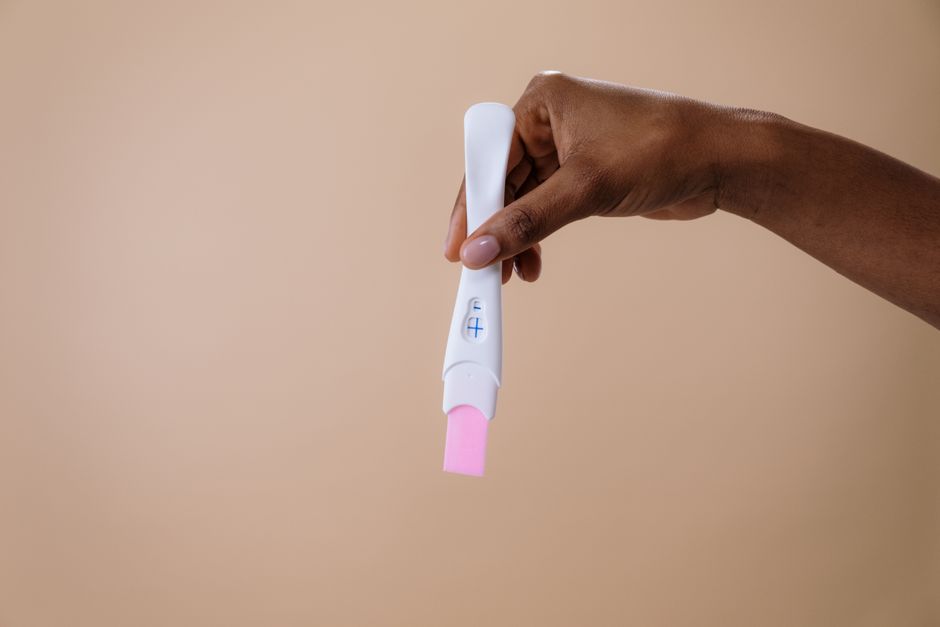
A pregnancy test turns positive when your body makes enough of a hormone called hCG (human chorionic gonadotropin). That hormone only appears after a fertilized egg implants in the uterus. For most women, that happens 6 to 10 days after ovulation. A sensitive home test can detect it a few days before your missed period, but the most reliable positive result comes on the first day of your missed period or later.
How Soon Can a Pregnancy Test Be Positive?
The short answer is about 10 to 14 days after ovulation. But the exact timing depends on two things: when implantation happened and how sensitive your test is.
Here is what happens step by step. After sperm fertilizes an egg, the egg travels down the fallopian tube. It reaches the uterus and implants into the uterine lining. Implantation usually happens 6 to 10 days after ovulation. Only after implantation does the placenta start making hCG.
hCG rises quickly after that. It roughly doubles every 48 to 72 hours in early pregnancy. At first, the levels are tiny. A test can only turn positive once hCG crosses its detection threshold.
Most home pregnancy tests on the market today are very sensitive. Many can detect hCG levels as low as 10 to 25 mIU/mL. Urine hCG reaches that range for most women about 12 to 14 days after ovulation.
When Will Pregnancy Test Be Positive Before Missed Period
Some tests claim they can detect pregnancy up to 6 days before your missed period. That claim is technically true but comes with a major caveat.
Testing early means you risk a false negative. Here is why. If you test 5 days before your missed period, you are only about 9 days past ovulation. Implantation may not have happened yet. If it has not, your body is not making hCG at all. The test will be negative even if you are pregnant.
Research on early testing shows that only about half of all pregnancies are detected by a home test 4 to 5 days before the missed period. By the day of the missed period, that number rises to over 90 percent. By one week after the missed period, home tests detect nearly all pregnancies.
If you want the most accurate result, wait until the first day of your missed period. If you test early and get a negative, test again in a few days. A negative result before your missed period does not mean you are not pregnant.
How Pregnancy Tests Detect hCG
Home pregnancy tests work by using antibodies that bind to hCG. When you dip the test strip in urine, the urine travels up the strip. If hCG is present, it attaches to those antibodies and creates a visible line or a digital reading.
Urine concentration matters. Your urine is most concentrated first thing in the morning after you wake up. That is when hCG levels in urine are at their highest. Testing with first morning urine gives you the best chance of an accurate early result.
If you test later in the day, drink plenty of fluids beforehand. Diluted urine can hide a pregnancy that a concentrated sample would catch. This is less of an issue after a missed period, but it matters for early testing.
Blood tests done at a doctor’s office can detect hCG even earlier than urine tests. A quantitative blood test measures the exact amount of hCG in your blood. It can turn positive as early as 8 to 10 days after ovulation. But home urine tests are sufficient for most women.



What Causes a False Negative Pregnancy Test
A false negative means the test says not pregnant when you actually are. This is far more common than a false positive. Several factors cause it.
Testing too early is the most common reason. If implantation has not occurred, there is no hCG in your body to detect. No test can show a positive result before hCG exists.
Diluted urine is another cause. Testing in the afternoon after drinking large amounts of water can lower urine hCG below the test’s detection limit. Using first morning urine avoids this problem.
Some women have naturally lower hCG levels in early pregnancy. Their levels rise more slowly than average. A test that works for most women may not detect their pregnancy until several days after a missed period.
Certain medical conditions and medications can also interfere with test accuracy. If you get a negative result but still have pregnancy symptoms or a missed period, wait 3 to 5 days and test again. If you still get a negative and your period has not come, see a doctor.
Can a Pregnancy Test Be Positive Then Negative
Yes, this can happen, and it is important to understand what it means. A positive test followed by a negative test usually indicates a chemical pregnancy.
A chemical pregnancy is a very early miscarriage. The egg is fertilized and implants, and hCG production begins. The pregnancy test turns positive. But the pregnancy stops developing shortly after implantation. hCG levels fall, and the next test turns negative.
Chemical pregnancies are extremely common. Many women never know they had one. They may just experience a slightly late and heavier period. Studies suggest that up to 50 percent of all first pregnancies end in miscarriage, often before a woman even knows she is pregnant.
If you get a positive test and then a negative one, contact your doctor. They can do a blood test to check your hCG levels. A single chemical pregnancy is not a sign of a fertility problem. Most women go on to have healthy pregnancies afterward.
How to Read a Pregnancy Test Correctly
Reading a test wrong is a common source of confusion. Most home tests have two windows or lines. The control line tells you the test worked. The test line tells you if hCG is present.
Any visible test line counts as positive, even if it is faint. The intensity of the line depends on your hCG level. A faint line early in pregnancy is normal. It does not mean the test is invalid or that the pregnancy is weak.
An evaporation line is different. If you read a test after the time window printed in the instructions, the urine can dry and leave a faint colorless line. This is not a positive result. Always read the test within the time specified on the package, usually 3 to 5 minutes.
Digital tests remove some guesswork. They display the words “Pregnant” or “Not Pregnant” instead of lines. But they are not more sensitive than quality line tests. They often require higher hCG levels to show a positive result.
When to See a Doctor After a Positive Test
Once you get a positive home test, you should schedule an appointment with a doctor or midwife. Most providers will see you around 8 weeks from your last menstrual period. That timing allows them to see the pregnancy on an ultrasound.
Call your doctor earlier if you have certain symptoms. Heavy bleeding, severe cramping on one side, or fainting can be signs of an ectopic pregnancy. An ectopic pregnancy occurs when the embryo implants outside the uterus, usually in the fallopian tube. This is a medical emergency.
If you have a history of miscarriage, ectopic pregnancy, or fertility treatment, your doctor may want to do early blood tests. They can check that your hCG levels are rising appropriately. They may also schedule an early ultrasound to confirm the pregnancy location.
Do not be surprised if your doctor does not do an immediate blood test after one positive home test. For low-risk pregnancies, a positive home test followed by a normal early ultrasound is sufficient confirmation.
Frequently Asked Questions
How many days after intercourse will a pregnancy test be positive?
A test can turn positive about 10 to 14 days after ovulation, which is roughly the same time as your missed period. Sperm can survive in the body for up to 5 days, so intercourse timing does not directly predict test results.
Can a pregnancy test be positive at 1 week after conception?
It is possible but not guaranteed. One week after conception is about 7 days past ovulation, and implantation may not have happened yet. Testing at this point often produces a false negative.
What time of day is best to take a pregnancy test?
First morning urine is the most accurate because it is the most concentrated. If you test later in the day, avoid drinking excessive fluids for a few hours beforehand.
Can medication affect a pregnancy test result?
Most common medications, including birth control pills and antibiotics, do not affect pregnancy test results. Only medications containing hCG, which are used for fertility treatment, can cause a false positive.
