
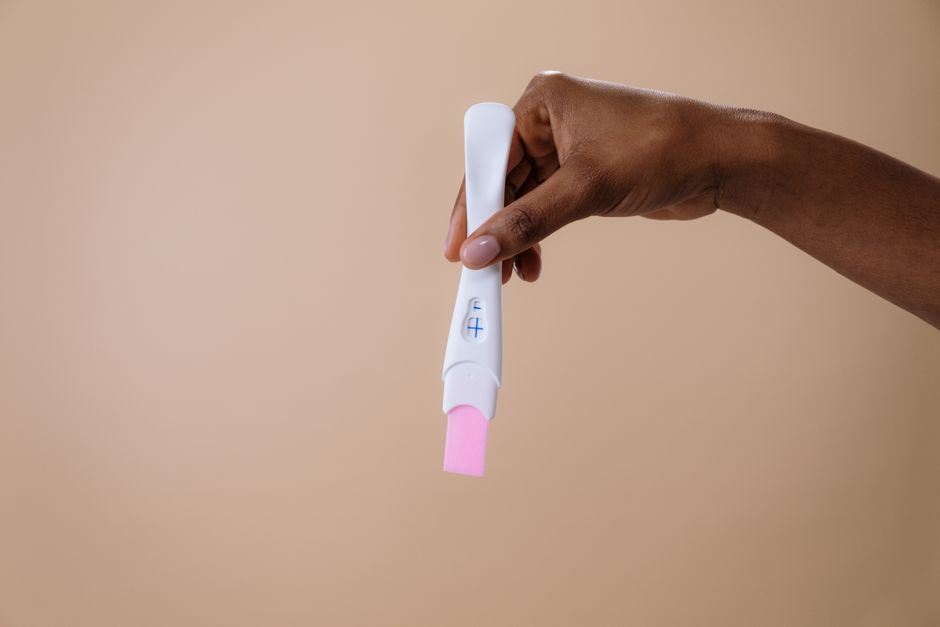
Yes, you can take a pregnancy test with an IUD. The IUD does not interfere with the test’s ability to detect hCG, the hormone produced during pregnancy. A standard urine or blood pregnancy test works the same way whether you have an IUD or not. If you miss a period or have other pregnancy symptoms, a home pregnancy test remains accurate regardless of your IUD.
How Does a Pregnancy Test Actually Work?
A pregnancy test measures human chorionic gonadotropin, or hCG. This hormone appears in your blood and urine soon after a fertilized egg attaches to the lining of the uterus. Tests are designed to detect hCG and only hCG. They do not measure anything related to your IUD.
Urine tests you buy at a store work the same way as lab tests. Both rely on antibodies that bind to hCG. The result is either positive or negative based on whether your hCG level is above the test’s threshold. An IUD has no chemical effect on hCG.
Can an IUD Affect Pregnancy Test Results?
No. An IUD sits inside the uterus and does not change the hormones in your body. Copper IUDs release copper ions that affect sperm motility and egg survival. Hormonal IUDs release progestin, which thickens cervical mucus and thins the uterine lining. Neither type produces or blocks hCG. The test reads your hCG level accurately no matter which IUD you have.
Some people worry that the IUD itself might cause a false positive or false negative. That is not possible. The test does not detect the IUD or any substance it releases. The only factors that affect accuracy are how early you test, how concentrated your urine is, and whether you are using the test correctly.
Why Would You Need a Pregnancy Test With an IUD?
IUDs are over 99 percent effective at preventing pregnancy, but no birth control method is perfect. A missed period is the most common reason to test. Other symptoms like nausea, breast tenderness, or unusual fatigue may also lead you to take a test.
It is also possible to mistake implantation bleeding for a light period, or to have irregular bleeding while your body adjusts to a hormonal IUD. If you have any doubt, testing is the only reliable way to know. A pregnancy test is a simple, low-cost step that can give you clear information.




What Does a Positive Pregnancy Test Mean With an IUD?
A positive result means hCG is present, which usually indicates pregnancy. With an IUD in place, a pregnancy is rare but possible. When it happens, there is an increased chance that the pregnancy is ectopic — meaning the fertilized egg implants outside the uterus, most often in a fallopian tube.
IUDs are very effective at preventing uterine pregnancy. But if pregnancy occurs despite the IUD, the device may have partially shifted or perforated the uterus. An ectopic pregnancy is a medical emergency and must be treated promptly. A positive test with an IUD requires immediate medical evaluation, not just a repeat test.
What Should You Do If You Get a Positive Result?
Contact your healthcare provider right away. They will order a blood test to confirm the result and an ultrasound to locate the pregnancy. If the pregnancy is inside the uterus, the IUD will likely need to be removed. Early removal reduces risks of infection, miscarriage, and preterm delivery.
If the pregnancy is ectopic, oral or injectable medication or surgery may be needed. Do not wait. Even if you have no symptoms, a pregnancy with an IUD requires professional management. No home test can tell you whether the pregnancy is properly located.
Can an IUD Cause a False Positive or False Negative?
No, the IUD itself cannot cause a false positive. False positives are rare and usually caused by certain medications containing hCG, a recent miscarriage, or a very rare medical condition. An IUD does not produce hCG or cross-react with the test.
False negatives are more common and happen when you test too early, use diluted urine, or read the result too soon. The best way to avoid a false negative is to test after the first day of a missed period and use first-morning urine. An IUD does not affect this timing or accuracy. You can trust the test result the same way you would without an IUD.
Does an IUD Affect Menstrual Bleeding and Pregnancy Symptoms?
Hormonal IUDs often cause lighter periods, irregular bleeding, or no periods at all. This can make it harder to know if you have missed a period. Copper IUDs may cause heavier or longer periods. Neither type creates pregnancy-like symptoms.
If you have a hormonal IUD and do not get a period, you may not know when to test. Some women with a hormonal IUD become pregnant without ever realizing they missed a period. That is why it is important to pay attention to other symptoms such as nausea, breast tenderness, or fatigue. When in doubt, test.
No IUD causes symptoms like morning sickness or breast changes. Those are driven by hCG and pregnancy hormones. If you experience them and you have an IUD, take a test.
Pregnancy With an IUD: How Common Is It?
Pregnancy with an IUD is uncommon. The failure rate is less than 1 percent per year. For every 1,000 people using an IUD for a year, fewer than 10 will become pregnant, and most of those pregnancies occur when the IUD has partially slipped out of place without the person noticing.
Regular self-checks are recommended. Most IUDs have strings that you can feel at the top of the vagina. If you cannot feel the strings, or if they feel longer or shorter than usual, check with your doctor. A displaced IUD loses effectiveness. If you have any concern about your IUD placement and you have had unprotected sex, consider a pregnancy test.
Key Takeaway
A pregnancy test works the same way whether you have an IUD or not. The test detects hCG, and the IUD does not interfere. If you have a missed period or pregnancy symptoms, test without hesitation. A positive result with an IUD demands immediate medical attention because of the increased risk of ectopic pregnancy. Trust the test, but do not ignore the result.
Frequently Asked Questions
Can you take a pregnancy test with an IUD?
Yes. An IUD does not affect pregnancy test accuracy. The test only detects hCG, which is not influenced by the IUD.
Does an IUD cause a false positive pregnancy test?
No. There is no mechanism by which an IUD could produce a positive result on a pregnancy test. False positives are caused by other factors like medication or recent miscarriage.
What happens if you are pregnant with an IUD?
A pregnancy with an IUD is rare but serious because of a higher risk of ectopic implantation. Immediate medical evaluation is needed to locate the pregnancy and plan treatment.
Can a hormonal IUD stop periods and make you think you are pregnant?
A hormonal IUD often causes light or absent periods, but it does not cause pregnancy symptoms like nausea or breast tenderness. If you have those symptoms, take a pregnancy test.
