
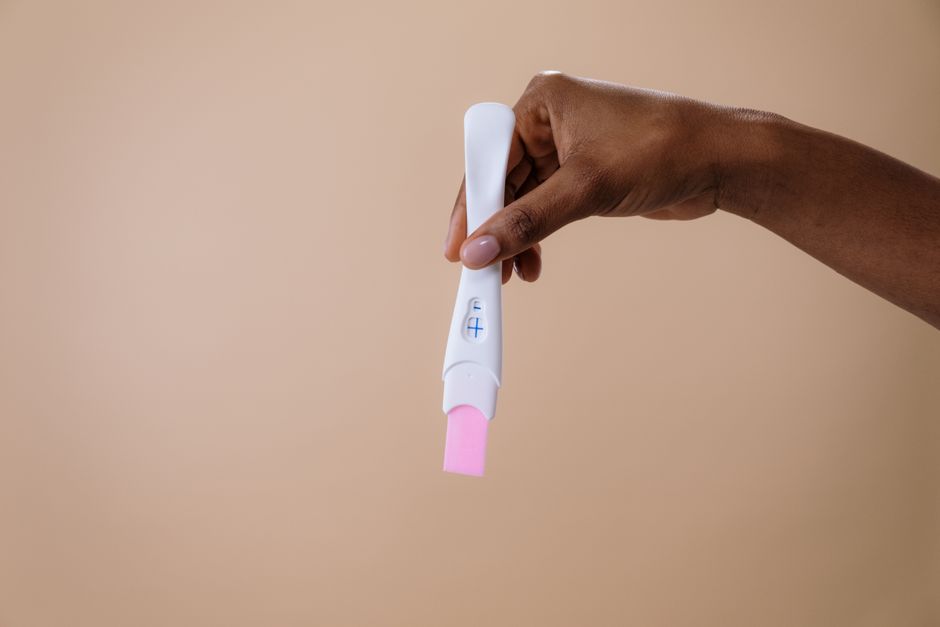
The most reliable way to check for pregnancy is to use a home pregnancy test. These tests detect human chorionic gonadotropin (hCG), a hormone your body starts making after a fertilized egg implants in your uterus. Home tests are widely available, easy to use, and accurate when used correctly. A blood test at a doctor’s office can also detect pregnancy earlier, but it is not necessary for most people.
How do home pregnancy tests work?
Home pregnancy tests detect hCG in your urine. After implantation — which typically happens 6 to 12 days after fertilization — hCG levels begin to rise rapidly. The test strip contains antibodies that react to hCG, producing a visible line, a plus sign, or a digital result.
Different tests have different sensitivity thresholds. More sensitive tests can detect lower levels of hCG, which means they can potentially give a positive result a few days before your missed period. However, no test is reliable that early for everyone. The most consistent results come after your period is late.
When is the best time to take a pregnancy test?
The single best time to take a home pregnancy test is on the first day of your missed period. By this point, hCG levels are usually high enough for an accurate reading. For people with irregular cycles, wait at least 14 days after you think you ovulated or until your period is at least a week late.
If you test earlier, use your first morning urine. It is more concentrated and contains the highest hCG level. Avoid drinking large amounts of fluid before testing because diluted urine can cause a false negative. Taking a test too early is the most common reason for a false negative result.
Some tests claim to detect pregnancy up to six days before your missed period. These claims are based on detecting very low levels of hCG. However, research shows that testing this early produces a high rate of false negatives because not everyone will have detectable hCG that soon. If you test early and get a negative result, retest on the day of your missed period to be sure.
How accurate are home pregnancy tests?
Most home pregnancy tests are highly accurate when used correctly. Manufacturers typically report accuracy greater than 99% when testing on the day of the missed period. This means fewer than 1 in 100 tests will give a false negative or false positive at that time.
Accuracy depends on following instructions exactly. Leaving the test in urine too long or not long enough, reading results after the specified time, or using an expired test can all reduce reliability. Store tests at room temperature and check the expiration date before use.
False negatives are far more common than false positives. A false negative usually happens because the test was taken too early, urine was too dilute, or the test was not sensitive enough. False positives are rare but can occur due to certain medications, medical conditions, or a very early miscarriage that is not a viable pregnancy.





What about blood tests for pregnancy?
Blood tests for pregnancy are performed at a doctor’s office or lab. There are two types: qualitative and quantitative. A qualitative blood test simply tells you whether hCG is present — yes or no. A quantitative blood test measures the exact amount of hCG in your blood.
Blood tests can detect pregnancy slightly earlier than urine tests, sometimes as early as 6 to 8 days after ovulation. However, they are not necessary for most people. Doctors usually order a quantitative hCG test when there is concern about an ectopic pregnancy, a possible miscarriage, or when a home test result is unclear.
Blood tests are also used to monitor hCG levels over time. In early pregnancy, hCG typically doubles every 48 to 72 hours. If levels rise more slowly or drop, it may indicate a problem. But these trends must be interpreted by a doctor — a single measurement is not enough to diagnose a pregnancy complication.
Can you get a false negative or false positive?
Yes. A false negative means the test says you are not pregnant when you are. This is more common than a false positive. Causes include testing too early, using diluted urine, an expired test, or not waiting long enough to read the result.
A false positive — the test says you are pregnant when you are not — is rare but possible. Reasons include: having hCG from a recent miscarriage or abortion still in your system, certain medications that contain hCG (used for fertility treatments), or rare medical conditions that produce hCG, such as some ovarian tumors. Some pregnancy tests can also show a faint evaporation line after the reading window, which can be mistaken for a positive result. Always read the test within the time specified in the instructions.
If you get a positive result but later start bleeding or have other symptoms, contact a healthcare provider. It could indicate an early pregnancy loss or an ectopic pregnancy, both of which require medical attention.
What are early signs of pregnancy?
Early pregnancy symptoms can appear before a missed period, but they are not reliable for diagnosis. The most commonly reported early signs include: breast tenderness, fatigue, nausea (morning sickness), frequent urination, and a metallic taste in the mouth. Some people also notice light spotting called implantation bleeding, which can occur around the time a period would be expected.
The problem is that these symptoms overlap with premenstrual syndrome (PMS) and other conditions. Many non-pregnant people have breast tenderness and fatigue before their period. Implantation bleeding is light and brief, but it can be confused with a period. The only way to know for sure is to take a pregnancy test.
Do not rely on symptoms alone. A negative test despite having symptoms usually means you are not pregnant — or you tested too early. Wait a few days and retest.
How To Check Pregnancy – step by step
To check pregnancy at home, follow these general steps. Always read the specific instructions for your test brand because timing and technique can vary.
- Check the expiration date. Do not use an expired test.
- Collect urine in a clean cup or place the test stick directly in your urine stream according to the package directions.
- Hold the test in place for the required number of seconds — usually 5 to 10.
- Set the test on a flat surface and wait the exact time specified (usually 3 to 5 minutes).
- Read the result within the time window. Results after that period are not reliable.
- A positive result usually appears as a second line, a plus sign, or the word “pregnant” on a digital test.
- If the result is negative but your period still does not start, wait a few days and retest.
Digital tests remove some guesswork by displaying “pregnant” or “not pregnant” in clear text. However, they work on the same principle and are not inherently more accurate than line tests.
What should you do after a positive test?
A positive home pregnancy test is very likely correct. Once you see a positive result, call your healthcare provider to schedule an appointment. Many offices will schedule your first prenatal visit around 8 weeks from your last menstrual period unless you have symptoms or a medical history that needs earlier attention.
Meanwhile, you can start taking a prenatal vitamin with folic acid (400 to 800 micrograms daily) if you haven’t already. Avoid alcohol, smoking, and any medications not approved by your doctor. If you have an underlying health condition like diabetes or high blood pressure, contact your doctor right away.
If the test is positive but you later have heavy bleeding, severe cramping, or pain on one side of your abdomen, seek medical attention. These can be signs of an ectopic pregnancy or miscarriage.
Frequently Asked Questions
How soon can I take a pregnancy test?
You can take a test as early as a few days before your missed period, but it is most accurate on the first day of a missed period or later. Testing too early increases the chance of a false negative.
Can a home pregnancy test be wrong?
Yes, but false negatives are much more common than false positives. Following instructions carefully and testing at the right time gives the best accuracy.
What does a faint line on a pregnancy test mean?
A faint line usually means you are pregnant, but hCG levels are still low. It may also be an evaporation line if you read the test after the recommended time. Check the test within the stated window.
Do I need a blood test to confirm pregnancy?
No, most people do not need a blood test. A positive home pregnancy test is reliable enough for most women to confirm pregnancy. Your doctor may order a blood test if there are concerns about a complication or if the home result is unclear.
