
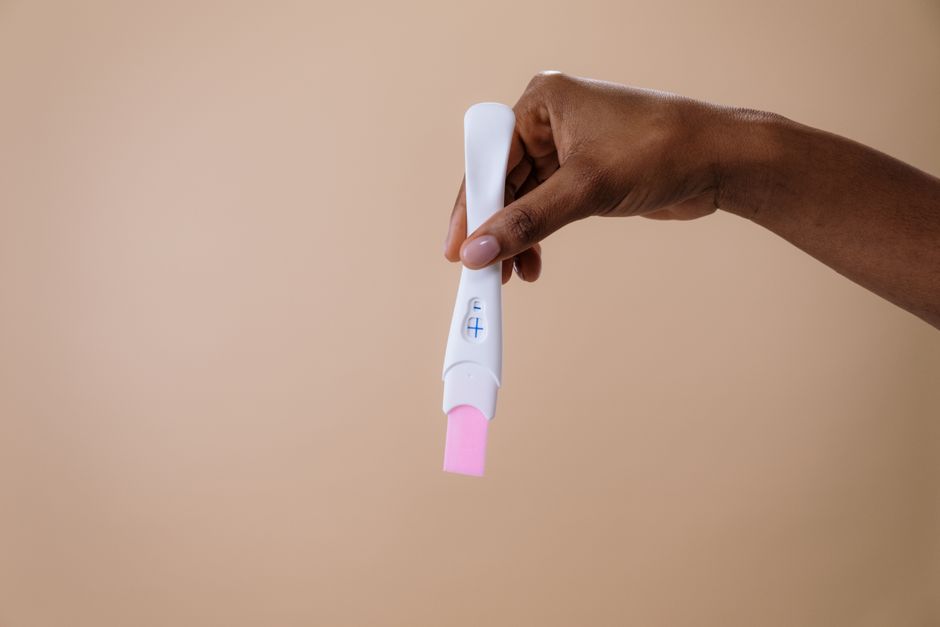
You want to know when a pregnancy test will actually work. The short answer is that most home pregnancy tests can give you a reliable positive result by the first day of your missed period, which is about 14 days after ovulation. But some sensitive tests can detect pregnancy as early as 10 to 12 days after ovulation. The key is understanding how these tests work and what the timing means for accuracy.
How Do Home Pregnancy Tests Actually Work?
Home pregnancy tests detect a hormone called human chorionic gonadotropin (hCG). Your body starts making hCG only after a fertilized egg implants in your uterus. This implantation usually happens 6 to 12 days after ovulation.
Before implantation, there is no hCG in your urine or blood. So no test — no matter how sensitive — can tell you anything until that process is complete. Once hCG enters your system, its level doubles roughly every 48 hours in early pregnancy. This is why waiting a few extra days makes a big difference in test accuracy.
Tests vary in sensitivity. Some can detect hCG at levels as low as 10 mIU/mL. Others need 25 mIU/mL or more. A test with lower sensitivity can detect pregnancy earlier. But even the most sensitive test will not show a positive result before implantation happens.
When Does A Pregnancy Test Work Best: Before or After a Missed Period?
Testing before your missed period is possible but comes with trade-offs. Some early detection tests claim to work up to 6 days before your missed period. Research published in the journal Human Reproduction found that only about 10% of pregnant women got a positive result when testing 6 days before their expected period. By 4 days before, that number rose to about 50%. By 2 days before, it was around 90%.
Testing on the day of your missed period gives the most reliable result. At that point, hCG levels are usually high enough for any standard test to detect. The American College of Obstetricians and Gynecologists recommends waiting until the first day of your missed period for the most accurate result.
If you test too early and get a negative result, it does not mean you are not pregnant. It may just mean your hCG levels are not high enough yet. If your period does not arrive, test again in a few days.
What Time of Day Should You Take a Pregnancy Test?
First morning urine is the best sample for early pregnancy testing. Your urine is more concentrated after a night of sleep, which means hCG levels are higher relative to the volume of fluid. This matters most when you are testing very early, before your missed period.
Later in the day, drinking fluids dilutes your urine. This can lower the concentration of hCG and increase the chance of a false negative. Some studies suggest that drinking large amounts of water before testing can reduce accuracy by as much as 10% to 15%.
If you are testing after a missed period, the time of day matters less. By then, hCG levels are usually high enough to show up in diluted urine. But if you want the most reliable result, test with first morning urine.




How Accurate Are Pregnancy Tests at Different Times?
| Timing of Test | Typical Accuracy | Notes |
|---|---|---|
| 6 days before missed period | About 10% | Only very sensitive tests may work |
| 4 days before missed period | About 50% | False negatives are common |
| 2 days before missed period | About 90% | Most but not all pregnant women get a positive |
| Day of missed period | Over 99% | Most reliable time to test |
| 1 week after missed period | Over 99% | Results are highly reliable |
These numbers come from data published by the manufacturers of early detection tests and confirmed by independent research. The key takeaway is that accuracy jumps dramatically once you reach the day of your missed period. Testing earlier than that means accepting a real chance of a false negative.
False positives are very rare with modern tests. If you get a positive result, it is almost certainly correct. False positives can happen with certain medical conditions, medications that contain hCG, or recent miscarriage or abortion. But for most people, a positive test means pregnancy.
What Affects How Soon a Pregnancy Test Shows Positive?
The timing of implantation is the biggest factor. Some embryos implant as early as 6 days after ovulation. Others take up to 12 days. This variation of nearly a week means two women with the same ovulation day can get positive results days apart.
Your individual hCG levels also matter. Some women produce more hCG early in pregnancy than others. There is no standard “normal” level for very early pregnancy. The range is wide. This is why some women get a clear positive at 10 days past ovulation while others do not get one until 14 or 15 days.
The sensitivity of your test matters too. Tests that detect 10 mIU/mL can pick up pregnancy earlier than tests that detect 25 mIU/mL. Check the package label. It usually lists the sensitivity level. Lower numbers mean more sensitive tests.
- Implantation timing: 6 to 12 days after ovulation
- hCG doubling rate: Every 48 hours in early pregnancy
- Test sensitivity: Lower mIU/mL numbers mean earlier detection
- Urine concentration: First morning urine is best
- Individual variation: hCG levels vary between women
Can Medications or Medical Conditions Affect Test Results?
Most medications do not affect pregnancy test results. Pain relievers, antibiotics, birth control pills, and fertility drugs that do not contain hCG will not cause a false positive or false negative. This is a common myth, and it is not supported by evidence.
The exception is medications that contain hCG itself. Some fertility treatments include hCG injections to trigger ovulation. If you take one of these, you may get a false positive for up to 10 days after the injection. The hCG from the shot stays in your system for a while and can be detected by a pregnancy test.
Medical conditions that cause hCG production are rare. Certain types of ovarian tumors, pituitary gland issues, and some cancers can produce hCG. But these are uncommon. For the vast majority of women, a positive test means pregnancy.
Ectopic pregnancy can also cause positive test results. The body still produces hCG when a fertilized egg implants outside the uterus. If you get a positive test and have symptoms like sharp abdominal pain or bleeding, see a doctor immediately.
Common Misconceptions About Pregnancy Test Timing
One widespread myth is that you can get a positive result immediately after conception. This is not true. Conception happens when sperm fertilizes an egg, but hCG does not appear until implantation occurs days later. No test can detect pregnancy before implantation.
Another myth is that a faint line always means early pregnancy. A faint line can mean early pregnancy, but it can also mean a test that is not working correctly. If the line is faint, wait two days and test again. A line that gets darker over time is a better sign than a line that stays the same or fades.
Some people believe that drinking a lot of water before a test can improve accuracy. The opposite is true. Diluted urine makes it harder to detect hCG. Stick with first morning urine for the most reliable result.
There is also a belief that digital tests are more accurate than line tests. Both types use the same technology. Digital tests just display the result differently. The accuracy depends on the sensitivity of the test, not whether it shows lines or words.
Frequently Asked Questions
Can a pregnancy test work 5 days before my missed period?
Some sensitive tests may work 5 days before a missed period, but the chance of a false negative is high. Only about 30% of pregnant women get a positive result at this point.
How soon after implantation can I test positive?
You can test positive about 2 to 3 days after implantation. hCG levels need to rise enough for the test to detect them, which usually takes 48 to 72 hours.
Does a negative test mean I am not pregnant?
A negative test does not always mean you are not pregnant, especially if you tested early. If your period does not arrive, test again in a few days.
Can I get a false positive from a pregnancy test?
False positives are very rare with modern tests. They can happen with certain medications, medical conditions, or recent pregnancy loss, but for most people a positive result is correct.
