

If you think you might be pregnant, the waiting is the hard part. The short answer: a home pregnancy test can usually detect pregnancy around the first day of a missed period. Some sensitive tests claim they can give a result a few days earlier, but testing too soon raises the odds of a false negative. The hormone a test looks for needs time to build up to a level it can measure.
How Do Pregnancy Tests Actually Work?
Home pregnancy tests detect a hormone called human chorionic gonadotropin, or hCG. This hormone is produced after a fertilized egg implants in the lining of the uterus. The test strip contains antibodies that react to hCG in your urine, producing a visible line or a digital result.
Implantation usually happens about 6 to 12 days after ovulation. Once the embryo attaches, hCG starts entering the bloodstream and then shows up in urine. The key point is that hCG starts low and roughly doubles every two to three days in early pregnancy. So on the day of implantation, the amount may be too small for any test to detect. A few days later, it may be high enough.
This is why timing matters more than brand. The test is not faulty. The hormone simply was not there in enough quantity yet.
How Long Do You Have To Wait For A Pregnancy Test?
The most reliable time to take a home pregnancy test is the first day of a missed period. By that point, if you are pregnant, hCG has usually risen to a level most tests can detect.
Some tests are marketed as “early results” tests that can be used several days before a missed period. These tests are more sensitive, meaning they can pick up lower levels of hCG. But there is a trade-off. The earlier you test, the higher the chance of a false negative, because hCG may not have reached the detectable threshold yet.
If you test early and get a negative result, that result is not final. Wait a few days and test again. If your period still has not started, testing again is reasonable.
Here is a point many people miss: the timing of ovulation matters as much as the timing of the test. Not everyone ovulates on day 14 of their cycle. If you ovulated later than usual, implantation happens later, and hCG rises later. A test taken “on time” by calendar math could still be too early for your body.
What Is the Best Time of Day to Test?
For most people, the first urine of the morning gives the clearest result, especially if testing early. Overnight, urine becomes more concentrated, so any hCG present is less diluted.
That said, once you have missed your period and hCG levels are higher, the time of day matters less. Many tests can detect hCG in urine at any time of day at that stage. If you are testing before a missed period, morning urine gives you the best chance of an accurate reading.
Drinking a lot of water before testing can dilute your urine and lower the concentration of hCG. If you are testing early, this can affect the result.




Can You Test Too Early?
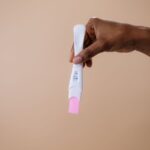
Yes. Testing too early is the most common reason for a false negative on a home pregnancy test. A false negative means the test says you are not pregnant when you actually are.
This happens because hCG has not yet reached the level the test can detect. It is not a sign that something is wrong. It simply means your body has not produced enough of the hormone for that particular test at that particular moment.
If you get a negative result but still suspect you are pregnant, the standard advice is to wait a few days and test again. If your period remains absent, a repeat test or a call to your doctor is a reasonable next step.
What About Blood Tests at the Doctor’s Office?
Blood tests can detect pregnancy earlier than urine tests. A blood test measures the exact amount of hCG in your blood, and it can pick up the hormone at lower levels than a urine test.
There are two main types. A qualitative blood test simply checks whether hCG is present. A quantitative blood test, sometimes called a beta hCG test, measures the exact level. This can be useful for tracking a pregnancy over time, since hCG levels change in a predictable way in early pregnancy.
Blood tests are typically ordered when a urine test is unclear, when a doctor needs to confirm or monitor a pregnancy, or when there is a concern about an ectopic pregnancy or possible miscarriage. They are not usually the first step for someone who simply wants to know if she is pregnant.
How Accurate Are Home Pregnancy Tests?
When used correctly and after a missed period, home pregnancy tests are generally very accurate. Most studies and clinical guidance support that a test taken at the right time gives a correct result the large majority of the time.
Accuracy drops when you test too early. It can also be affected by:
- Testing before hCG has had time to rise
- Using diluted urine, such as after drinking a lot of fluids
- Reading the result outside the time window stated in the instructions
- Using an expired test or storing it improperly
- Certain fertility medications that contain hCG, which can cause a false positive
A false positive is less common than a false negative. When it happens, it is often linked to medications containing hCG or to a very early pregnancy loss that occurred after the test was taken.
What If the Result Is Faint or Unclear?
A faint line usually still counts as a positive result, as long as it appears within the time window in the instructions. A line that shows up hours later, after the window has passed, is called an evaporation line and does not count.
If the result is unclear, wait two to three days and test again with a new test. If you are still unsure, a blood test at a doctor’s office can give a definite answer.
Digital tests can remove some of the guesswork because they display words like “pregnant” or “not pregnant” instead of lines. But they follow the same biology, so timing still matters.
When Should You See a Doctor?
If you have a positive home test, the next step is usually to schedule a visit with a healthcare provider. They can confirm the pregnancy and talk with you about what comes next.
Contact a doctor promptly if you have a positive test along with:
- Vaginal bleeding or spotting
- Sharp or severe abdominal pain
- Pain in the shoulder or tip of the shoulder
- Dizziness or fainting
These symptoms can sometimes point to an ectopic pregnancy, which is a medical emergency. This is not a reason to panic, but it is a reason to seek care quickly.
If you have been trying to conceive and your period is irregular, or if you have conditions that affect your cycle, your doctor can help you figure out the best time to test based on your specific situation.
Frequently Asked Questions
How soon can I take a pregnancy test?
You can take a home pregnancy test as early as the first day of a missed period for the most reliable result. Some sensitive tests claim earlier detection, but testing before a missed period increases the chance of a false negative.
Can I get a positive pregnancy test before my missed period?
It is possible, but less reliable. If you are pregnant and hCG has risen enough, an early-result test may detect it a few days before your period is due.
Why did I get a negative test but I still feel pregnant?
A negative test often means you tested too early and hCG was not yet high enough to detect. Wait a few days and test again, or ask your doctor about a blood test.
Does the time of day affect a pregnancy test?
First-morning urine gives the most concentrated sample and is best if you are testing early. After a missed period, the time of day usually matters less.
