
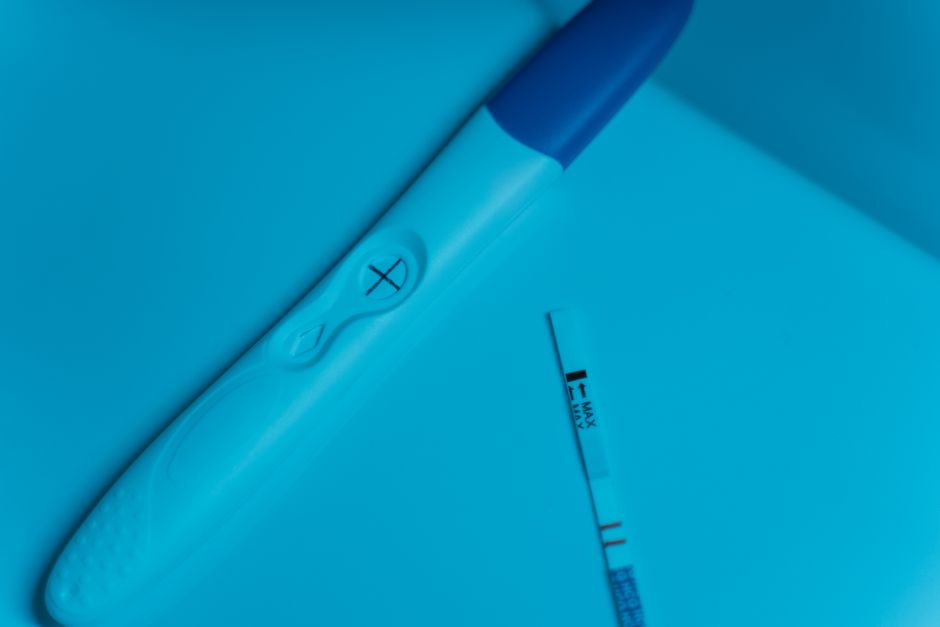
Testing pregnancy with a strip comes down to one thing: detecting a hormone called human chorionic gonadotropin, or hCG, in your urine. You dip the strip into urine or hold it in your stream, wait for the time listed on the package, and read the result window. A second line or a plus sign usually means pregnant. No line or a minus sign usually means not pregnant.
That is the whole process. The accuracy depends far more on timing and how you use the strip than on which brand you buy.
How Does a Pregnancy Strip Actually Work?
Pregnancy strips are designed to detect hCG, a hormone the developing placenta begins producing after a fertilized egg implants in the uterine lining. This implantation generally happens about six to twelve days after ovulation.
The strip contains antibodies that bind to hCG. When urine containing enough hCG flows across the strip, those antibodies react and create a visible colored line or symbol. The intensity of the line reflects how much hCG is present, though most strips are built to give a yes-or-no answer rather than a precise measurement.
One detail many people miss: hCG levels roughly double every two to three days in early pregnancy. That means a test taken too early can be negative simply because there is not enough hormone yet, even in a normal, healthy pregnancy. Waiting a few days can change the result entirely.
There are two main types of strips. Manual dip strips require you to collect urine in a cup and dip the strip for a set number of seconds. Midstream tests let you hold the stick in your urine stream. Both work on the same principle. Manual strips are usually cheaper and are popular for people tracking early results over several days.
When Is the Best Time To Take a Pregnancy Test?
The most reliable time is the first day of a missed period. By that point, most pregnancies produce enough hCG for a standard urine test to detect.
Testing earlier than that raises the chance of a false negative. If you know when you ovulated, waiting until at least the first day of your expected period gives the clearest result. If your cycles are irregular, it can be harder to know when to test, and you may need to wait longer or test again after a few days.
First-morning urine tends to give the strongest reading because hCG concentrates overnight while you sleep. If you test later in the day, drinking a lot of water beforehand can dilute the hormone and make a faint line harder to see. This does not cause a false positive, but it can cause a false negative.
Some tests are marketed as able to detect pregnancy several days before a missed period. These claims come from the test’s sensitivity to low levels of hCG. They can work, but the earlier you test, the higher the chance the result is wrong. A negative result before a missed period does not rule out pregnancy.
How To Test Pregnancy Using Strip: Step by Step
Follow the instructions that came with your specific strip, because dip times and read windows vary between brands. The general process looks like this.
- Read the package instructions first. Every strip has its own dip time and wait time.
- Collect urine in a clean cup if you are using a dip strip. Midstream tests skip this step.
- Dip the strip to the marked line, or hold it in your stream, for the exact number of seconds listed.
- Lay the strip flat and wait. Do not check it early and do not check it late.
- Read the result within the window stated on the package, usually a few minutes.
Two things trip people up. First, reading the strip after the window has passed. A line that appears hours later, sometimes called an evaporation line, is not a positive result. It is a faint mark left as the urine dries. Second, dipping for too long or too short a time can affect how the strip develops.
If the result is faint or unclear, wait two to three days and test again with first-morning urine. Rising hCG should make the line darker if you are pregnant.




What Do the Lines on a Pregnancy Strip Mean?
Most strips use a control line and a test line. The control line confirms the strip worked. The test line shows whether hCG was detected.
| Result | What You See | Meaning |
|---|---|---|
| Negative | One line (control only) | No hCG detected |
| Positive | Two lines, or a plus sign | hCG detected |
| Invalid | No control line | Test did not work; use a new strip |
A positive result is a positive result, even if the second line is faint. Any visible test line within the read window counts. If no control line appears, the strip is faulty and the result cannot be trusted, regardless of what the test line shows.
Digital strips work differently. They display the words “pregnant” or “not pregnant” instead of lines, which removes the guesswork of interpreting faint marks. They cost more but can be easier to read.
How Accurate Are Pregnancy Strips?
When used correctly and after a missed period, home pregnancy tests are generally accurate for detecting pregnancy. The main cause of a wrong result is testing too early, not a faulty strip.
False negatives are the most common error. They usually happen because hCG has not risen high enough yet. False positives are much less common, but they can occur. Certain medications that contain hCG, some fertility treatments, and rare medical conditions can trigger a positive result when you are not pregnant. Blood in the urine or a recent miscarriage can also affect results.
If you get a positive result, the next step is to confirm it with a healthcare provider. A blood test measures hCG directly and can detect it earlier and more precisely than a urine strip. Your provider can also arrange an ultrasound to confirm the pregnancy and check its location.
If you get repeated negative results but still have pregnancy symptoms or a missed period, contact a healthcare provider. There are reasons a strip might not pick up a pregnancy that a blood test can.
Common Mistakes That Affect Your Result
Most inaccurate results trace back to a handful of avoidable errors.
- Testing too early, before hCG has had time to rise.
- Drinking large amounts of water right before testing, which dilutes urine.
- Reading the strip after the time window has passed.
- Using an expired strip or one stored in a hot, humid place.
- Dipping the strip for the wrong amount of time.
Storing strips correctly matters more than most people realize. Heat and moisture can damage the antibodies that make the test work. Keep them in a cool, dry place and check the expiration date before you use one.
If your result does not match what your body is telling you, the answer is usually to wait a few days and retest, or to see a provider for a blood test. A strip is a screening tool, not a diagnosis.
Frequently Asked Questions
Can I test pregnancy using a strip before my missed period?
You can, but the earlier you test, the higher the chance of a false negative. For the most reliable result, wait until the first day of your missed period.
What does a faint line on a pregnancy strip mean?
A faint test line within the read window still counts as a positive result. It usually means hCG is present but at a low level, which is common in early pregnancy.
Can a pregnancy strip give a false positive?
False positives are uncommon but possible. Certain fertility medications containing hCG, blood in the urine, or a recent miscarriage can cause one, so a positive result should be confirmed by a healthcare provider.
How soon after a positive strip should I see a doctor?
Contact a healthcare provider after a positive result to confirm the pregnancy and arrange early care. There is no emergency unless you have severe pain or heavy bleeding.
