

The prostate is a small gland, about the size of a walnut, located just below the bladder in men. Its main job is to produce fluid that nourishes and transports sperm. This fluid mixes with sperm from the testicles and fluids from other glands to make semen. While it is not essential for survival, it is essential for reproduction. The prostate also helps control urine flow, as it surrounds the tube that carries urine out of the body.
What Does the Prostate Actually Do?
The prostate’s primary function is to make seminal fluid. This fluid is slightly alkaline, which helps protect sperm from the acidic environment of the female reproductive tract. It also contains enzymes and nutrients that keep sperm healthy and give them energy for their journey.
During ejaculation, muscles in the prostate contract. These contractions push the seminal fluid into the urethra, where it mixes with sperm. This mixture is what leaves the body as semen. The prostate also produces prostate-specific antigen (PSA), a protein that helps keep semen in liquid form so sperm can swim freely.
Beyond reproduction, the prostate plays a role in urinary control. It sits directly below the bladder and wraps around the urethra. The muscles of the prostate help keep urine from leaking between bathroom trips.
Where Is the Prostate Located?
The prostate sits deep in the pelvis. It is positioned just below the bladder and in front of the rectum. The urethra, the tube that carries urine and semen out of the body, runs directly through the center of the prostate.
Because of this location, the prostate can be examined through the rectum. A doctor can feel the back of the gland with a gloved finger. This is called a digital rectal exam, or DRE. The location also means that prostate problems often affect urination first, since an enlarged gland can squeeze the urethra.
How Does the Prostate Change With Age?
The prostate is small at birth and grows slowly until puberty. During puberty, hormones cause it to reach its adult size. For most men, the prostate remains stable through their 30s and 40s.
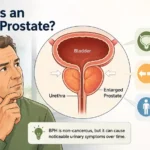
After age 40, the prostate often begins to grow again. This is called benign prostatic hyperplasia, or BPH. The word “benign” means it is not cancer. BPH is very common. By age 60, about half of men have some degree of prostate enlargement. By age 85, that number rises to about 90 percent.
This growth is not harmful by itself, but it can cause symptoms. As the gland enlarges, it can press on the urethra. This can make it harder to start urinating, weaken the urine stream, and cause a feeling that the bladder is not fully empty. Some men wake up several times at night to urinate.




What Are the Most Common Prostate Problems?
Three main conditions affect the prostate. Each has different causes, symptoms, and treatments.
Prostatitis is inflammation or infection of the prostate. It can affect men of any age. Symptoms include pain in the pelvis, painful urination, and sometimes fever. It is often treated with antibiotics if bacteria are present. Some cases are not caused by bacteria, and those are harder to treat.
BPH is the non-cancerous enlargement discussed above. It is the most common prostate condition. It is not life-threatening, but it can significantly reduce quality of life. Treatments range from watchful waiting to medications to surgery.
Prostate cancer is the second most common cancer in men. It grows slowly in most cases. Many men with prostate cancer die of something else without ever knowing they had it. However, some forms are aggressive and require treatment. Risk factors include age, family history, and race. African American men have a higher risk.
What Is PSA and How Is It Used?
PSA stands for prostate-specific antigen. It is a protein made by the prostate. A blood test can measure PSA levels. Normal levels are usually below 4 nanograms per milliliter, but this number is not a hard cutoff.
PSA levels can rise for many reasons. BPH, prostatitis, and prostate cancer can all raise PSA. Even recent ejaculation or a long bike ride can cause a temporary spike. Because of this, an elevated PSA does not mean cancer is present. It simply signals that more testing may be needed.
The decision to get a PSA test is personal. Some organizations recommend routine screening for men starting at age 50, or earlier for high-risk groups. Others suggest a shared decision-making approach with a doctor. The test can find cancer early, but it can also lead to unnecessary biopsies and treatment for cancers that would never cause harm.
What Are the Symptoms of Prostate Trouble?
Prostate problems share many symptoms. If you notice any of these, it is worth discussing them with a doctor:
- Frequent urge to urinate, especially at night
- Difficulty starting urination
- Weak or interrupted urine stream
- Pain or burning during urination
- Blood in urine or semen
- Pain in the lower back, hips, or pelvis
- Difficulty getting or keeping an erection
These symptoms are not specific to one condition. BPH, prostatitis, and cancer can all cause them. That is why a doctor needs to run tests to find the cause. Do not assume the worst based on symptoms alone. Many men with these symptoms have BPH, which is manageable.
Can Prostate Problems Be Prevented?
There is no proven way to prevent prostate cancer. Some studies suggest that a diet rich in vegetables and low in red meat may lower risk, but the evidence is not strong enough to make firm recommendations. No supplement has been shown to prevent prostate cancer in large clinical trials.
For BPH, some research suggests that regular exercise may reduce the risk of developing symptoms. Maintaining a healthy weight may also help. But again, the evidence is not definitive.
What is proven is that early detection matters. Men who know their risk factors and discuss screening with their doctor are more likely to catch problems early. Routine checkups are the best tool available.
What Happens During a Prostate Exam?
A prostate exam is quick. The doctor asks you to bend over or lie on your side. They insert a gloved, lubricated finger into the rectum. The exam takes about 10 to 15 seconds. You may feel pressure or mild discomfort, but it should not be painful.
The doctor checks the size, shape, and texture of the gland. A normal prostate feels smooth and firm. A hard lump or an irregular surface may require further testing. The exam cannot detect all prostate cancers, which is why it is often combined with a PSA blood test.
Many men avoid this exam because it feels uncomfortable. But it is one of the fastest and most informative tests a doctor can do. The discomfort is brief, and the information gained is valuable.
When Should You See a Doctor?
You should see a doctor if you have any urinary symptoms that persist. Difficulty urinating, blood in the urine, or pain are all reasons to make an appointment. These symptoms can indicate a problem that needs treatment.
For routine screening, the timing depends on your risk. Men with a family history of prostate cancer should discuss screening earlier, often around age 40 or 45. African American men also have higher risk and may benefit from earlier screening. For average-risk men, the conversation typically starts around age 50.
The decision to screen is not one-size-fits-all. It depends on your health, your family history, and your personal preferences. A frank discussion with your doctor is the best way to decide what is right for you.
Frequently Asked Questions
Can a man live without a prostate?
Yes. The prostate is not essential for survival. After removal, a man cannot produce semen, but he can still urinate normally.
Does an enlarged prostate always mean cancer?
No. An enlarged prostate is usually benign prostatic hyperplasia, which is not cancer. Only a biopsy can confirm whether cancer is present.
Does the prostate affect sexual function?
Yes. The prostate contributes fluid to semen and its muscles contract during ejaculation. Prostate surgery can sometimes affect erections or ejaculation.
At what age do prostate problems usually start?
BPH symptoms typically begin after age 40. Prostate cancer risk increases with age, with most cases diagnosed in men over 65.
