
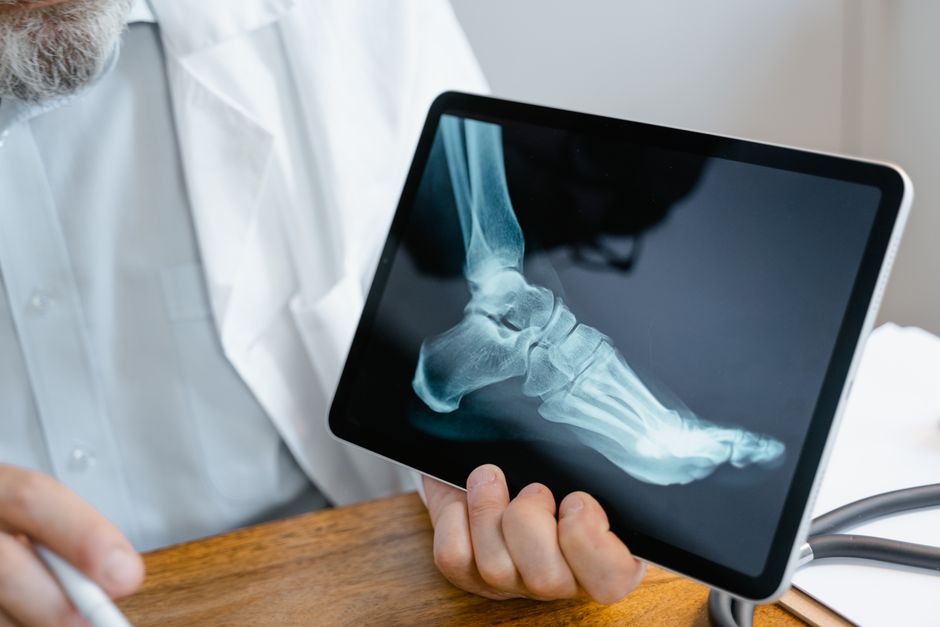
A bone spur, also called an osteophyte, is a smooth, bony growth that forms along the edge of a bone. Think of it as your body’s attempt to repair itself — it’s extra bone your body builds in response to pressure, rubbing, or stress over many years. Bone spurs themselves are not painful; the pain comes when that extra bone rubs against nearby nerves, tendons, or other bones.
What Exactly Causes a Bone Spur to Form?
Bone spurs are your body’s response to joint damage. The most common cause is osteoarthritis — the wear-and-tear type of arthritis. As cartilage breaks down between joints, your body tries to stabilize the area by growing extra bone. The CDC reports that osteoarthritis affects over 32 million US adults, and bone spurs are a common feature of this condition.
Other causes include repetitive stress on a joint from sports or physical labor, poor posture that puts uneven pressure on bones, and aging itself. By age 60, most people have at least some bone spurs visible on X-rays, even if they never feel them. Injuries like fractures or torn ligaments can also trigger spur growth as the bone heals.
Some people develop bone spurs from conditions like diffuse idiopathic skeletal hyperostosis, where ligaments and tendons slowly harden. This is less common but can cause large bone growths along the spine. Genetics also play a role — if your parents had bone spurs, you are more likely to develop them too.
Where Do Bone Spurs Usually Appear?
Bone spurs can form on any bone, but they are most common in weight-bearing joints and areas with frequent movement. The heel is one of the most frequent spots. A heel spur forms where the plantar fascia attaches to the heel bone, and it is often linked to plantar fasciitis. However, research published in the Journal of Orthopaedic & Sports Physical Therapy found that many people with heel spurs have no pain at all.
The spine is another common location. Bone spurs on the vertebrae can narrow the space for the spinal cord and nerves. This is called spinal stenosis. When this happens in the neck, it can cause pain, numbness, or weakness in the arms. In the lower back, it can affect the legs.
Other common spots include the knee, hip, and shoulder. In the knee, a bone spur can make it painful to straighten your leg fully. In the shoulder, spurs can pinch the rotator cuff tendons, leading to impingement syndrome. Finger joints also frequently develop small spurs, which can look like hard bumps under the skin.
What Symptoms Does a Bone Spur Actually Cause?
Here is the honest truth: most bone spurs cause zero symptoms. Many people discover them only when getting an X-ray or MRI for something else. The spur itself is not the problem — the problem is what it rubs against.
When symptoms do occur, they depend entirely on location. In the heel, you might feel sharp pain when you take your first steps in the morning. In the spine, symptoms include tingling, numbness, or weakness in an arm or leg. In the knee, you might feel a catching sensation when bending or straightening the joint.
Some people report visible lumps under the skin, especially on fingers or toes. These are usually bone spurs near the surface. They can be tender to touch but are rarely dangerous. The key symptom to watch for is nerve-related — if you have numbness, tingling, or muscle weakness that does not go away, that warrants a medical evaluation.
| Location | Common Symptom | What Gets Irritated |
|---|---|---|
| Heel | Sharp pain with first steps | Plantar fascia attachment |
| Spine (neck) | Arm numbness or tingling | Spinal nerves |
| Spine (lower back) | Leg pain or weakness | Sciatic nerve roots |
| Knee | Pain when straightening | Bone-on-bone contact |
| Shoulder | Pain lifting arm overhead | Rotator cuff tendons |
| Finger | Visible hard lump | Nearby soft tissue |





How Are Bone Spurs Diagnosed?
Diagnosis starts with a physical exam. Your doctor will ask about your pain — when it happens, what makes it better, and what makes it worse. They will move the joint to check range of motion and see if movement triggers pain.
X-rays are the standard tool for confirming bone spurs. They show the extra bone clearly. But here is where many people get confused: an X-ray finding of a bone spur does not automatically mean it is causing your pain. Studies show that many people with bone spurs on X-ray have no pain, and some people with pain have no visible spurs. Your doctor has to connect the imaging findings with your actual symptoms.
If nerve symptoms are present, your doctor might order an MRI. This shows soft tissues like nerves, discs, and ligaments better than X-ray. An MRI can reveal if a bone spur is pressing on a nerve or spinal cord. CT scans are less common but useful for complex spine cases. Electromyography, or EMG, can measure how well nerves are functioning if numbness or weakness is severe.
What Treatments Actually Work for Bone Spurs?
Treatment focuses on symptoms, not the spur itself. If you have no pain, you need no treatment. If pain is present, the first approach is always conservative. The American Academy of Orthopaedic Surgeons recommends rest, ice, and over-the-counter anti-inflammatory medications like ibuprofen or naproxen as first-line care.
Physical therapy is one of the most effective treatments. A therapist can identify the movement patterns or muscle imbalances that put stress on the joint. Strengthening the muscles around the joint often reduces pressure on the bone spur. Stretching tight muscles, especially in the foot and spine, can also relieve symptoms significantly.
For heel spurs specifically, research supports the use of custom orthotics or heel cups to cushion the area. Stretching the calf muscles and plantar fascia daily has good evidence behind it. Corticosteroid injections can reduce inflammation around the spur, but they are not a long-term solution. The relief usually lasts weeks to months.
In the spine, epidural steroid injections can calm nerve inflammation. These are done under X-ray guidance and can provide relief for several months. For some people, a few rounds of physical therapy and activity modification resolve symptoms completely.
Surgery is rarely needed. It is reserved for cases where conservative care has failed for at least 6-12 months and symptoms are severe. For heel spurs, surgery involves detaching the plantar fascia and removing the spur. For spine spurs causing nerve compression, a laminectomy or foraminotomy can create more space. Surgery carries risks like infection, nerve damage, and the possibility that the spur will grow back over time.
What Can You Do at Home to Manage Bone Spur Pain?
Many people manage bone spur pain effectively without medical procedures. The most important step is identifying what aggravates the joint. For heel pain, avoid walking barefoot on hard surfaces. Wear shoes with good arch support and cushioned soles. Ice the area for 15-20 minutes after activity.
- Stretch daily. Tight muscles pull on bones and increase pressure. Focus on the muscles around the affected joint. For heel spurs, stretch your calves. For spine spurs, stretch your hamstrings and hips.
- Strengthen supportive muscles. Strong muscles take load off joints. For knee spurs, strengthen your quadriceps. For hip spurs, work on glute strength.
- Watch your weight. Every extra pound of body weight adds about 4 pounds of pressure on your knees. Weight loss can reduce symptoms significantly for lower body bone spurs.
- Modify activities. High-impact exercise like running can aggravate bone spurs. Switching to swimming or cycling can keep you active without the pounding.
- Use proper footwear. Shoes that fit well and provide support can reduce pressure on foot and ankle spurs. Avoid flat shoes without arch support.
Common Misconceptions About Bone Spurs
One of the biggest myths is that bone spurs are sharp and “dig into” tissue. This is false. Bone spurs are smooth growths. The pain comes from pressure and rubbing, not from a sharp edge cutting into anything. The term “spur” is misleading — they look more like small bumps or ridges on X-ray.
Another widespread claim is that you can “dissolve” bone spurs with supplements or special diets. As of 2026, there is no clinical evidence that any supplement, vitamin, or dietary change can remove existing bone spurs. Your body cannot simply reabsorb that extra bone. Some people report that anti-inflammatory diets help with symptoms, but the spur itself remains.
Some people believe that cracking your knuckles causes bone spurs. This is not supported by any research. Knuckle cracking is not linked to arthritis or bone spur formation. The popping sound comes from gas bubbles in the joint fluid, not from bone damage.
A final misconception is that all bone spurs need treatment. This is simply not true. Millions of people have bone spurs and never know it. Treatment is only needed when symptoms interfere with daily life. Finding a bone spur on an X-ray is not a reason to panic or rush into surgery.
Frequently Asked Questions
Can a bone spur go away on its own?
No, bone spurs do not go away on their own. They are permanent bone growths, though symptoms may come and go over time.
Is a bone spur the same as arthritis?
No, a bone spur is a bony growth that often develops because of arthritis, but it is not arthritis itself. Arthritis is joint inflammation and cartilage loss.
Can exercise make a bone spur worse?
High-impact exercise can aggravate symptoms, but appropriate strengthening and stretching exercises usually help reduce pain by supporting the joint.
When should I see a doctor for a bone spur?
See a doctor if you have persistent pain, numbness, tingling, or weakness that does not improve with rest and over-the-counter treatments.
