
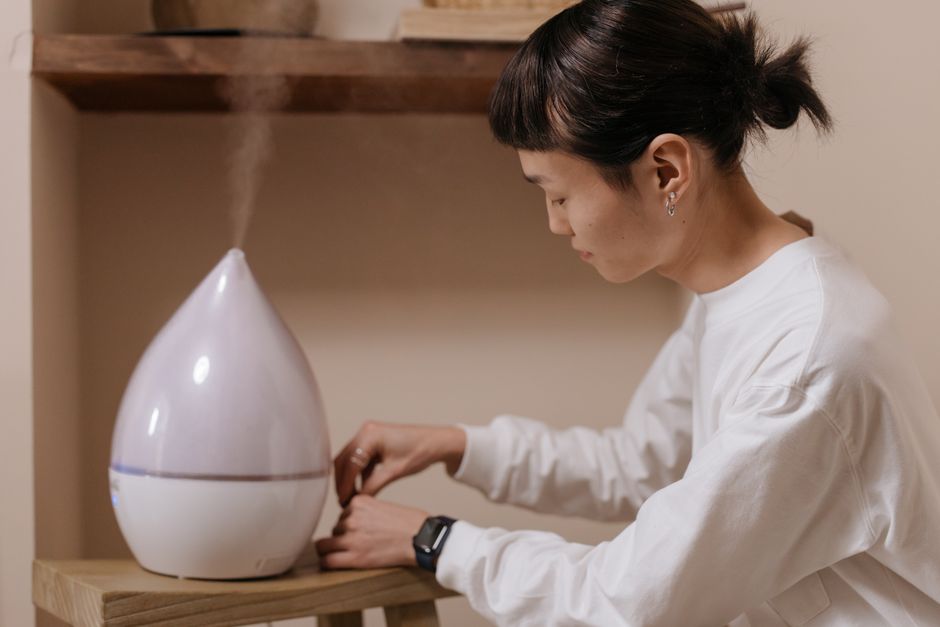
Nothing you add to humidifier water prevents mold. The only reliable way to keep mold out of a humidifier is to fill it with distilled or demineralized water and clean the tank on a regular schedule. Additives like vinegar, bleach, hydrogen peroxide, or essential oils do not make the water mold-proof, and several of them can harm you when breathed in as mist.
That answer surprises people because the internet is full of homemade humidifier “recipes.” But the science of humidifier mold is about cleaning and water quality, not about drops you put in the tank.
Does Adding Vinegar to Humidifier Water Stop Mold?
No. Vinegar does not prevent mold growth in a humidifier, and putting it in the tank is not recommended by humidifier makers or safety agencies.
Vinegar is a weak acid. It can help break down mineral scale when you use it to clean a tank that has been emptied and rinsed. That is a cleaning step, not a water additive. When vinegar sits in the water you are actively misting, it gets aerosolized and sent into the air you breathe. Inhaled acetic acid can irritate the eyes, nose, throat, and lungs, and it is worse for anyone with asthma or other respiratory conditions.
There is also a practical problem. Vinegar diluted in a full tank is far too weak to kill mold spores. Mold needs moisture and organic material to grow, and a humidifier provides both. A splash of vinegar does not change that.
Can I Use Bleach or Hydrogen Peroxide in the Water?
No. Never add bleach to humidifier water. This is a genuine safety issue, not a preference.
Bleach contains chlorine, and a humidifier turns tank water into a fine mist that reaches deep into the lungs. Breathing aerosolized bleach can injure the airways. The same concern applies to hydrogen peroxide, which can irritate the respiratory tract when inhaled as a mist.
Some manufacturers allow a diluted bleach solution for cleaning and disinfecting an empty tank, followed by thorough rinsing. That is a different action entirely from adding bleach to the water you run through the machine. If a cleaning routine calls for bleach, follow the maker’s exact dilution and rinse instructions, and never leave any residue behind.
Hydrogen peroxide has become a popular “natural” humidifier additive online. There is no evidence it safely prevents mold in a running humidifier, and inhaling it is not harmless.
What About Essential Oils and Humidifier “Cleaning” Pods?
Essential oils do not prevent mold, and adding them to humidifier water is discouraged by many manufacturers and health agencies.
Oils like tea tree, eucalyptus, and lavender are sometimes marketed as antimicrobial. Even if an oil shows some antimicrobial activity in a lab dish, that does not mean it stops mold inside a humidifier. More importantly, essential oils are not meant to be inhaled continuously as an ultrafine mist. Doing so can trigger coughing, wheezing, and airway irritation, and it is a particular risk for children, pregnant people, and anyone with asthma.
Commercial “humidifier cleaning” products and descaling pods are a mixed category. Some are designed only to remove mineral buildup, not to disinfect. Read what the product actually claims. If it is a descaler, it does not stop mold.





What Should You Actually Put in Humidifier Water?
Plain distilled or demineralized water. That is the answer.
Distilled water has had most minerals and impurities removed. That matters for two reasons. First, minerals like calcium and magnesium leave behind white dust and scale, which gives mold and bacteria more surface to cling to. Second, tap water can carry trace minerals and, in some cases, microorganisms that a humidifier can aerosolize.
If distilled water is not practical, some manufacturers say tap water is acceptable, but it increases mineral buildup and the need for frequent cleaning. The CDC advises against using humidifiers if you or someone in the home has certain lung conditions, and it emphasizes regular cleaning and using the right water. Always check your specific unit’s manual, because recommendations vary by type.
Why Does Mold Grow in Humidifiers in the First Place?
Mold grows because a humidifier is a warm, wet, dark container with a steady supply of moisture. That is close to ideal conditions for mold and bacteria.
Standing water is the core problem. When a tank sits with water in it between uses, spores that entered from the air or the water supply can settle and multiply. Mineral film on the tank walls and base gives them something to hold onto. Over time, that film becomes a thin layer where growth takes off.
This is why the fix is not an additive. It is removing the conditions mold needs: standing water, mineral buildup, and time. Empty the tank when you are not using it. Clean it on a schedule. That does more than any drop you could add.
How Often Should You Clean a Humidifier?
Clean it every day or every few days, and disinfect it about once a week. That is the general guidance from public health agencies, though your unit’s manual may specify differently.
A practical routine looks like this:
- Empty the tank and base every day when you are done using it. Do not let water sit.
- Rinse the tank with fresh water and wipe it dry, or let it air dry completely.
- Once a week, clean the tank and base with a mild soap or the maker’s recommended cleaner, then rinse thoroughly.
- Disinfect weekly only if the manufacturer allows it, following their exact instructions, then rinse until no residue remains.
- Replace filters and wicks as the manual directs. A dirty filter is a mold habitat.
If you see visible black, pink, or green film, or smell a musty odor, stop using the unit. Clean and disinfect it fully before running it again. If the growth keeps returning, replace the humidifier. Some contamination gets into crevices you cannot reach.
Does Humidifier Type Change What You Should Do?
Yes, the type matters for cleaning and water choice, though not for the “additive” question. No type should have vinegar, bleach, peroxide, or oils added to its water.
| Humidifier type | How it works | Water and cleaning note |
|---|---|---|
| Cool mist (evaporative) | Fan blows air through a wet wick or filter | Wick can harbor mold; replace as directed |
| Cool mist (ultrasonic) | Vibration creates a fine mist | Tap water produces white dust; distilled preferred |
| Warm mist (steam) | Heats water into steam | Steam is cleaner, but the tank still needs cleaning |
Ultrasonic units are the ones most associated with white mineral dust, which is why distilled water helps most there. Warm mist units boil water, which reduces some microbial concerns, but the tank and heating element still collect scale and need regular cleaning.
The Bottom Line on Humidifier Additives
There is no additive that safely prevents mold in humidifier water. The products people reach for — vinegar, bleach, hydrogen peroxide, essential oils — either do not work at this dilution, are unsafe to inhale, or both.
The real answer is boring but correct: use distilled water, empty the tank daily, clean it often, and replace filters and worn units. That is what actually keeps mold out.
Frequently Asked Questions
What can I put in my humidifier water to prevent mold?
Nothing you add to the water reliably prevents mold. The effective approach is using distilled or demineralized water and cleaning the tank on a regular schedule.
Is it safe to add vinegar to a humidifier?
No. Vinegar is not meant to be inhaled as a mist and can irritate the airways, and diluted vinegar in a tank is too weak to stop mold anyway.
Can I use bleach to clean my humidifier?
Only if the manufacturer specifically allows a diluted bleach solution for cleaning an empty tank, followed by thorough rinsing. Never add bleach to the water you run through the machine.
How often should I clean my humidifier to stop mold?
Empty and rinse it daily, and clean it thoroughly about once a week, or as your unit’s manual directs. Replace filters and wicks on schedule.
