
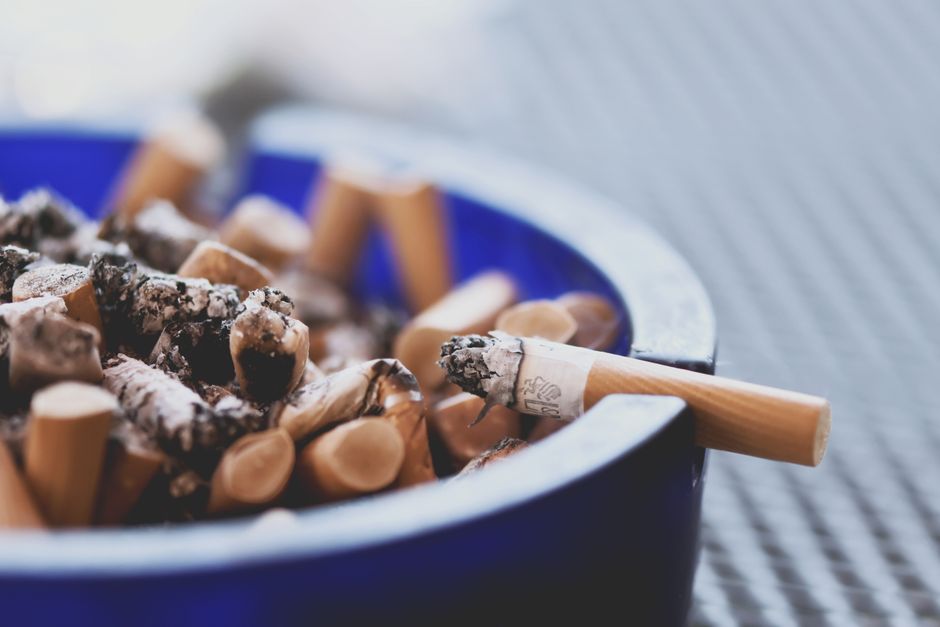
Secondhand smoke has no safe exposure level, and the only complete protection is to make your home and car 100% smoke-free. This means no smoking inside the house or vehicle at any time, not just when others are present. Even with windows open, air purifiers running, or smoking near a door, harmful chemicals linger in the air and settle on surfaces, which means the risk to your family remains.
Why Is Secondhand Smoke So Dangerous in Enclosed Spaces?
Secondhand smoke contains thousands of chemicals, and dozens of them are known to cause cancer. In an enclosed space like a car or a room, those chemicals have nowhere to go. The concentration builds quickly, and everyone inside breathes it in.
There is no risk-free level of exposure. The U.S. Surgeon General has concluded that even brief exposure can be harmful. For children, the risks are especially serious because their airways are smaller and their lungs are still developing.
Enclosed spaces also trap what is called thirdhand smoke. This is the residue that sticks to carpets, upholstery, curtains, and clothing. It can react with other chemicals in the air and form new harmful compounds. Opening a window does not remove this residue.
How To Prevent Secondhand Smoke In Your Home And Car
The most effective strategy is straightforward: establish a strict no-smoking policy indoors and inside the vehicle. This is not a compromise or a partial measure. It is the only approach that fully protects nonsmokers.
Make the rule clear to everyone who visits or rides with you. Post a small sign near your front door if needed. Communicate the policy to guests before they arrive so there is no awkward moment at the doorstep.
If a smoker lives in your home, work together on a plan. Designate a specific outdoor smoking area that is far from doors, windows, and air intakes. Provide a covered spot with a stable ashtray so it is practical even in bad weather. The goal is to make outdoor smoking the easy and expected choice.
For the car, the rule is absolute. Do not smoke inside the vehicle, even when driving alone. Smoke residue embeds in the fabric of the seats and the headliner. It stays there for a long time. If you buy a used car, consider having it professionally detailed if it was previously smoked in.
Does Opening a Window or Using an Air Purifier Help?
Opening a window reduces the concentration of smoke in the air, but it does not eliminate it. It also does nothing about the residue that settles on surfaces. In a moving car, opening a window can create a backdraft that pulls smoke toward the passengers in the back seat.
Air purifiers with HEPA filters can remove particles from the air. However, secondhand smoke is a mixture of particles and gases. Many air purifiers do not effectively capture the gaseous components. No air purifier removes the residue that has already settled on furniture, walls, or car seats.
These tools can improve air quality in general, but they are not a substitute for a smoke-free policy. Relying on them creates a false sense of safety. The only reliable protection is preventing the smoke from entering the space at all.




How Long Does Secondhand Smoke Stay in a Room or Car?
Smoke particles can remain suspended in the air for hours after a cigarette is extinguished, depending on ventilation. The gaseous chemicals can linger even longer. Opening a door or window speeds up the process, but it does not clear everything.
Thirdhand smoke lasts much longer than airborne smoke. Nicotine and other chemicals can persist on surfaces for months. They bind to dust and re-enter the air when that dust is disturbed, such as when someone vacuums or walks across a carpet.
In a car, the confined space makes this worse. The heat of a closed car in summer can cause trapped chemicals to off-gas more quickly. Even a car that has not been smoked in for weeks can still release these compounds from its surfaces.
What If Someone Smokes Outside but Near the House?
Smoke drifts. It follows air currents and can enter through open windows, doors, and even small cracks. It can also be pulled into the house by the ventilation system. Smoking right outside the back door is not enough to protect the people inside.
Set the outdoor smoking area at least 15 to 20 feet from any entrance. If possible, place it away from windows and the outdoor unit of your air conditioning system. A detached garage or a shed is a better location than a spot attached to the house.
Clothing matters too. A smoker who comes inside after a cigarette carries smoke residue on their clothes and hands. This is a form of thirdhand smoke exposure. Smokers should wash their hands after smoking and ideally change their shirt before holding an infant or sitting on upholstered furniture.
How To Protect Children From Secondhand Smoke
Children cannot choose their environment. They rely entirely on the adults around them. This makes the home and car the most important places to enforce a no-smoking rule.
Infants are especially vulnerable. They spend most of their time indoors and on the floor, where smoke residue settles. They also put their hands in their mouths constantly, which means they can ingest the chemicals that have settled on surfaces.
Studies have linked secondhand smoke exposure in children to a higher risk of sudden infant death syndrome, respiratory infections, asthma attacks, and ear infections. These are not minor risks. They are well-documented health consequences.
If a child has asthma, even brief exposure to secondhand smoke can trigger an attack. The best thing a caregiver can do is to ensure the child is never in a space where smoking occurs or has recently occurred.
What About E-Cigarettes and Vaping?
E-cigarette aerosol is not harmless water vapor. It contains nicotine, ultrafine particles, and other chemicals. Studies have found that vaping indoors increases the levels of these substances in the air, and bystanders inhale them.
The same no-smoking rules should apply to vaping. The aerosol leaves residue on surfaces, just like cigarette smoke does. If your goal is to protect your family from inhaled chemicals, vaping indoors works against that goal.
Some people switch to vaping thinking it protects their children. It does not. The evidence on the health effects of secondhand vaping aerosol is still developing, but the presence of nicotine and other toxicants is well established.
Practical Steps for Homes Shared With Smokers
If a smoker lives in the home and is not ready to quit, you can still create separation. The following steps reduce exposure but do not eliminate it entirely. The only complete solution is for the smoker to quit or to smoke exclusively outdoors.
- Declare the home and car smoke-free and post written reminders.
- Designate an outdoor smoking spot far from doors and windows.
- Provide a deep ashtray or metal container for cigarette butts.
- Ask smokers to wash hands and rinse their mouth after smoking.
- Change clothes after smoking before close contact with children.
- Clean carpets and upholstery regularly to remove settled residue.
- Replace HVAC filters frequently if smoking occurs near the home.
These steps lower the level of exposure. They do not make exposure safe. Be honest with yourself about the difference between reducing harm and eliminating it.
What To Do When Visiting Other People’s Homes
You cannot control what happens in someone else’s home, but you can control where your family goes. If you know a home is smoked in, it is reasonable to ask the host not to smoke while you visit. If that is not possible, consider meeting in a different location.
For children, the stakes are higher. A child’s exposure during a two-hour visit to a smoky home is meaningful. You do not need to apologize for protecting your child from known carcinogens. A simple statement like “We keep our kids away from smoke” is enough.
Hotels and rental cars are another consideration. Many hotels offer smoke-free floors or buildings. Request a room on a smoke-free floor and ask if the room has ever been smoked in. For rental cars, request a non-smoking vehicle and check the ashtray area for signs of use.
Frequently Asked Questions
Can secondhand smoke travel through walls or vents between apartments?
Yes. Smoke can move through shared ventilation systems, electrical outlets, and gaps around pipes. If you smell smoke in your apartment, you are being exposed to secondhand smoke.
Does an air purifier completely remove secondhand smoke?
No. HEPA filters capture particles but not all gases, and no filter removes residue already settled on surfaces. An air purifier can help, but it is not a substitute for a smoke-free space.
How long does thirdhand smoke stay on surfaces?
Nicotine and other chemicals can persist on surfaces for months. They bind to dust and fabrics and can be released back into the air over time.
Is it safe to smoke in another room while a baby is in the house?
No. Smoke moves through a home and lingers in the air and on surfaces. There is no safe level of secondhand smoke exposure for an infant.
