

Sleeping with a bulging disc often feels impossible. Every position hurts, and you wake up more sore than when you went to bed. The best positions keep your spine in a neutral line — ears, shoulders, and hips aligned. For most people, that means sleeping on your back with support under your knees or on your side with a pillow between your legs. Stomach sleeping is almost always the worst choice. These positions reduce pressure on the disc and let your muscles relax enough for real rest.
What Actually Happens to a Bulging Disc at Night?
A bulging disc is not a slipped disc. The outer layer of the disc weakens and pushes outward. It does not rupture. When you lie down, the pressure on your spine changes. The disc can shift slightly. If your sleeping position puts uneven pressure on the spine, that bulge presses on nearby nerves.
Research shows that spinal fluid flow increases during sleep. This is when discs rehydrate and repair. Poor positioning disrupts this process. Instead of healing, the disc stays compressed. Morning pain is often worse because the disc has been under constant pressure for hours.
The key is maintaining the natural curve of your lower back. This curve, called lumbar lordosis, acts as a shock absorber. Flattening it or arching it too much both increase disc pressure. The right sleeping position supports this curve without forcing it.
How To Sleep With A Bulging Disc Best Positions
The most evidence-supported position is sleeping on your back. Lie flat with a pillow under your knees. This tilts your pelvis slightly and reduces pressure on the lumbar spine. A study in the Journal of Orthopaedic Surgery found that this position decreased disc pressure by about 25% compared to lying flat without knee support.
Side sleeping is the second best option. Choose the side that causes less pain. Place a firm pillow between your knees. This keeps your hips level and prevents your top leg from pulling your spine out of alignment. The pillow should be thick enough to keep both hips stacked directly on top of each other.
Fetal position can help some people. Lie on your side and gently curl your knees toward your chest. This opens the space between vertebrae slightly. But do not curl too tightly. A gentle curve is enough. Over-curling can compress the front of the disc.
Stomach sleeping is the position to avoid. It forces your neck to twist and flattens the natural curve of your lower back. If you absolutely cannot sleep any other way, place a thin pillow under your hips and lower abdomen. This helps maintain some curve. But even with this adjustment, stomach sleeping is not recommended for bulging discs.
What Pillows and Mattress Support Actually Help?
Pillow choice matters more than most people realize. A cervical pillow that supports the natural curve of your neck is worth trying. Standard pillows often push your head too far forward or sideways. This creates strain that travels down to the lower back.
For back sleepers, a pillow that is too thick forces your neck forward. A pillow that is too thin lets your head drop back. Both create tension. The ideal pillow keeps your head in line with your spine when viewed from the side.
Mattress firmness is personal but evidence gives some guidance. A 2021 study in the Journal of Chiropractic Medicine found that medium-firm mattresses improved sleep quality and reduced back pain more than firm or soft mattresses. The mattress should support your body without sagging at the hips or shoulders.
Memory foam can be helpful because it distributes pressure evenly. But some people find it too soft, causing their hips to sink and misalign the spine. A latex or hybrid mattress often provides better support for people with disc issues. Test mattresses if possible. Your body will tell you within a few minutes if a surface feels right.




How to Get In and Out of Bed Without Making It Worse
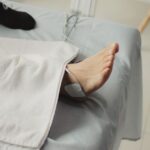
The way you get into bed matters as much as the position you sleep in. Twisting or jerking movements can aggravate the disc. Use a log-roll technique. Sit on the edge of the bed first. Then lower your upper body down while keeping your spine straight. Use your arms to guide you.
To get out of bed, roll onto your side first. Push yourself up with your arms while swinging your legs off the edge. Do not sit up straight from lying on your back. This motion puts high pressure on the lumbar spine and can cause sharp pain.
Some people find it helpful to place a small rolled towel under their lower back when lying down. This provides gentle support without forcing the spine. Remove it if it feels uncomfortable. Your body will let you know quickly if something is working or not.
If you wake up in pain, do not stay in bed. Get up slowly and move gently. Walking for a few minutes can help reduce morning stiffness. Lying still for too long after waking can make pain worse.
What About Sleep Aids and Medications?
Over-the-counter pain relievers like ibuprofen or naproxen can reduce inflammation around the disc. Taking them 30 minutes before bed may help you fall asleep more comfortably. But do not rely on them long term. They mask pain without fixing the underlying issue.
Melatonin is generally safe for short-term use. It helps regulate sleep cycles but does not directly affect disc pain. Some people report that magnesium glycinate helps relax muscles at night. Current research suggests magnesium may reduce muscle tension, but evidence specific to disc pain is limited.
Prescription muscle relaxants are sometimes prescribed. They can help you sleep but come with side effects like drowsiness the next day. Use them only under a doctor’s guidance and for short periods. They do not treat the disc itself.
CBD products are widely claimed to help with sleep and pain. As of 2026, there is no clinical evidence that CBD specifically helps bulging discs. Some people report relief, but that could be from the placebo effect or from improved sleep quality unrelated to the disc. If you try it, start with a low dose and see how your body responds.
Common Misconceptions About Sleeping With a Bulging Disc
One myth is that you need a rock-hard mattress. Hard mattresses can actually increase pressure on the hips and shoulders, causing you to toss more. Medium firmness is better for most people. Another myth is that you should never move during sleep. Your body naturally shifts positions throughout the night. That is normal and healthy. Trying to stay perfectly still can cause muscle stiffness.
Some people believe that sleeping on the floor is the answer. There is no evidence that floor sleeping helps bulging discs. It can actually make things worse by not allowing your body to relax fully. Your muscles may stay tense all night trying to protect the spine.
Another common claim is that a special pillow can cure a bulging disc. No pillow cures a disc problem. A good pillow can reduce symptoms and improve sleep quality, but it does not fix the structural issue. Disc problems often require physical therapy, exercise, and sometimes medical treatment.
Finally, some people think they should avoid sleeping on the painful side entirely. This is not always true. For some people, sleeping on the painful side can actually reduce pressure by keeping the disc away from the nerve. Test both sides and see which feels better for you.
Frequently Asked Questions
Should I sleep on my back or side with a bulging disc?
Back sleeping with knee support is usually best because it keeps the spine neutral. Side sleeping with a pillow between the knees is a good second choice.
Can a bad pillow cause a bulging disc to get worse?
A bad pillow can increase neck and back strain, which may worsen symptoms. A supportive cervical pillow helps maintain proper alignment.
How long does it take for a bulging disc to heal with better sleep positions?
Most people notice improvement within a few days to two weeks. Full healing of the disc can take several months depending on the severity.
Is it okay to sleep in a recliner with a bulging disc?
Sleeping in a recliner can reduce pressure on the disc for some people. The semi-upright position may help if lying flat causes pain.
