
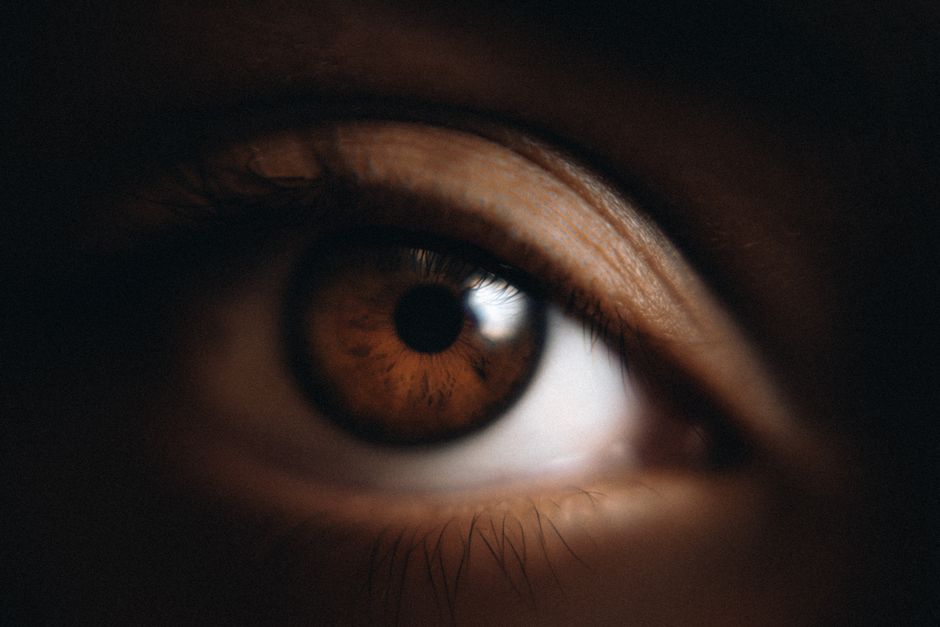
The pupil is the black circular opening in the center of your iris, the colored part of your eye. Its primary job is to control how much light enters the eye, much like the aperture of a camera. The pupil automatically widens in dim light to let more light in and narrows in bright light to protect the retina from too much light.
How Does the Pupil Actually Work?
The pupil itself is not a structure — it is simply an opening. The muscles that control its size are located in the iris, the colored tissue surrounding it. Two sets of muscles work in opposition to change pupil size.
The first set is the dilator muscles. These fibers radiate outward from the pupil like spokes on a wheel. When they contract, they pull the iris open, making the pupil larger. This process is called mydriasis.
The second set is the sphincter muscles. These fibers circle the pupil like a tight ring. When they contract, they squeeze the opening smaller. This process is called miosis.
These muscles respond automatically to light levels through a reflex pathway that involves the optic nerve and the brain. You do not control this consciously. The entire adjustment happens in fractions of a second.
Why Does the Pupil Change Size?
Light control is the main reason, but not the only one. The pupil also responds to emotional states, focus, and certain medications.
In bright light, the pupil constricts to roughly 2 to 4 millimeters. This limits how much light reaches the retina and improves visual clarity by reducing glare. In darkness, the pupil dilates to roughly 4 to 8 millimeters to capture as much available light as possible.
Pupil size also changes with near vision. When you look at something close, your pupils constrict slightly. This works together with the lens to sharpen the image on the retina. The medical term for this is the near response, and it involves three coordinated actions: pupil constriction, lens thickening, and inward eye turning.
Emotional arousal also affects pupil size. The sympathetic nervous system, which drives the fight-or-flight response, dilates the pupils. This is why pupils widen when someone is surprised, frightened, or sexually interested. These changes are involuntary and difficult to fake.
What Does the Pupil Do in Different Lighting Conditions?
The pupil’s response to light is one of the most reliable reflexes in the human body. It works even in people who are unconscious, which makes it a valuable tool for doctors assessing brain function.
When light enters one eye, both pupils constrict. This is called the consensual light reflex. The response in the illuminated eye is direct, and the response in the opposite eye is consensual. Doctors test both responses to check whether the nerves and brain pathways are working correctly.
The process happens quickly. Full constriction occurs within about one second of bright light exposure. Full dilation in darkness takes longer — often 20 to 30 seconds. This delay is why walking from a bright room into a dark theater leaves you temporarily unable to see. Your pupils need time to open fully.
Normal pupil size varies between individuals. Age matters. Older adults often have smaller pupils that respond more sluggishly to light changes. This is a normal part of aging, not a disease.




What Can Pupil Changes Tell Doctors?
Pupil examination is a standard part of neurological assessment. The size, symmetry, and reactivity of the pupils provide clues about brain health.
Unequal pupil sizes are called anisocoria. About 20 percent of healthy people have a slight difference in pupil size that is harmless. But a sudden new difference can signal a serious problem, such as a stroke, aneurysm, or nerve damage. Any sudden change in pupil size or reactivity warrants immediate medical attention.
Both pupils that are fixed and dilated may indicate severe brain injury or drug effects. Both pupils that are very small, described as pinpoint, can result from opioid use or damage to the pons, a part of the brainstem.
Doctors also use pupil response to assess brain death in comatose patients. A complete absence of pupil response to bright light, along with other criteria, contributes to the determination of brain death.
What Medications and Substances Affect Pupils?
Many substances change pupil size because they act on the nervous system. Some of these effects are medically useful. Others are signs of intoxication or overdose.
Opioids, including prescription painkillers and heroin, cause pinpoint pupils. This effect is so consistent that doctors use it as a clinical sign of opioid use. Conversely, opioid withdrawal typically causes dilated pupils.
Stimulants such as cocaine, amphetamines, and methamphetamine dilate the pupils. So do hallucinogens like LSD and psilocybin. Anticholinergic drugs, which include some antihistamines and motion sickness medications, also cause dilation.
Eye drops used in eye exams work on these same pathways. Dilating drops, such as tropicamide, block the sphincter muscle so the pupil cannot constrict. The pupil stays wide open for several hours, allowing the doctor to examine the retina. These drops can cause light sensitivity and blurred near vision until they wear off.
Can Pupil Size Predict Health or Behavior?
Some research has explored whether pupil responses can indicate cognitive load, fatigue, or even certain psychiatric conditions. This is an area of active study, not established clinical practice.
Pupil dilation does correlate with mental effort. When a person performs a difficult cognitive task, the pupils dilate measurably. This effect is used in some psychological research as a measure of mental workload. But it is not a diagnostic tool for any condition.
Some studies have examined pupil responses in people with autism, schizophrenia, and depression. Results are preliminary and inconsistent. No clinical guidelines currently recommend pupil testing for psychiatric diagnosis.
Marketing claims that pupil analysis can reveal personality traits or hidden emotions are not supported by evidence. Pupil size is a physiological response, not a personality test.
When Should You See a Doctor About Pupil Changes?
Most pupil changes are normal and harmless. But certain patterns require medical evaluation.
Seek prompt medical care if you experience any of the following:
- Sudden unequal pupil sizes
- Pupils that do not respond to light
- Blurred vision, double vision, or vision loss along with pupil changes
- Headache, dizziness, or confusion with pupil changes
- Eye pain or redness with pupil changes
These symptoms can indicate serious conditions such as stroke, aneurysm, increased pressure inside the skull, or acute angle-closure glaucoma. Do not wait to see if symptoms improve on their own.
An eye care professional can perform a thorough pupil examination and determine whether the changes are benign or require further testing. If you notice a persistent change in pupil size that concerns you, schedule an eye exam. It is better to check than to assume.
Frequently Asked Questions
Why are my pupils different sizes sometimes?
A slight difference in pupil size is common and harmless in many people. If the difference is new, sudden, or accompanied by other symptoms, seek medical attention immediately.
How fast do pupils react to light?
Pupils constrict within about one second of bright light exposure. Dilation in darkness takes longer, often 20 to 30 seconds to reach full size.
Can stress or anxiety change pupil size?
Yes, stress and anxiety activate the sympathetic nervous system, which dilates the pupils. This is an involuntary reflex related to the fight-or-flight response.
Do pupils get smaller as you age?
Yes, older adults typically have smaller pupils that respond more slowly to light changes. This is a normal part of aging and not a cause for concern on its own.
