
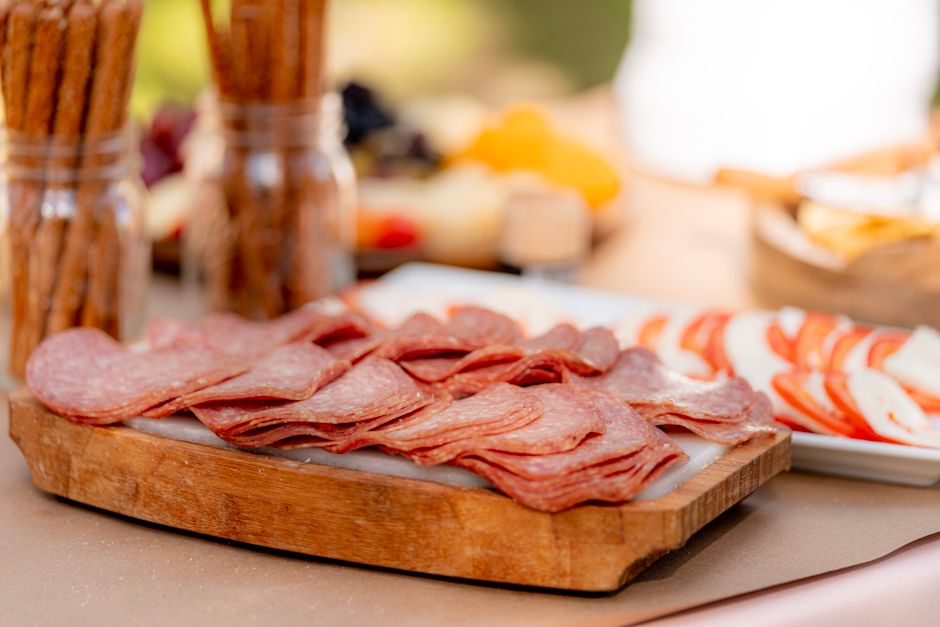
Italian salami is a cured sausage made from fermented and air-dried ground meat, typically pork, mixed with fat, salt, spices, and starter cultures. The mixture is stuffed into a casing and aged for weeks or months to develop its distinct flavor and firm texture. In Italy, traditional salami follows strict production rules that define which ingredients can be used and how the sausage must be made.
What Is Italian Salami Made Of?
The core ingredients in Italian salami are simple. Ground pork provides the base. Pork fat, usually from the back or belly, is added at about 20 to 30 percent of the total weight. This fat is essential. It keeps the salami moist during the long drying period and contributes to the smooth, sliceable texture.
Salt makes up roughly 2.5 to 3.5 percent of the mixture. It draws moisture out of the meat, which slows bacterial growth and aids preservation. Black pepper is the most common spice. Garlic, fennel seeds, chili flakes, and red or white wine appear in many regional recipes. Starter cultures — specific strains of lactic acid bacteria — are added to control the fermentation process. These bacteria produce acid that lowers the pH of the meat, creating an environment where harmful bacteria cannot survive.
The casing is usually natural pork intestine, though some producers use beef casings or synthetic alternatives. Natural casings allow the salami to breathe during drying, which helps develop the characteristic rind and flavor.
What Types of Meat Are Used in Italian Salami?
Pork is the traditional and most common meat used in Italian salami. The meat comes from the shoulder, belly, and trimmings. Some regional varieties use beef, wild boar, duck, or goose. Finocchiona, a Tuscan specialty, uses pork with fennel seeds. Soppressata can be made from pork or a mix of pork and beef. Game meats are used in some rural traditions, but these are less common commercially.
The fat comes from the back fat or belly fat of the pig. This fat has a higher melting point than internal fat, which helps the salami hold its shape during fermentation and drying. Using the correct fat is not optional — it is structurally necessary for the final texture and preservation.
What Seasonings and Spices Go Into Italian Salami?
Black pepper is nearly universal. It adds heat and acts as an antimicrobial. Garlic is common but not required. Fennel seeds define several regional styles, such as finocchiona. Chili pepper appears in southern Italian varieties like ‘nduja and some versions of soppressata. Paprika, white pepper, nutmeg, cloves, and cinnamon appear in specific regional recipes but are not standard across all types.
Wine is a traditional ingredient in many Italian salami recipes. Red wine is used in some northern regions, while white wine appears in central and southern recipes. The alcohol content is minimal after fermentation and drying, but the flavor compounds remain. Some producers use sugar or dextrose in small amounts to feed the starter cultures during fermentation, but traditional recipes often rely on the natural sugars present in the meat and wine.





How Is Italian Salami Fermented and Cured?
Fermentation is what makes salami safe to eat raw. After the meat and fat are ground and mixed with seasonings and starter cultures, the mixture is stuffed into casings. The sausages are hung in a controlled environment at around 70 to 85 degrees Fahrenheit with high humidity. During this period, which lasts one to three days, the lactic acid bacteria multiply and produce lactic acid. The pH of the meat drops to around 5.0 or lower. This acidic environment kills or inhibits pathogens such as Salmonella and E. coli.
After fermentation, the salami moves to a drying room. Temperature and humidity are lowered gradually over weeks or months. The salami loses 30 to 40 percent of its original weight through moisture evaporation. As water leaves, the salt concentration increases, and the remaining water is trapped inside the meat matrix, making it unavailable for bacterial growth. This combination of low pH, reduced water activity, and salt is what preserves the salami without refrigeration in its whole, uncut form.
The mold that grows on the outside of natural-casing salami is intentional. These molds, usually Penicillium species, help control the drying rate, prevent unwanted bacteria from growing on the surface, and contribute to the final flavor. The mold is safe to eat, though most people peel off the casing before eating.
What Are the Main Types of Italian Salami?
Italy produces dozens of regional salami varieties, each with distinct ingredients and production methods. Some of the most recognized types are listed below.
| Name | Region | Key Characteristics |
|---|---|---|
| Genoa | Liguria | Fine grind, pork and veal, garlic and wine, aged 4-6 weeks |
| Milano | Lombardy | Very fine grind, pork only, mild flavor, aged 6-8 weeks |
| Felino | Emilia-Romagna | Medium grind, pork shoulder, whole black pepper, aged 3-4 months |
| Napoli | Campania | Coarse grind, pork and pork fat, chili flakes, aged 4-6 weeks |
| Soppressata | Various (Calabria, Sicily) | Coarse grind, irregular shape, chili pepper, aged 4-12 weeks |
| Finocchiona | Tuscany | Coarse grind, pork shoulder, fennel seeds, aged 4-6 weeks |
Each of these types has a protected status under Italian law. This means the recipe, region of production, and production methods are defined. Products that do not meet these standards cannot legally be labeled with these names in Italy.
What Is the Nutritional Profile of Italian Salami?
Italian salami is a protein-dense food. A 100-gram serving contains roughly 25 to 30 grams of protein and 35 to 40 grams of fat, most of which is saturated. The same portion contains about 1500 to 2200 milligrams of sodium, which is 65 to 95 percent of the daily recommended limit for most adults.
Salami contains B vitamins, particularly B12, along with zinc, selenium, and small amounts of iron. The fermentation process may increase the bioavailability of some nutrients, though the overall vitamin content is lower than in fresh meat because some vitamins degrade during aging. Nitrates and nitrites are added during production to prevent botulism and maintain color. These curing agents also produce small amounts of nitrosamines when cooked at high heat, though the levels are regulated within safety limits.
Because of its high sodium and saturated fat content, regular consumption of large portions is not recommended. A reasonable serving size is about 1 to 2 ounces, or 30 to 60 grams, a few times per week.
Does Italian Salami Contain Nitrates or Nitrites?
Yes, most Italian salami contains added nitrates or nitrites. Sodium nitrite and potassium nitrate are commonly used. These additives perform three functions: they prevent the growth of Clostridium botulinum spores, they preserve the red color of the meat, and they contribute to the characteristic cured flavor.
Traditional producers sometimes use celery powder or other vegetable sources of nitrates as a natural alternative. The chemical effect is the same — the nitrate is converted to nitrite by bacteria during fermentation, and the nitrite performs the same functions. Whether the source is synthetic or vegetable, the nitrite content in the finished product is similar. The USDA regulates the allowable levels of nitrites in salami, and these limits apply regardless of the source.
Some producers now make uncured salami without added nitrates or nitrites. These products must be refrigerated and have a shorter shelf life. They are not traditional Italian salami in the strict sense, but they are available commercially.
Is Italian Salami Safe to Eat Raw?
Yes, but with important conditions. The combination of fermentation, salt, and drying makes salami safe to eat without cooking. The low pH and reduced water activity prevent the growth of pathogenic bacteria. In the United States, the USDA requires that fermented sausages like salami undergo a validated process that achieves a specific level of pathogen reduction. This typically involves a combination of fermentation pH below 5.0 and drying to a moisture-to-protein ratio of 1.9:1 or lower.
Pregnant women are often advised to avoid cured meats due to the risk of toxoplasmosis and listeriosis. The actual risk depends on how the salami was produced, whether it was properly fermented and dried, and how it has been stored. Some clinical guidelines in the United States and Europe recommend that pregnant women only eat dry-cured salami if it has been cooked to 165 degrees Fahrenheit, while others advise avoiding it entirely. No clinical consensus currently exists across all health authorities. Pregnant women should follow the advice of their healthcare provider.
Frequently Asked Questions
Is Italian salami safe to eat during pregnancy?
Health guidelines vary on this topic. Pregnant women should follow the specific advice from their healthcare provider, as recommendations differ between countries and clinical organizations.
How long does Italian salami last in the refrigerator?
Whole, uncut salami can last 6 to 8 weeks in the refrigerator. Once sliced, it should be eaten within 2 to 3 weeks for best quality.
What is the difference between Italian salami and pepperoni?
Pepperoni is an American variation that uses a finer grind and contains paprika, chili pepper, and often sugar. Italian salami uses a coarser grind and relies on traditional spices like black pepper, fennel, or garlic.
Can you freeze Italian salami?
Yes, but freezing may alter the texture. Whole salami freezes better than sliced. Thaw in the refrigerator and use within a few days after thawing.
