
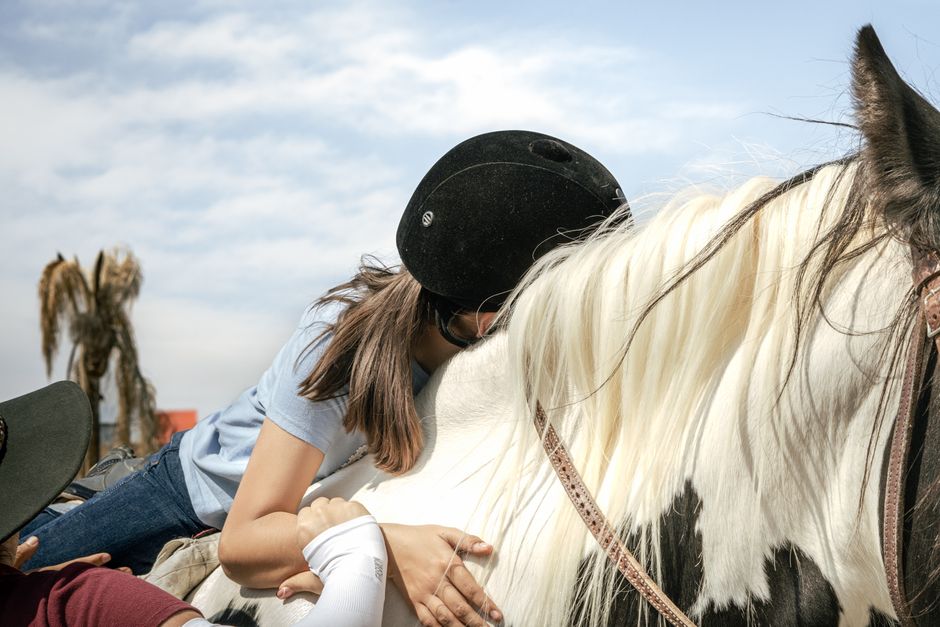
Equine therapy is a treatment that uses horses to help people with mental health conditions, physical disabilities, or emotional challenges. It is also called equine-assisted therapy or equine-facilitated therapy. The main types include therapeutic horseback riding, equine-assisted psychotherapy, and horsemanship programs. Benefits can include improved mood, better balance, and stronger confidence. Sessions are led by licensed professionals and involve interacting with horses on the ground or riding.
What Is Equine Therapy?
Equine therapy is a structured treatment that involves horses and a trained therapist. It is not the same as recreational horseback riding. The horse is part of the therapy team. Clients groom, lead, or ride the horse under professional guidance. The goal is to address specific treatment goals such as reducing anxiety, improving communication, or building physical strength.
Therapists use the horse’s behavior and movements to help clients notice their own reactions. This can lead to insights about emotions, relationships, and body awareness. It is used across many age groups, from children to older adults.
What Are the Benefits of Equine Therapy?
Research demonstrates several benefits for both mental and physical health. For mental health, interacting with horses can lower stress hormones like cortisol. It may also reduce symptoms of depression, anxiety, and post-traumatic stress disorder (PTSD). The rhythmic motion of riding can have a calming effect on the nervous system.
Physically, riding strengthens core muscles, improves balance, and increases coordination. The horse’s gait simulates the human walking pattern, which can help people with mobility problems retrain movement. Some stroke survivors and people with cerebral palsy have shown gains in walking and posture after regular sessions.
Socially, caring for a horse requires patience and clear communication. This can improve trust, empathy, and social skills in individuals with autism spectrum disorder or behavioral issues. However, not all studies show the same level of benefit for every condition. Results vary based on the type of therapy, frequency, and the individual’s specific needs.
What Are the Different Types of Equine Therapy?
There are three main types: therapeutic horseback riding, equine-assisted psychotherapy, and equine-assisted learning. Each has a different focus and requires different credentials for the provider.
Therapeutic horseback riding is physical therapy on horseback. A riding instructor works with a physical or occupational therapist. The goal is to improve strength, balance, and motor skills. Sessions often include exercises on the horse and at the mounting ramp.
Equine-assisted psychotherapy (EAP) is led by a licensed mental health professional. The horse is used as a partner in talk therapy. Ground activities like leading, grooming, or obstacle courses help clients explore feelings, relationships, and behavioral patterns. No riding is involved.
Equine-assisted learning (EAL) focuses on personal development, leadership, and teamwork. It is often used in corporate retreats or school programs. The therapist uses horse-based tasks to teach problem-solving and communication. It is not a medical treatment but can complement therapy.
Some programs combine these types. Always check the credentials of the provider and whether they have training specifically in the type they offer.





Who Can Benefit From Equine Therapy?
Equine therapy has been studied for many conditions. Strongest evidence supports its use for PTSD in veterans. Several studies show significant reductions in symptoms after 6–12 sessions. The Department of Defense and some VA facilities include equine therapy as an option.
Children and adults with autism spectrum disorder may benefit from improved social interaction and reduced irritability. Some research also points to benefits in children with attention deficit hyperactivity disorder (ADHD), though evidence is less consistent.
People with physical disabilities such as cerebral palsy, multiple sclerosis, or spinal cord injury often gain improved trunk control and balance through therapeutic riding. Stroke survivors may see walking improvements.
Equine therapy is also used for depression, anxiety, eating disorders, and substance abuse. However, for these conditions, it is usually a complement to standard treatment, not a replacement. No large trials have proven it is more effective than established therapies alone.
What to Expect During an Equine Therapy Session
A typical session lasts 45 minutes to one hour. At the first visit, you will meet the therapist and the therapy horse. The therapist will explain safety rules, such as how to approach the horse and wear a helmet if riding.
For ground-based therapy, you may stand near the horse, brush it, or lead it through an obstacle course. The therapist will ask questions about your feelings and observations. The horse reacts to your body language, and the therapist uses those reactions to discuss patterns in your life.
For therapeutic riding, you will be helped onto the horse with a mounting ramp. The horse is led by an instructor. You may do stretches, reach for objects, or simply sit and feel the motion. Sessions always end with time for debriefing and feedback.
No horse experience is needed. The staff will teach all necessary skills. Sessions are tailored to your comfort level and goals.
Is Equine Therapy Supported by Evidence?
The evidence is mixed but growing. For PTSD, several randomized controlled trials show benefit. A 2021 meta-analysis of equine-assisted therapies found small to moderate effects for depression, anxiety, and PTSD. For autism, small studies report improvements in social responsiveness, but larger controlled trials are lacking.
For physical rehabilitation, therapeutic riding is well accepted by clinicians. The American Physical Therapy Association includes it as an intervention for balance and mobility. However, the quality of evidence is limited by small sample sizes and lack of blinding.
Some critics argue that many studies are funded by equine therapy organizations, creating potential bias. It is also difficult to separate the effect of the horse from the effect of being outdoors, exercising, or receiving attention from a therapist.
Overall, equine therapy appears promising for several conditions but is not proven to be more effective than standard care. It is best used as part of a comprehensive treatment plan.
How to Find a Qualified Equine Therapist
Look for certification from a recognized organization. In the United States, the main credentialing bodies are PATH International (Professional Association of Therapeutic Horsemanship International) and the Equine Assisted Growth and Learning Association (EAGALA).
For therapeutic riding, a PATH International certified instructor should lead the session. For equine-assisted psychotherapy, the provider should be a licensed mental health professional (social worker, psychologist, or counselor) with additional equine therapy training. EAGALA certifies teams of a mental health professional and an equine specialist.
Ask about the horse’s training, experience with your condition, and safety protocols. Many barns require a doctor’s note before starting. If you have a medical condition, consult your physician first. Sessions can be covered by some insurance plans, health savings accounts, or veterans’ benefits. Contact your provider to check.
Frequently Asked Questions
How much does equine therapy cost?
Cost ranges from $50 to $200 per session depending on location, type, and provider. Some insurance plans or veterans benefits may cover it.
Is equine therapy safe?
Yes, when done with trained professionals and well-handled horses. Falls and kicks are rare. Programs follow strict safety protocols including helmet use and ground rules.
How long does it take for equine therapy to work?
Improvements can appear after 4–6 sessions, but individual results vary. For chronic conditions like PTSD or autism, longer treatment may be needed.
Can I do equine therapy if I am afraid of horses?
Yes. Therapists work gradually, starting with activities at a distance. Many people overcome their fear as they build trust with the horse.
