
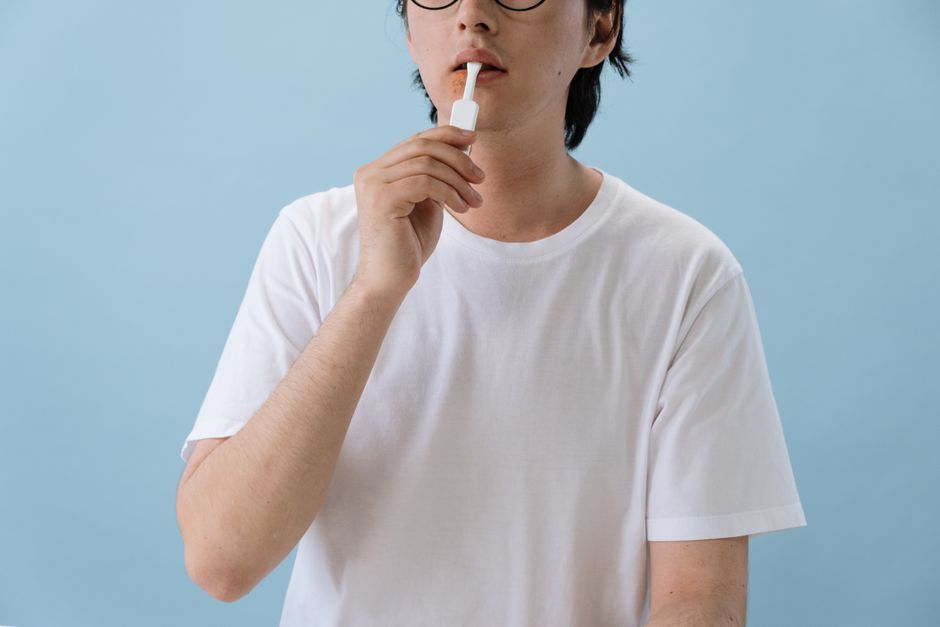
Herpes testing comes down to a few specific methods: a viral swab taken directly from a sore, a blood test that looks for antibodies, and in some cases a PCR test on fluid or tissue. Each test answers a different question, and choosing the wrong one at the wrong time is the most common reason people get a confusing or falsely reassuring result.
If you have visible sores or blisters, a swab can confirm whether herpes is the cause. If you have no symptoms but want to know your status, a blood test is the tool — though it has real limits that most people are never told about. Understanding what each test can and cannot do is the difference between a useful answer and a wasted one.
What Tests For Herpes Swab Blood And More?
There are four main ways clinicians test for herpes, and they fall into two categories: tests that detect the virus itself, and tests that detect the body’s immune response to it.
Direct tests look for the virus or its genetic material in a sample:
- Viral culture — a swab from a sore is placed in a medium where the virus may grow. It is the oldest method and the least sensitive.
- PCR (polymerase chain reaction) — a swab or fluid sample is tested for herpes DNA. This is far more sensitive than culture and is now the preferred direct test in most labs.
- Direct fluorescent antibody (DFA) — a swab is treated with labeled antibodies that bind to viral proteins. Less common today.
Indirect tests look for antibodies the immune system makes against the virus:
- Type-specific serology (blood test) — measures IgG antibodies that distinguish HSV-1 from HSV-2. This is the standard blood test.
The word “swab” and the word “blood” refer to two fundamentally different sampling methods. A swab tests a lesion. A blood test tests your immune history. They are not interchangeable, and one cannot substitute for the other.
How Does a Herpes Swab Test Work?
A swab test requires an active sore, blister, or area of broken skin. A clinician rubs the swab firmly across the base of the lesion — not just the surface — to collect cells and fluid where the virus is present.
Timing matters enormously here. Herpes virus is most concentrated in a fresh blister or early ulcer. As a sore crusts over and begins healing, the amount of detectable virus drops. A swab taken too late in the healing process can come back negative even when herpes is the true cause.
PCR swabs are the most sensitive direct test available. Research has consistently found that PCR detects herpes in a substantially higher percentage of positive samples than viral culture does. For this reason, many clinical labs have moved away from culture entirely.
A negative swab does not rule out herpes. It means the virus was not detected in that particular sample on that particular day. If suspicion remains high, a clinician may repeat the test on a fresh lesion or order a blood test instead.
What Does a Herpes Blood Test Actually Detect?
A herpes blood test does not look for the virus. It looks for IgG antibodies — proteins your immune system produces in response to infection. Once your body makes these antibodies, they generally stay detectable for life.
This creates a timing problem. After initial infection, it can take weeks to months for IgG antibodies to reach levels a test can reliably detect. Testing too early can produce a negative result in someone who is actually infected. This window is one of the most misunderstood parts of herpes testing.
Type-specific blood tests distinguish HSV-1 from HSV-2. This matters because the two types behave differently. HSV-1 classically causes oral cold sores and HSV-2 classically causes genital sores, but both can infect either location. Knowing which type you have affects how you understand transmission risk and what you might expect going forward.
Blood tests are useful when:
- You have no active sores but want to know your status
- A swab was negative but clinical suspicion remains
- You want to know which type you carry
Blood tests are not useful for diagnosing a brand-new infection in its first days, because antibodies have not formed yet.

Why Are Herpes Blood Tests Sometimes Wrong?
Blood tests are not perfect, and the reasons are specific.
False negatives happen most often when the test is done too soon after exposure. If antibodies have not developed yet, the test cannot find them. A negative result early on is not proof of anything.
False positives are a real and underappreciated problem, particularly with HSV-2. Some blood tests can react to antibodies against HSV-1 and produce a low-positive HSV-2 result in someone who does not actually have HSV-2. This is more likely when the index value — the number the lab reports — is low rather than clearly positive.
Because of this, many clinicians recommend confirmatory testing when an HSV-2 result is low-positive. A second, different test method can clarify whether the result is real. Not all labs flag this automatically, so it is worth asking what your specific number was and whether confirmation is warranted.
The CDC has historically recommended against routine screening for herpes in people without symptoms, partly because of these accuracy issues and the psychological impact of a result that may be wrong. Testing is generally most useful when there is a specific reason — symptoms, a known exposure, or a partner with confirmed infection.
Swab vs. Blood Test: Which One Do You Need?
The choice depends entirely on whether you have symptoms right now.
| Situation | Best Test | Why |
|---|---|---|
| Active sores or blisters | PCR swab | Detects virus directly; most accurate during an outbreak |
| No symptoms, want status | Type-specific blood test | Detects antibodies; works without a lesion |
| Recent exposure, no symptoms yet | Wait, then blood test | Antibodies take weeks to months to appear |
| Healing or crusted sore | PCR swab (if fresh) or blood test | Virus levels drop as sores heal |
| Unclear or low-positive blood result | Confirmatory blood test | Rules out false positives |
If you have a sore, get it swabbed while it is still fresh. That single step gives you the clearest answer available. If you have no sore, a blood test is your only option — and you need to understand its timing and accuracy limits before you interpret the result.
Can You Test for Herpes Without Symptoms?
Yes, but only with a blood test. Swabs require something to swab.
The catch is that a positive blood test tells you that you carry the virus — not when you got it, not how often you might shed it, and not whether you will ever have symptoms. Many people with HSV-1 or HSV-2 antibodies have few or no noticeable outbreaks.
This is where testing gets philosophically tricky. A blood test can give you information you did not have, but it cannot tell you what that information will mean for your daily life. Some people carry the virus and never pass it on. Others transmit it without ever knowing they had it.
If you are considering testing without symptoms, it is worth a conversation with a clinician about what a positive or negative result would actually change for you. That is not a reason to avoid testing — it is a reason to go in with clear expectations.
What About Testing During Pregnancy?
Herpes testing in pregnancy follows different rules, and this is a topic where established clinical guidance matters more than general reasoning.
Routine herpes blood testing is not recommended for all pregnant women. However, if a woman has a known history of genital herpes, or develops symptoms during pregnancy, clinicians typically take specific steps to reduce the risk of transmission to the baby during delivery. Newborn herpes infection is rare but serious, so this is handled carefully.
The timing of infection matters. A woman who acquires genital herpes for the first time late in pregnancy faces different risks than one who has had it for years. This is a situation where you should follow your obstetric provider’s guidance directly rather than relying on general information.
No clinical guidelines currently recommend universal herpes screening for all pregnant women in the absence of symptoms or known history.
How Accurate Are These Tests Overall?
PCR swabs are the most accurate direct test, especially when taken from a fresh lesion. Their main limitation is timing and sample quality, not the test itself.
Viral culture is less sensitive and can miss infections that PCR would catch. It is still used in some settings but is no longer the preferred method in most labs.
Type-specific blood tests are generally reliable when used correctly and interpreted with their timing window in mind. Their main weaknesses are false negatives early after exposure and false positives at low index values, particularly for HSV-2.
No test is perfect. The most accurate result comes from matching the right test to your situation — swab when you have symptoms, blood when you do not, and confirmatory testing when a result is unclear.
Frequently Asked Questions
Can a herpes swab test be wrong?
Yes. A swab can miss herpes if it is taken too late in the healing process or if the sample does not collect enough virus. PCR swabs are far more sensitive than older culture methods, but timing and technique still affect accuracy.
How soon after exposure can a blood test detect herpes?
It can take weeks to months after exposure for IgG antibodies to reach detectable levels. Testing too early can produce a negative result even in someone who is infected.
What does a low-positive HSV-2 blood test mean?
A low-positive result can be a false positive, especially if the index value is only slightly above the cutoff. Many clinicians recommend a confirmatory test using a different method before treating it as a true infection.
Do I need a blood test if I already had a positive swab?
Not usually. A positive PCR swab confirms the infection directly, so a blood test adds little. A blood test may still be ordered to determine whether the infection is HSV-1 or HSV-2 if the swab did not specify type.
