
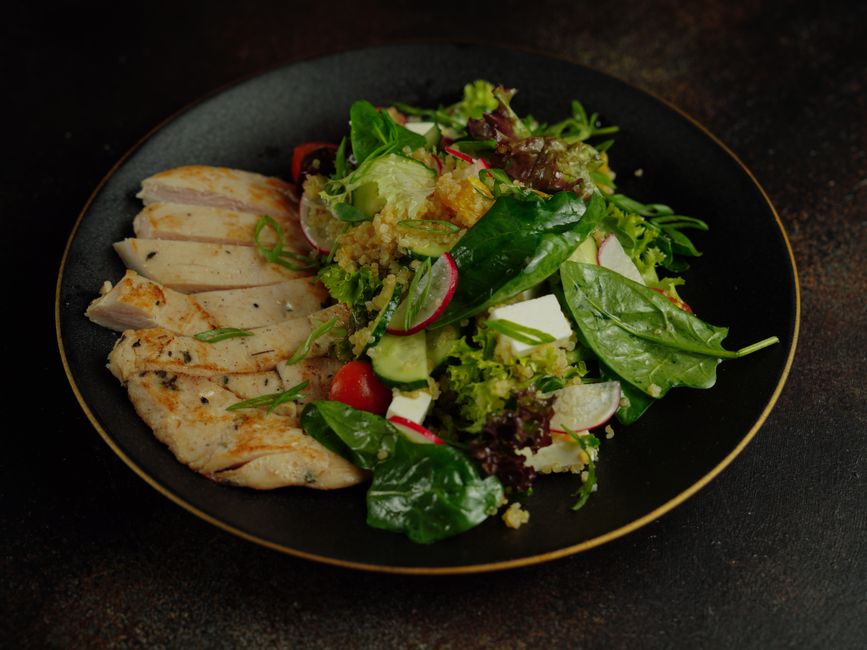
Chicken must be cooked to a minimum internal temperature of 165°F (74°C) throughout the meat. This is the standard set by the USDA and is the only temperature that reliably kills harmful bacteria like Salmonella and Campylobacter. You must check the temperature in the thickest part of the meat, avoiding bone, to get an accurate reading.
Why Is 165°F the Magic Number for Chicken?
The 165°F target is not arbitrary. It is the temperature at which Salmonella and Campylobacter—the two bacteria most often linked to chicken—are killed instantly. At this temperature, the bacteria die within seconds, making the meat safe to eat.
Think of it as a safety net. Cooking to 165°F guarantees safety even if your thermometer placement is slightly off or if the heat distribution in the meat is uneven. It is a fail-safe standard that leaves no room for error.
Does Dark Meat Need a Different Temperature?
No. Both white meat and dark meat must reach 165°F to be safe. However, dark meat often tastes better when cooked to a higher temperature, around 175°F to 180°F. This is because dark meat contains more connective tissue, which needs higher heat to break down and become tender.
If you cook thighs or drumsticks to 165°F, they are safe to eat but may be chewy. Cooking them higher improves texture without compromising safety, as long as the meat does not dry out.
How to Measure Chicken Temperature Correctly
Using a food thermometer is the only reliable way to know if chicken is done. Color and juices are not accurate indicators. Pink meat can be safe, and clear juices can still harbor bacteria.
Insert the thermometer into the thickest part of the meat. For a whole chicken, check the inner thigh and the thickest part of the breast. For pieces, check the center of the thickest piece. Make sure the probe is not touching bone, as bone conducts heat differently and will give a false reading.
Digital instant-read thermometers are the most accurate and give results in seconds. They are inexpensive and worth owning if you cook meat regularly.
What About Resting Time and Carryover Cooking?
Carryover cooking is the rise in temperature that happens after you remove meat from heat. For large cuts like a whole roast chicken, the internal temperature can rise by 5°F to 10°F while resting. This means you could pull the bird at 160°F and it would reach 165°F during resting.
However, this technique is not recommended for chicken. The USDA standard of 165°F applies to the final temperature, not the temperature during carryover. For safety, it is best to reach 165°F before removing the chicken from the heat source. Resting is still important for juiciness, but it should not be relied upon for safety.
Can You Cook Chicken to a Lower Temperature?
Yes, but only under specific conditions. The USDA allows chicken to be cooked to lower temperatures if it is held at that temperature for a specific amount of time. This is called the time-temperature relationship. For example, chicken held at 155°F for 48 seconds is as safe as chicken cooked to 165°F instantly.
This method is commonly used in sous vide cooking, where precise temperature control is possible. It is not recommended for home cooks using conventional ovens or stovetops because holding a precise temperature for a set time is difficult. For standard home cooking, 165°F remains the safe target.
If you use sous vide, follow published, tested recipes that specify both temperature and time. Do not guess. The margin for error is small, and undercooking poultry can lead to serious foodborne illness.
What Happens If You Eat Undercooked Chicken?
Eating undercooked chicken can cause food poisoning. Symptoms typically appear within 12 to 72 hours and include stomach cramps, diarrhea, fever, and vomiting. Most healthy adults recover within a few days, but dehydration can be a concern, especially for young children, older adults, and people with weakened immune systems.
In severe cases, Salmonella or Campylobacter infections can spread beyond the digestive tract and require hospitalization. This is not a rare event. The CDC estimates that Salmonella alone causes over one million infections in the United States each year.
Common Mistakes That Lead to Undercooked Chicken
Several common mistakes cause people to serve undercooked chicken. One is cooking frozen chicken without adjusting the time. Frozen chicken takes roughly 50% longer to cook than thawed chicken. Always check the internal temperature rather than relying on cooking time.
Another mistake is crowding the pan. When chicken pieces are packed together, steam builds up and prevents browning. The surface may look cooked while the center remains raw. Give each piece space so heat can circulate evenly.
Finally, do not rely on visual cues. A golden-brown crust does not mean the inside is cooked. The only reliable check is a thermometer reading of 165°F in the thickest part of the meat.
Safe Handling Practices for Raw Chicken
Proper cooking is only one part of food safety. How you handle raw chicken matters just as much. Raw chicken juices can contaminate cutting boards, knives, counters, and your hands.
Wash your hands with soap and water for at least 20 seconds after touching raw chicken. Use a separate cutting board for raw poultry, and sanitize it after use. Do not rinse raw chicken in the sink—this spreads bacteria through splashes and can contaminate the entire kitchen area. Cooking to 165°F kills the bacteria, so rinsing is unnecessary and increases risk.
Refrigerate raw chicken below 40°F and use it within one to two days, or freeze it for longer storage. Thaw chicken in the refrigerator, in cold water, or in the microwave—never on the counter at room temperature.
How to Tell When a Whole Chicken Is Done
For a whole chicken, check the temperature in two places: the thickest part of the breast and the inner thigh, near the body cavity. Both must read 165°F. The thigh is often the last part to reach the safe temperature, so check it first.
Do not check the temperature at the wing or the area near the neck cavity. These spots cook faster and will give a misleading reading. If you are roasting a stuffed chicken, the stuffing must also reach 165°F. This is another reason to avoid stuffing whole birds—the stuffing can stay cold while the meat cooks, creating a food safety risk.
What about Chicken Cooked in a Slow Cooker or Instant Pot?
Slow cookers and pressure cookers can safely cook chicken, but the same 165°F rule applies. In a slow cooker, chicken should reach 165°F before serving. Because slow cookers cook at low temperatures for long periods, bacteria are killed gradually, but the final temperature check is still essential.
In an Instant Pot or other electric pressure cooker, the high-pressure environment raises the boiling point of water, allowing food to cook faster. The chicken still needs to reach 165°F. Use an instant-read thermometer after cooking to confirm, especially for large cuts like whole breasts or thighs.
Does Organic or Free-Range Chicken Need Different Cooking Temperatures?
No. The safe internal temperature for chicken is the same regardless of how it was raised. Organic, free-range, and conventionally raised chickens can all carry Salmonella and Campylobacter. The 165°F target applies to all poultry, including chicken, turkey, duck, and game birds.
Some people believe that higher-quality chicken is safer to eat rare, but this is not true. The bacteria are present in the environment and can affect any bird. Cooking to 165°F is the only reliable way to ensure safety.
Frequently Asked Questions
What temperature should chicken breast be cooked to?
Chicken breast must reach 165°F (74°C) in the thickest part to be safe. Check the center of the thickest piece with an instant-read thermometer.
Is it safe to eat chicken at 160°F?
No, 160°F is not safe for chicken unless it is held at that temperature for a specific period of time, which is difficult to do at home. The USDA standard is 165°F.
Can chicken be pink and still be safe?
Yes, pinkness is not a reliable indicator of doneness. The only way to know if chicken is safe is to check the internal temperature with a thermometer.
How long should I rest chicken after cooking?
Rest chicken for about 5 to 10 minutes after cooking to allow juices to redistribute. Resting does not replace the need to reach 165°F during cooking.
