
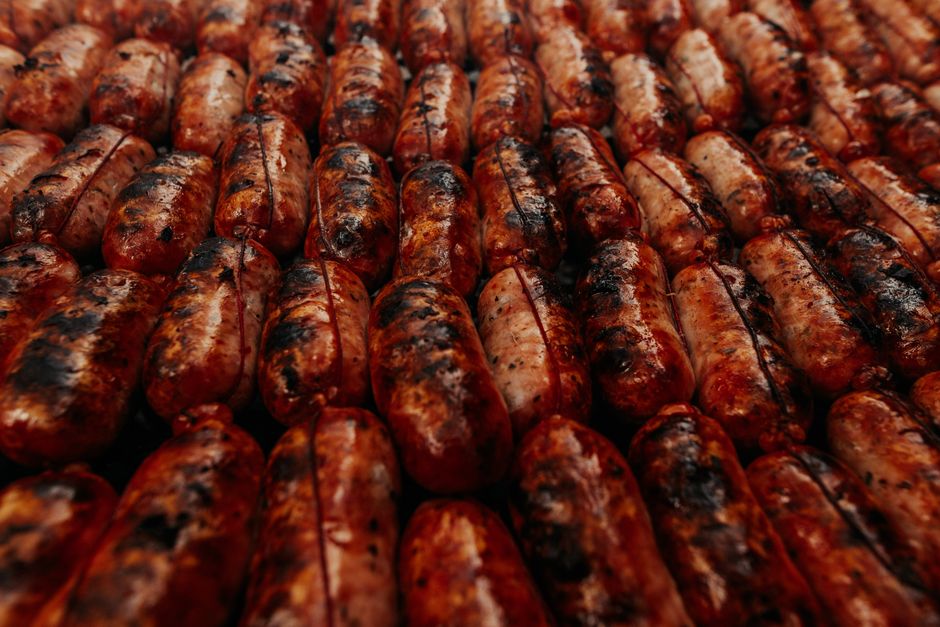
You can tell chorizo is fully cooked by checking its internal temperature with a food thermometer: it needs to reach 160°F for raw ground chorizo and 165°F for raw ground poultry chorizo. If you do not have a thermometer, look for firm, crumbly texture, no pink in the center, and clear juices instead of pink or bloody ones. The tricky part is that chorizo comes in several forms — Mexican raw, Spanish cured, and fresh sausage — and each one has different rules for what “cooked” actually means.
Why Chorizo Is Trickier Than Other Sausages
Chorizo is not one food. That single word covers at least three different products sold in US grocery stores, and they are not interchangeable when it comes to cooking.
Mexican chorizo is usually sold raw. It is a fresh, loose sausage made from ground pork mixed with vinegar, chile powder, garlic, and spices. It often has a deep red color from the chile, not from the meat itself. This is the type you crumble into a skillet. It must be cooked through before eating.
Spanish chorizo is usually cured and dried. It is firm, sliceable, and sold ready to eat — similar to salami or pepperoni. You can eat it straight from the package. Cooking it is optional and mostly about texture or warming it through a dish.
Fresh chorizo sausage links sit somewhere in between. They may be raw and need full cooking, or they may be cured. The label is the only reliable guide.
This distinction matters because the color and firmness cues people use for one type can be completely misleading for another. A cured Spanish chorizo is already firm and deep red. A raw Mexican chorizo also looks red because of the chile. Color alone tells you almost nothing.
What Internal Temperature Should Chorizo Reach?
Ground meat needs to reach a safe internal temperature to kill harmful bacteria like Salmonella and E. coli. The USDA sets these temperatures, and they are not negotiable for food safety.
- Raw ground pork chorizo: 160°F
- Raw ground poultry chorizo (chicken or turkey): 165°F
- Raw beef or mixed-meat chorizo: 160°F
Measure the temperature in the thickest part of the meat. For crumbled chorizo, push the probe into the center of a clump rather than the edge of the pan. For links, insert the probe into the middle of the sausage, not touching the casing or the pan.
Ground meat is different from whole cuts of pork. A whole pork chop can be safely cooked to 145°F with a rest time. Ground meat cannot, because bacteria get mixed throughout the meat during grinding rather than staying on the surface. That is why the temperature for ground pork is higher.
How Can You Tell When Chorizo Is Cooked Without a Thermometer?
Visual and texture cues can help, but they are less reliable than a thermometer. Use them as a backup, not a replacement.
Raw Mexican chorizo starts out soft, sticky, and bright red. As it cooks, the fat renders out and the meat breaks into small crumbles. Fully cooked chorizo looks darker, drier, and more uniform in color. There should be no shiny raw spots and no pink remaining in the thickest pieces.
The juices should run clear. If you see pink or reddish liquid pooling in the pan, keep cooking and check again.
Texture is the most useful cue. Cooked chorizo is firm and crumbly, not squishy or pasty. When you press a piece with a spoon, it should hold its shape rather than smear.
One caution: the red color from chile powder and paprika does not cook out. Chorizo can stay visually red even when it is fully cooked and safe. Do not rely on “no red color” as your only test.




How Long Does Chorizo Take to Cook?
Timing depends on the form, the pan, and the heat. These are general ranges, not guarantees — always confirm with a thermometer.
Crumbled raw Mexican chorizo in a skillet over medium heat typically takes about 8 to 12 minutes, stirring and breaking it apart as it cooks. It releases a lot of fat, so you may want to drain some of it partway through.
Chorizo links take longer, roughly 15 to 20 minutes in a skillet, turning them so they brown on all sides. Thicker links take longer than thin ones. If you are finishing them in the oven, they may need 20 to 25 minutes at 350°F, depending on size.
If you are cooking chorizo as an ingredient — mixed into eggs, potatoes, beans, or a soup — the chorizo still needs to reach its safe temperature. Adding it to a hot dish does not automatically cook it. Brown it separately first if you are unsure, then add it in.
Common Mistakes That Lead to Undercooked Chorizo
The biggest mistake is assuming chorizo is done because it looks brown on the outside. Ground meat can brown on the surface while staying under temperature in the center.
Another common error is cooking cured Spanish chorizo as if it were raw. This usually does not cause a safety problem, but it can dry out a product that was already ready to eat. If the label says “ready to eat” or “dry cured,” it does not need cooking.
People also confuse the two types when shopping. If you grab a package of Spanish cured chorizo thinking you bought raw Mexican chorizo, you may overcook it or wonder why it never breaks down into crumbles. Check the label for words like “cured,” “dry,” or “ready to eat” versus “raw” or “fresh.”
Finally, some cooks rely on taste-testing a small piece while the rest is still cooking. That piece may be done while the center of the pan is not. Stir and check the middle of the batch, not just the top.
Does Chorizo Need to Rest After Cooking?
Resting matters for large cuts of meat like roasts, not for crumbled chorizo. Once crumbled chorizo hits 160°F, it is done. You can serve it right away.
For chorizo links, a short rest of a few minutes can help the juices settle, but it is not required for safety. The temperature is what matters, not the rest time.
If you are adding cooked chorizo to a dish that will keep cooking — like a casserole or a pot of beans — the chorizo is already safe. Further cooking will change its texture but not its safety.
What About Chorizo in Restaurants and Deli Counters?
When you order chorizo at a restaurant, you are trusting the kitchen to cook it properly. There is no way to verify the internal temperature from your table. If a dish with raw chorizo tastes or looks underdone, it is reasonable to send it back.
Cured Spanish chorizo sold at a deli counter is ready to eat. It does not need to be cooked, and eating it cold is normal in Spain and in many US delis.
If you are unsure which type you have, the package label is the best source. When in doubt, treat it as raw and cook it to 160°F. Overcooking cured chorizo is not a safety risk — it just changes the texture.
Quick Reference: Chorizo Types and Cooking Rules
| Type | Sold As | Safe Internal Temperature | Ready to Eat? |
|---|---|---|---|
| Mexican chorizo (raw, loose) | Fresh, refrigerated | 160°F | No |
| Fresh chorizo links (raw pork) | Fresh, refrigerated | 160°F | No |
| Fresh chorizo links (raw poultry) | Fresh, refrigerated | 165°F | No |
| Spanish chorizo (cured, dried) | Shelf-stable or refrigerated | Not required | Yes |
The single most reliable test is a food thermometer. Color, firmness, and juices can support your judgment, but they cannot replace a temperature reading. If you cook chorizo regularly, a basic instant-read thermometer is worth keeping in the kitchen.
Frequently Asked Questions
What temperature does chorizo need to reach to be safe?
Raw ground pork chorizo needs to reach 160°F, and raw poultry chorizo needs 165°F. Cured Spanish chorizo is ready to eat and does not require cooking.
Can you eat chorizo if it is still pink in the middle?
If it is raw chorizo, pink in the center means it has not reached a safe temperature. Continue cooking until it hits 160°F or 165°F, depending on the meat.
How do you know when Mexican chorizo is done?
It should be firm and crumbly with clear juices and no raw spots, and it should reach 160°F on a thermometer. The red color from chile does not fade, so do not use color alone as your test.
Is Spanish chorizo already cooked?
Yes, cured Spanish chorizo is typically sold ready to eat without cooking. Check the label for “cured,” “dry,” or “ready to eat” to confirm which type you have.
